A breeze that
keeps up.
Set how you like the air. Let the fan adjust as the room changes.
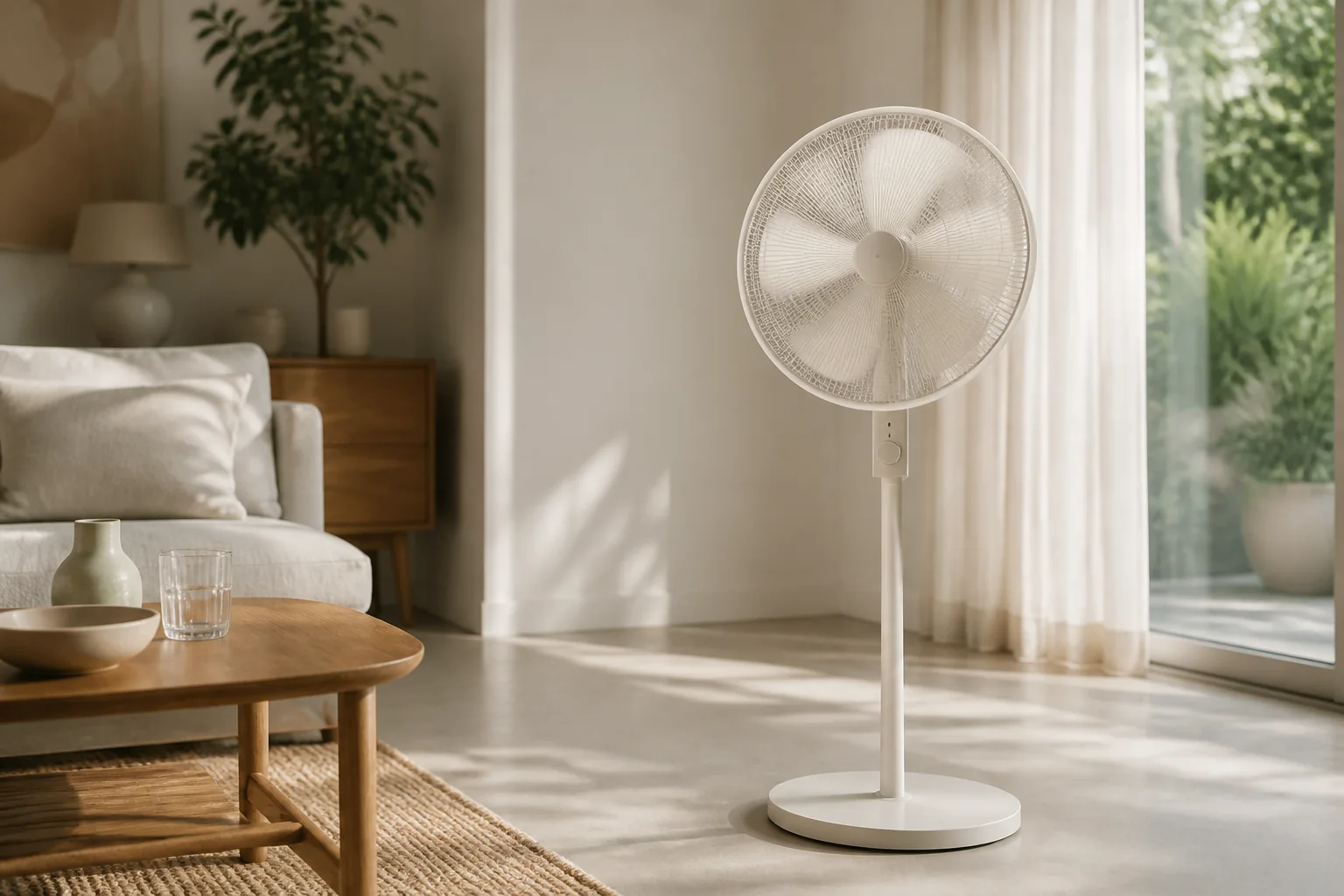
The room changes. Your fan should respond.
The speed that feels right on a warm afternoon can feel excessive later in the evening. Humidity changes the experience too. An ordinary fan leaves you to notice the difference and reach for the control again.
The Thermoregulated Fan builds knowledge about human comfort into its response. It reads temperature and humidity, then adjusts its speed automatically as those conditions change. The person chooses where the comfort curve sits; the fan handles the changing airflow.
Move the curve to where you feel comfortable.
The control shifts the placement of the built-in response curve. If you prefer a stronger breeze, move it toward more airflow at the same room conditions. If you prefer gentler air, shift it the other way. The knowledge that shapes the response stays built in.
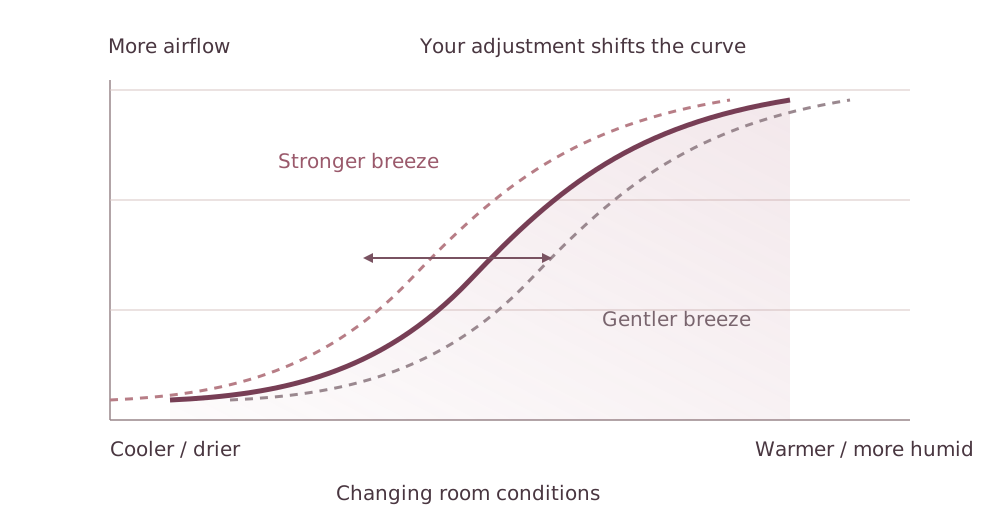
As the air becomes warmer or more humid, the fan responds along the chosen curve. As conditions ease, the breeze relaxes. Your setting describes the comfort you want, so you do not have to keep translating each change in the room into a new motor speed.
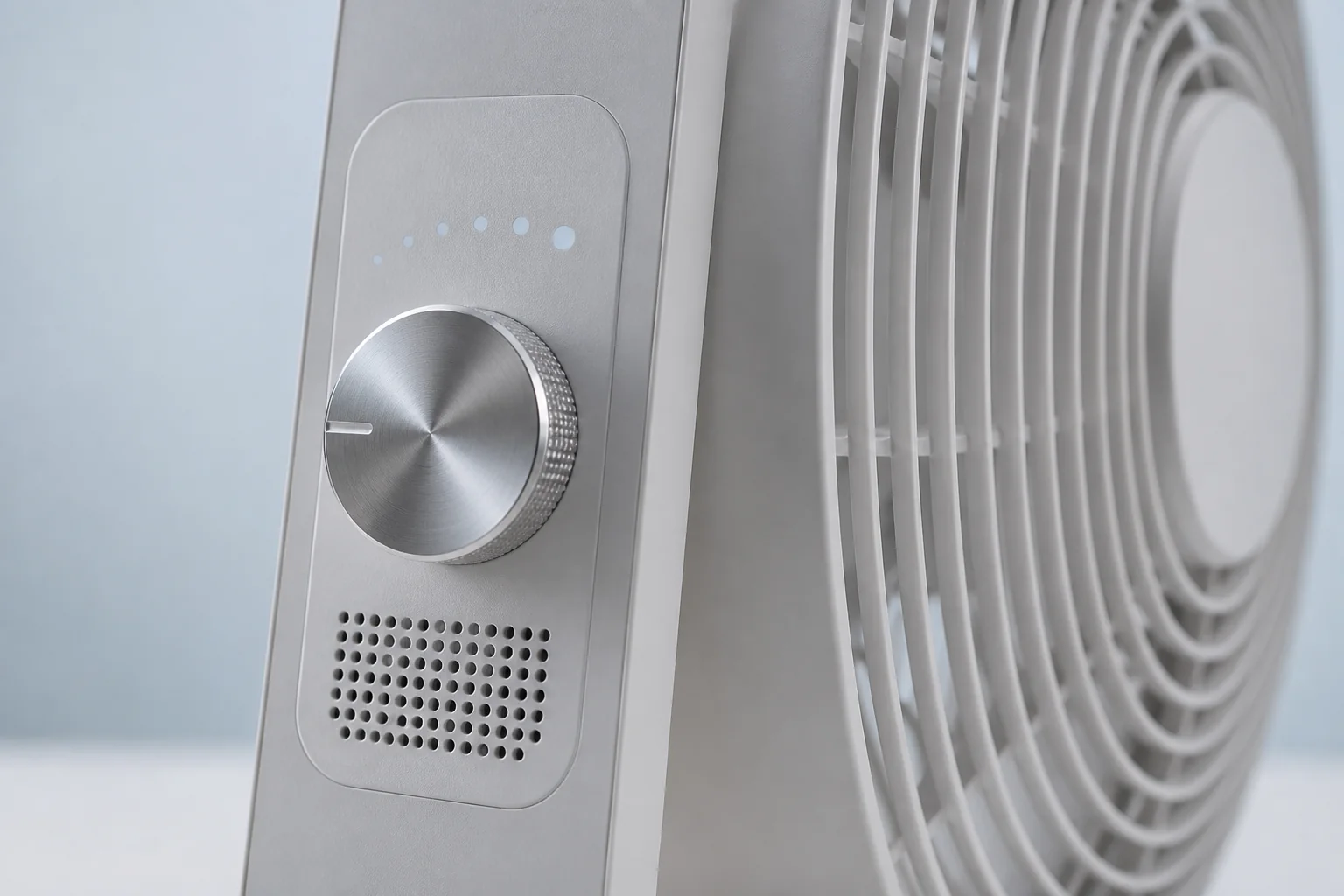
Choose the feeling. Leave the adjustments to the fan.
The control remains available whenever your preference changes. Turn it until the breeze suits you, then let the automatic response carry that preference through the rest of the afternoon, the evening or the night.
The benefit is a familiar appliance that asks less of you. Its speed changes because the conditions have changed, while the setting you chose continues to guide the result.