What if the boundary
itself could move?
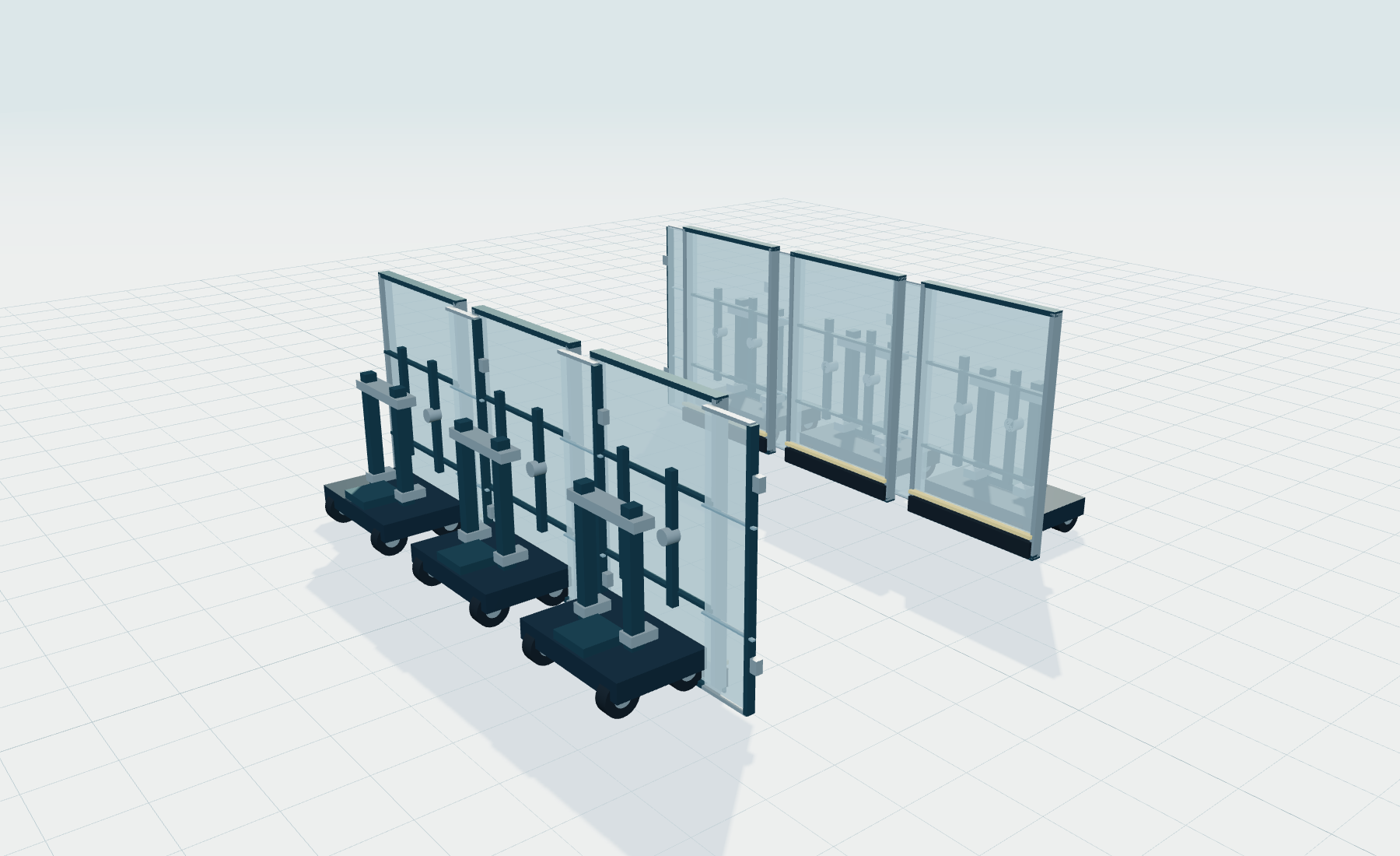
A twelve-foot wall face on a wheeled base. It can rise, lower and tilt; an expanding side element joins it to another section. Linked modules turn a temporary boundary into a piece of movable architecture.
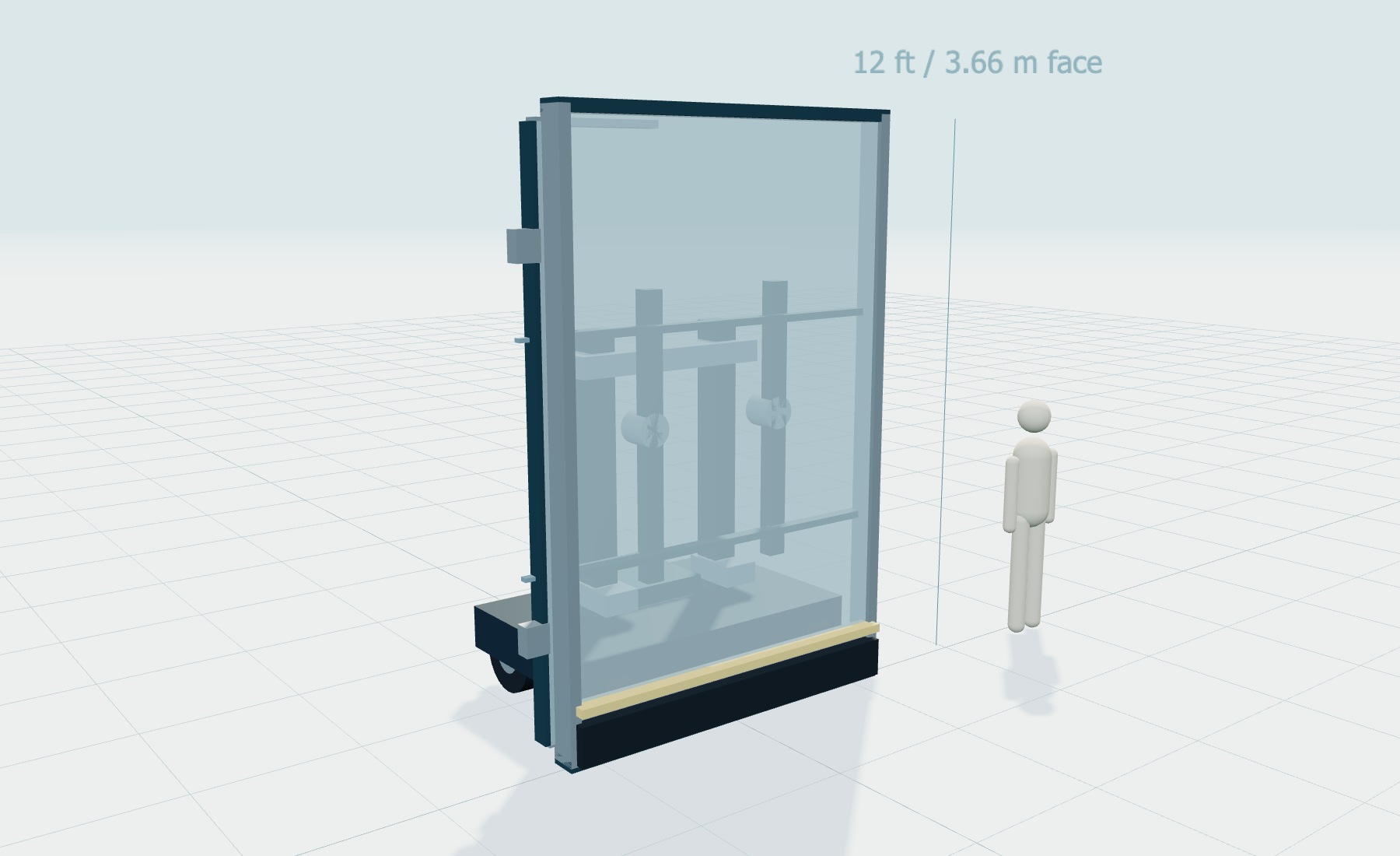
Move the wall as a whole.
A handheld shield line is made of people. A fixed barricade stays where it was assembled. The Moving Line proposes something between them: an entire tall boundary that can change position without having a row of people carry its front edge.
The proposed uses include moving a crowd boundary, separating groups and establishing a vehicular passage through occupied public space. Its distinctive proposition is spatial: the wall itself moves. The intended benefit is less direct confrontation than a person-to-person push, tear gas or water cannons. That benefit remains a question to demonstrate, especially wherever the structure would contact people.
Inspect the object
Turn the module to inspect the support behind its face. The three pose controls expose the lift, tilt and side extension individually.
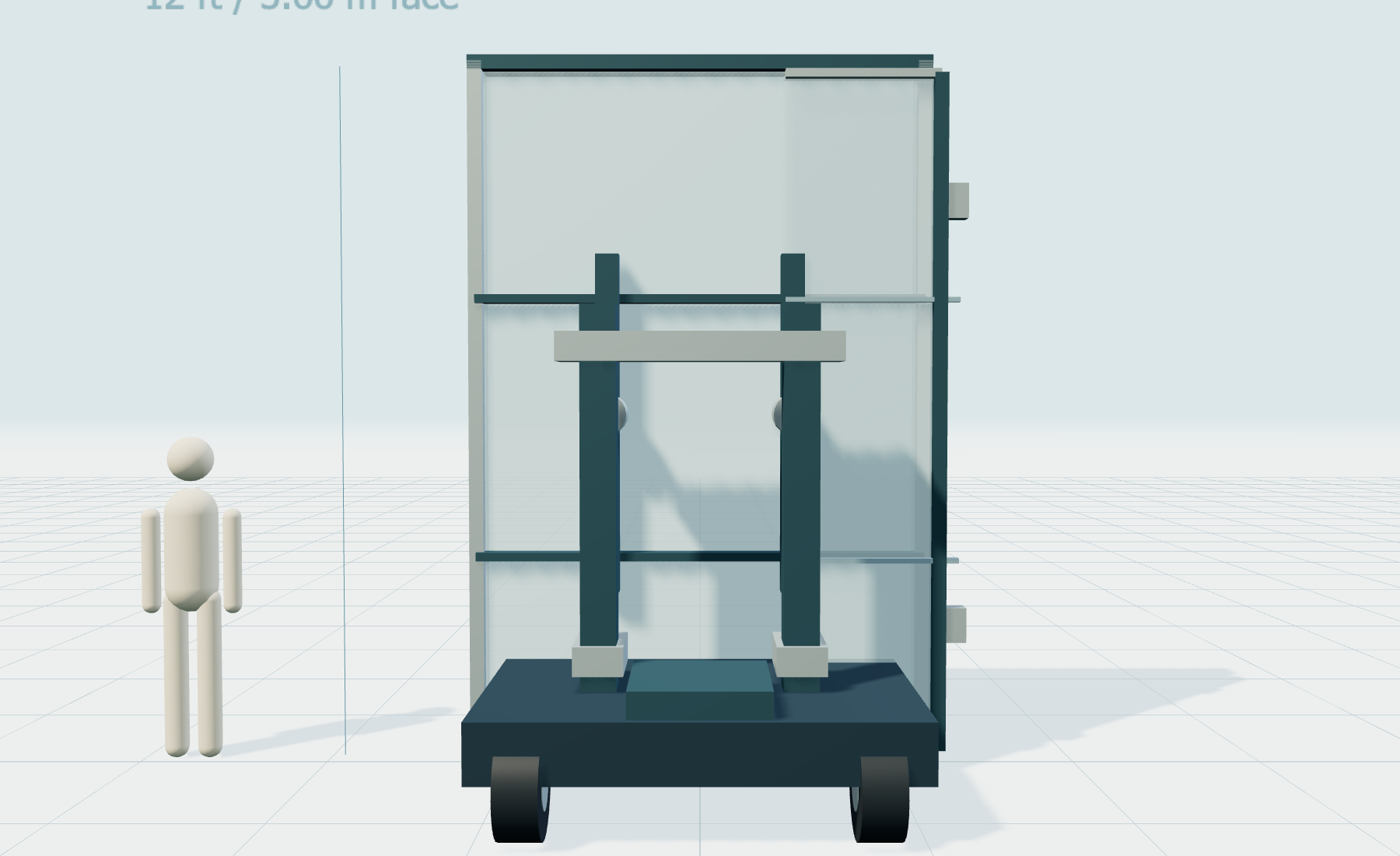
A base, a face, a connection
The base carries the tall surface on wheels. A lift changes the face’s height relative to the ground, while tilt changes its angle. An overlapping side element extends toward an adjacent module, making the connection visible as part of the surface.
The bottom lip is intended to stay low. That ambition is about preventing a person from going beneath the face; it is not proof against trapping. Uneven paving, feet, mobility aids and a fallen person make the ground relationship more complicated than a clean line in a drawing.
From an object to a boundary
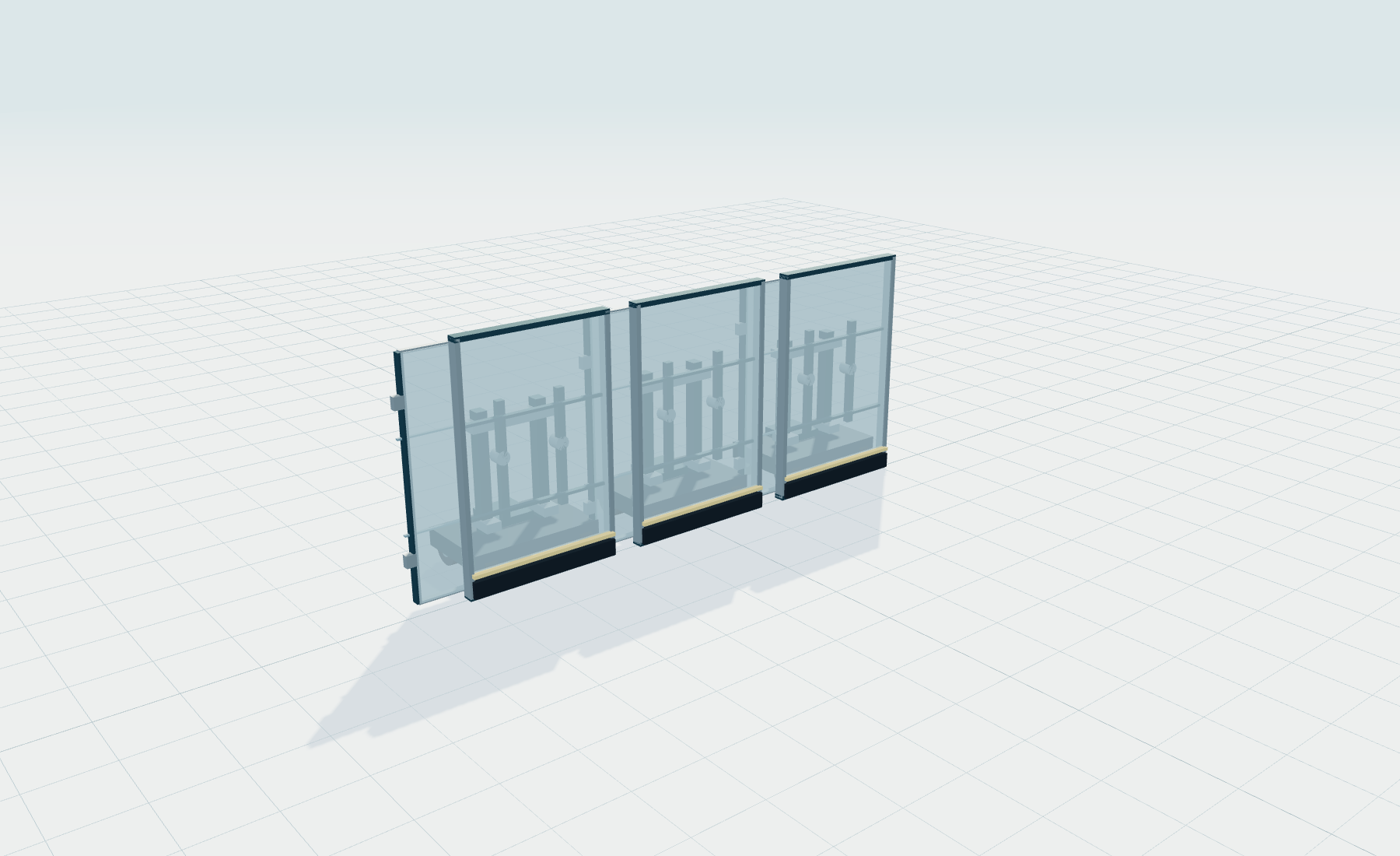
Linking sections changes the idea’s scale. A single face can occupy a local boundary; multiple sections could span a street. The visible continuity is the point: a boundary recognizable as one structure, instead of a collection of individual confrontations.
The useful comparison is not simply how much space it occupies. It is whether people can understand the boundary, see where they may go and retain the ability to move freely away from it. A tall wall can also obstruct sightlines and hide conditions beyond its face.
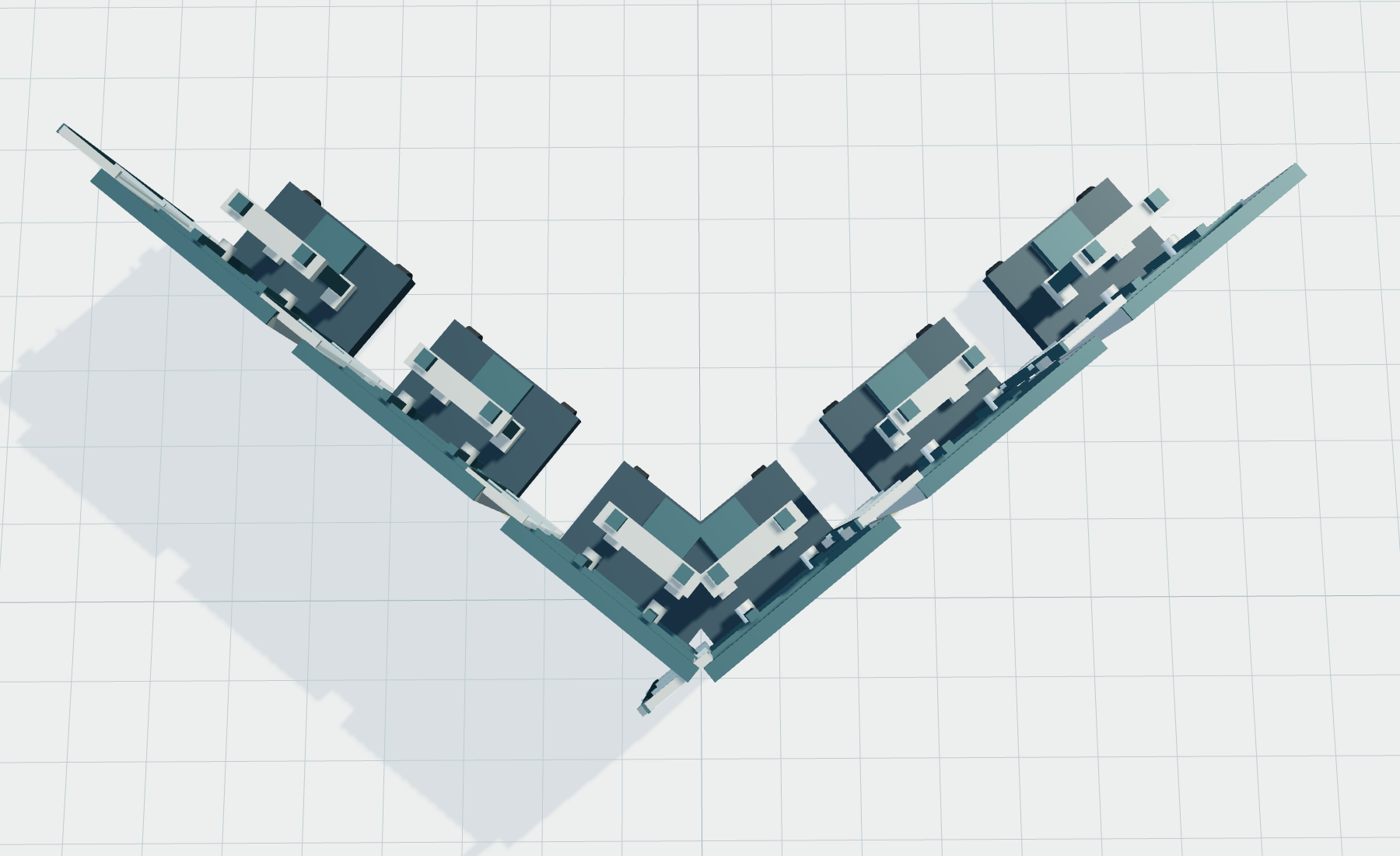
An outline that can change
Articulation is part of the proposition. A connected line need not remain flat: the sections could form angles, with side elements maintaining a visible relationship between them. The corner and the joint become important parts of what people encounter.
A passage made visible
A temporary vehicular path is another proposed use. Two defined edges can make a route legible while keeping the vehicles’ path distinct from the surrounding gathering. Its real usefulness depends on access and movement around the entire site.
Slow does not mean force-free.
A large structure can apply dangerous pressure while barely moving. If someone cannot move away, speed alone does not resolve the contact. A low lip might prevent one route under the face while creating a pinch point at another. An unbroken wall can make a boundary clear while removing an escape route.
HSE’s crowd-safety guidance identifies crushing between people and against structures as a hazard and treats safe movement and exit as properties of the whole space. A model of the machine cannot stand in for that assessment.
The aim of avoiding violent engagement deserves a test that measures it. Fewer officers touching people is not enough if a machine delivers the contact instead. The relevant outcome is less injury, less involuntary compression and preserved ability to leave.
The boundary and the space around it
The clear contribution is a movable boundary with a visible, adaptable shape. The first useful demonstrations can examine the object’s scale, sightlines and spatial legibility without placing a crowd in contact with it. Those questions are different from proving that a machine can safely push people.
A convincing case for the intended public-safety benefit would have to establish how the entire environment behaves around the structure, including people who cannot respond as expected.