Gallery
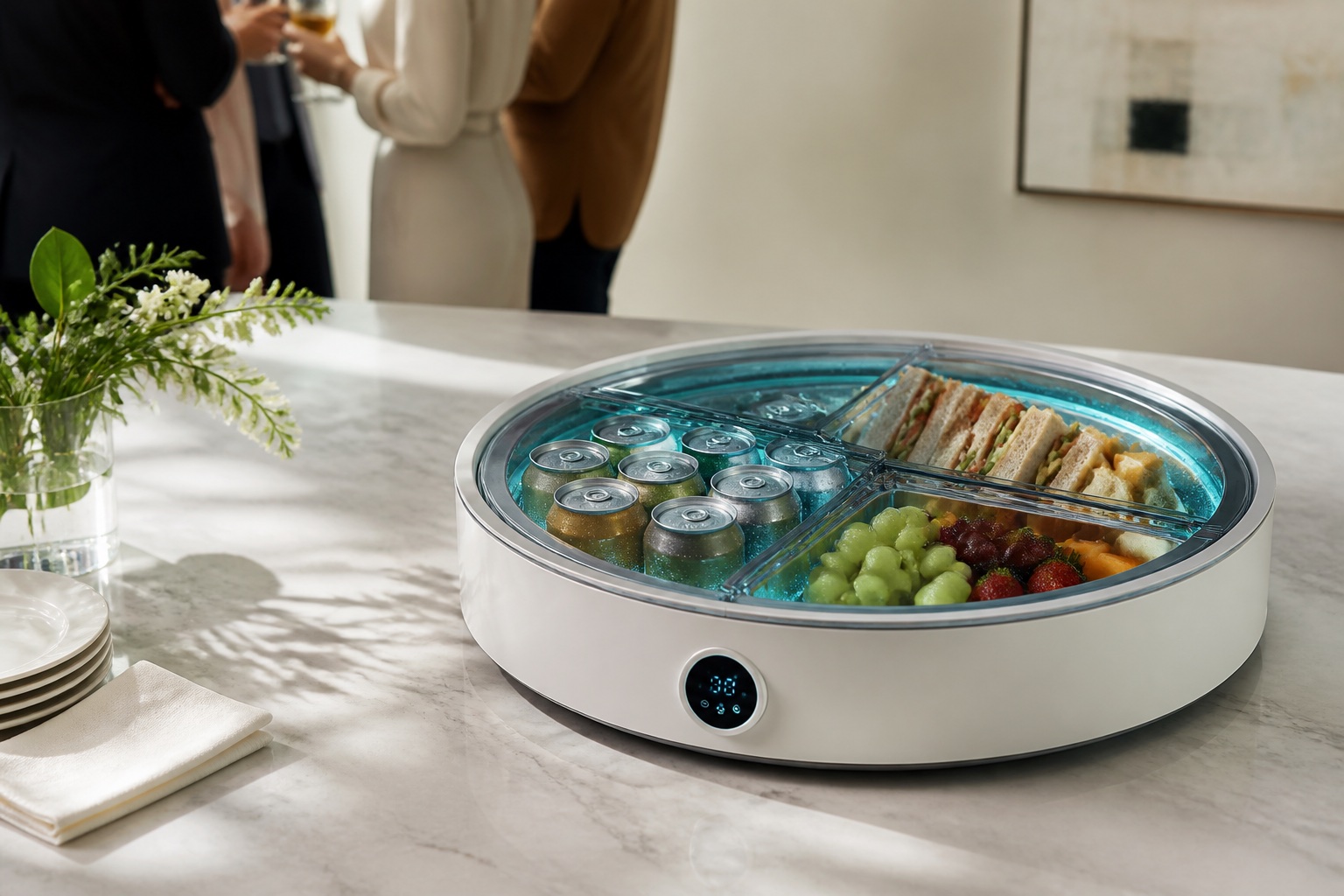
Quiet, presentable refreshments that remain safe without a bulky catering station.
TABLETOP APPLIANCE · ONE COLD LAYER
Set the refreshments out without setting them adrift in ice. This shallow circular refrigerator keeps drinks, sandwiches, fruit, and cheese visible, chilled, and within reach.
THE SMALL MISSING APPLIANCE
A gathering creates a small but persistent conflict: the food should remain where the people can see and share it, while perishable food should remain cold. The host usually resolves that conflict by repeatedly returning trays to the kitchen, burying them in ice, or quietly accepting that the display is warming. USDA buffet guidance recommends holding cold food at 40°F or below and replacing small platters rather than leaving them at room temperature.
The ordinary bad gathering: sandwiches and cheese look fine on the table long after anyone remembers when they came out. The host leaves the conversation to manage the refrigerator, while guests cannot tell whether the remaining tray is merely warm or too old.
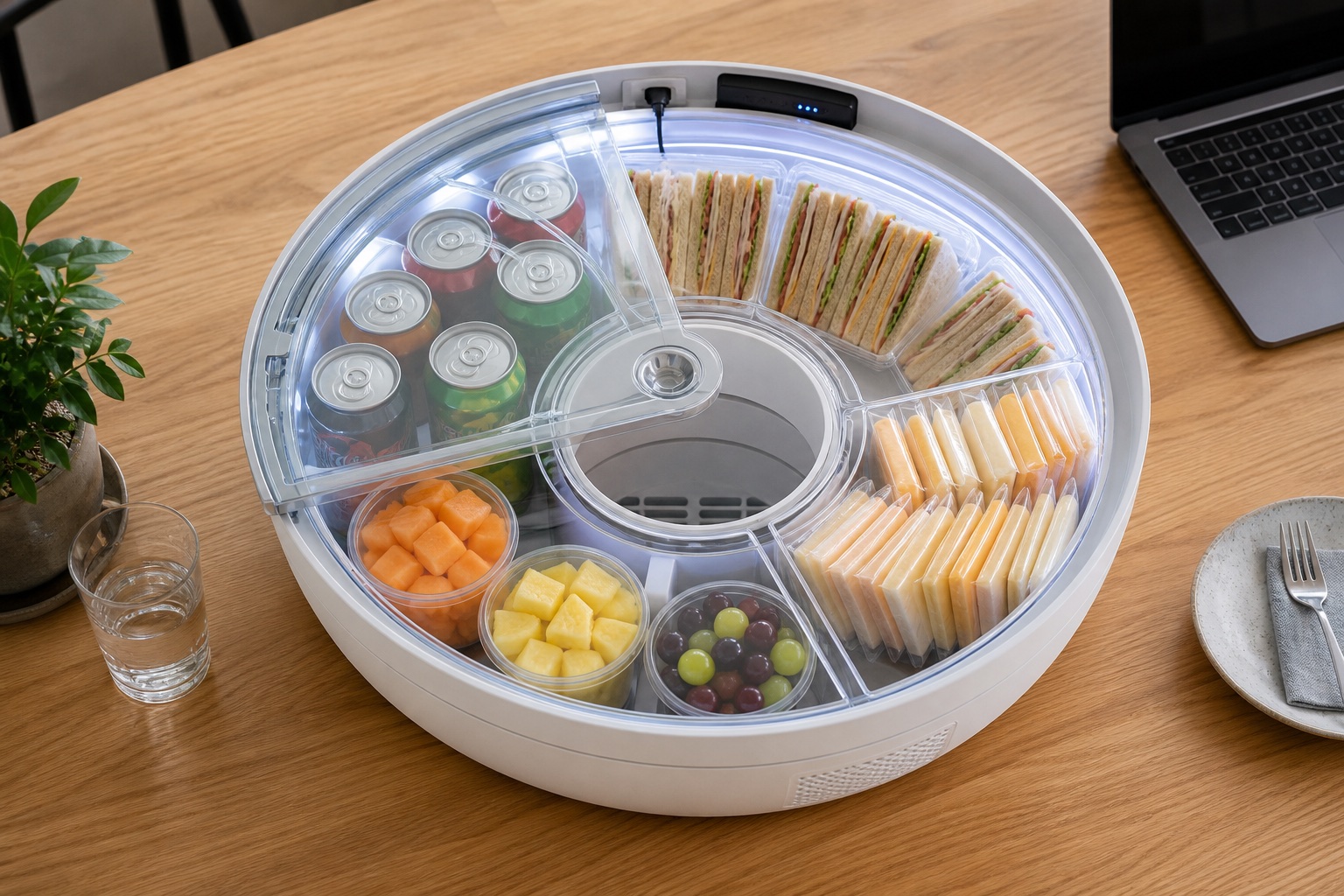
With the tabletop cooler: one shallow visible layer stays actively chilled at the center of the gathering. Nothing hides behind anything else, segmented lids expose only the chosen slice, and the host can monitor the warmest item instead of running a relay between table and kitchen.
OPEN ONE SLICE, NOT THE WHOLE TOP
The transparent cover divides into overlapping or sliding segments. A guest exposes one portion, takes an item, and closes it without dumping the entire cold-air layer into the room. The mechanism should be removable and easy to clean.
PUT COLD FOOD WHERE IT IS USEFUL
Quiet, presentable refreshments that remain safe without a bulky catering station.
Food and drinks stay within the conversation instead of sending people to a break room.
Battery operation gives a finite window of refrigeration where a cord is awkward.
A simple way to put out lunch for a group without repeatedly opening the main refrigerator.
DESIGN THE THERMAL LOOP FIRST
A conductive base evens out temperatures beneath the serving layer while high-performance insulation limits heat leaking through the shallow shell.
The compressor or solid-state choice must be judged by actual efficiency, noise, cost, and room-temperature performance—not novelty. Warm exhaust must never blow across the food.
A restrained display reports setpoint, measured temperature, battery state, and a lid-open warning. The appliance should remain useful without an account, app, or network.
Wall power handles long events. A removable or serviceable battery supports short placement away from outlets. Runtime remains a prototype measurement, not a promise.
THE FIRST HONEST PROTOTYPE