Scents
for Cents.
A small, protected liquid sample turns an inexpensive postcard into one honest encounter with a fragrance—and a keepsake after the drop is gone.
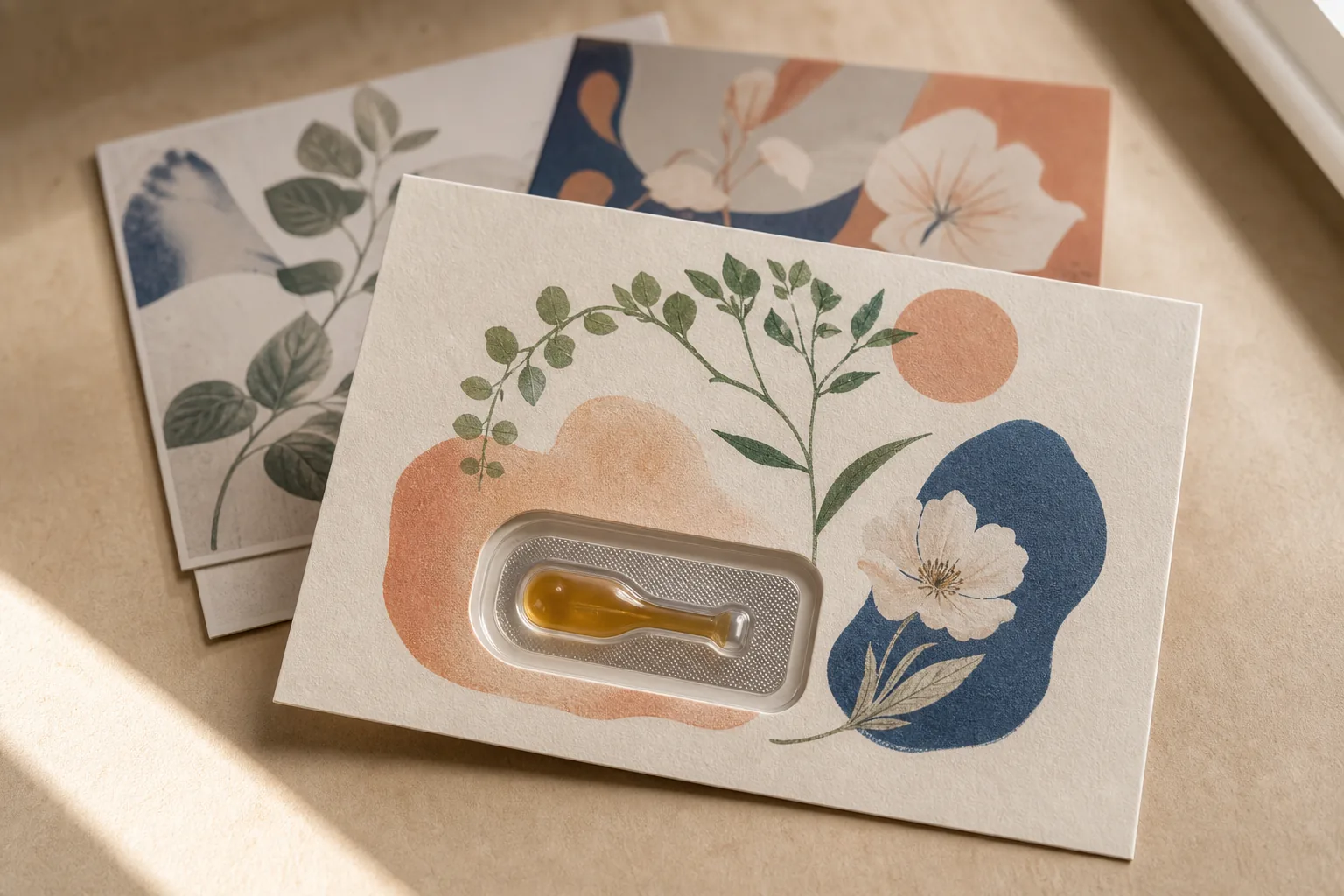
Try the scent. Keep the postcard.
Fragrance has an unusually severe information problem: prose, photographs, star ratings, and ingredient lists cannot tell a person what the product will smell like on them. The reliable answer is a physical encounter, yet that encounter is usually tied to a store visit, a promotional distribution system, or an expensive bottle.
A person reads descriptions of woods, rain, amber, and citrus, buys the full package blind, discovers in minutes that it is wrong, and leaves almost the entire manufactured bottle unused.
A collectible postcard carries one protected liquid dose of the actual formulation in a tiny liquid applicator. It can travel cheaply, be opened once, and applied once, providing enough material for a real skin or blotter trial before the customer buys the bottle. The card remains useful as art after the drop is gone.
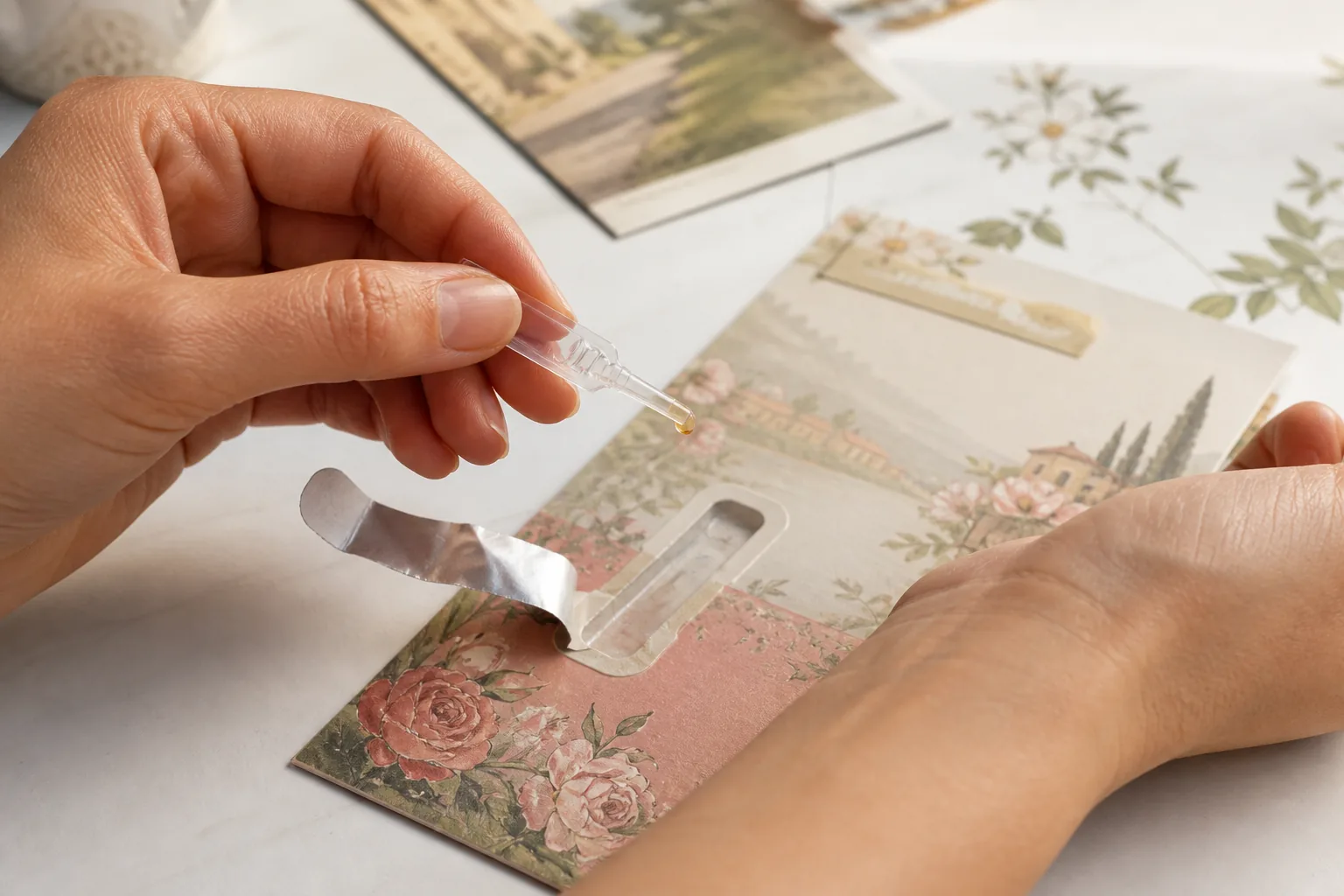
One small encounter with the real thing
The protected chamber has three jobs before it ever becomes beautiful: keep the liquid in, keep the world out, and survive automated mail handling. A small applicator then delivers the whole sample cleanly, without a loose glass vial or a sprayer.
- Exactly one intended use
- Protected from crushing and accidental opening
- No sharp edge after separation
- A card still worth keeping afterward
A sample to use. An object to keep.
The front belongs to the fragrance: original art, the origins of its ingredients, or the story of the composition. Each issue can join a collection long after its sample has been used. The protected dose sits within that printed object, so the card and the scent arrive as one experience.
The liquid is metered for exactly one intended use. “One drop” describes the idea; filling tolerances and the applicator determine the final quantity. A fragrance-compatible barrier protects it from evaporation, oxygen and migration into the paper, while a shallow well takes the pressure of handling.
Identification, ingredients and allergens where required, application guidance, lot information and disposal instructions belong on the reverse. The recipient should know what arrived and how to try it, while the illustrated front remains a postcard worth displaying.
From the printing press to the letterbox
- PrintProduce the art card and its required product information without exposing fragrance to ink-curing or finishing processes.
- Fill + sealMeter the liquid under controlled conditions into a compatible single-use applicator, then verify seal integrity and fill mass by lot.
- InsertSecure the sealed unit inside a shallow protective well that cannot snag mail equipment or release the dose when flexed.
- FulfillPick the fragrance, apply the correct destination-specific labeling and outer protection, and preserve batch traceability through delivery.
The pleasure begins when it arrives intact.
The tiny chamber has to behave well in a very ordinary journey. Flexing, compression, vibration, heat, cold and changes in pressure must leave the sample sealed and the paper clean. The protective well should pass through sorting without catching an edge or turning a postcard into an awkward parcel.
A first delivery trial can follow one formulation along one domestic route. Weighing the sealed samples before and after transit, checking for stains and escaping fragrance, and watching recipients open them would reveal whether the packaging delivers the encounter it promises. Formulation, dose, labeling and destination are worked out together before the collection expands.
A fragrance can be difficult to describe. A postcard can let it introduce itself.