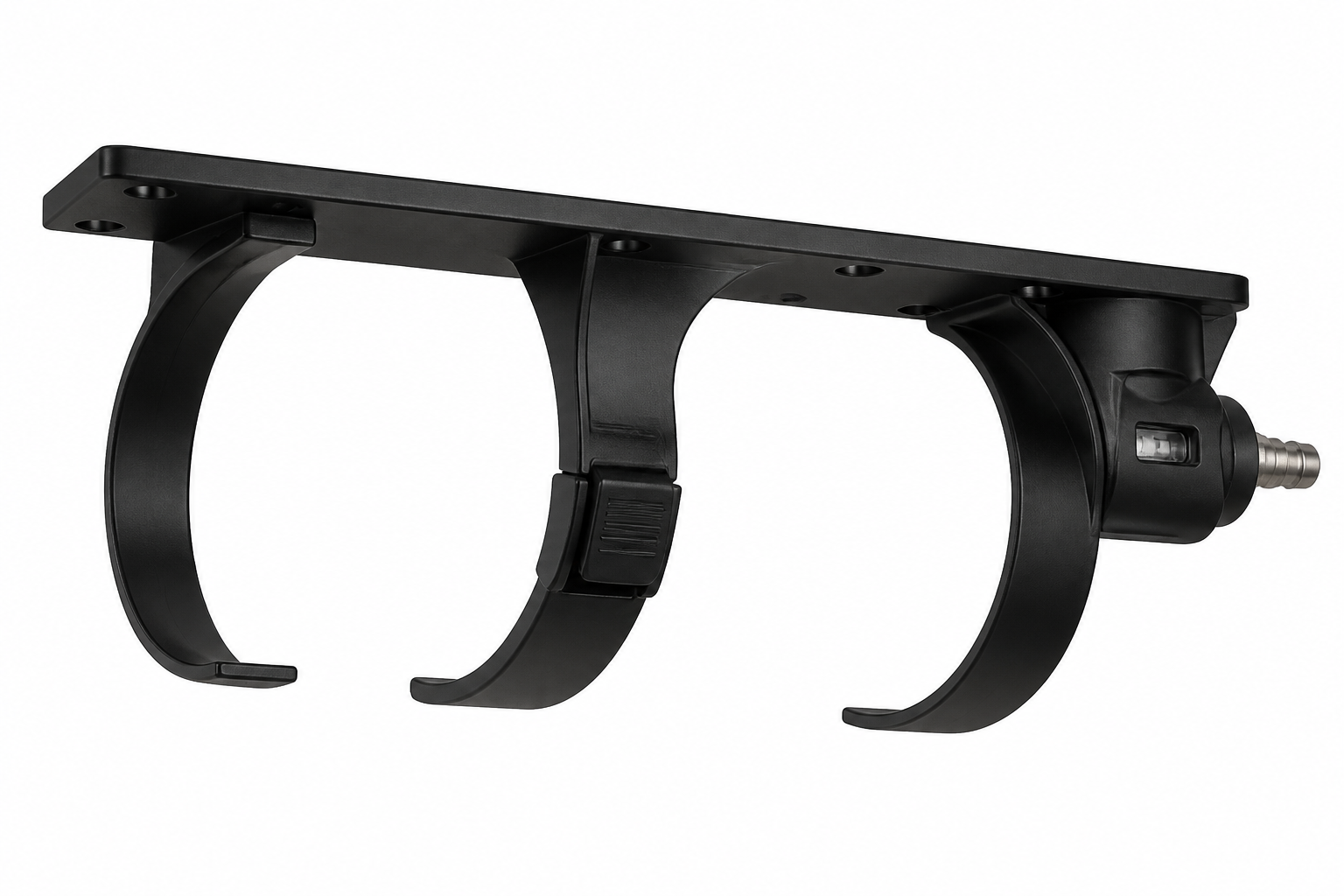
Cradle & adapter
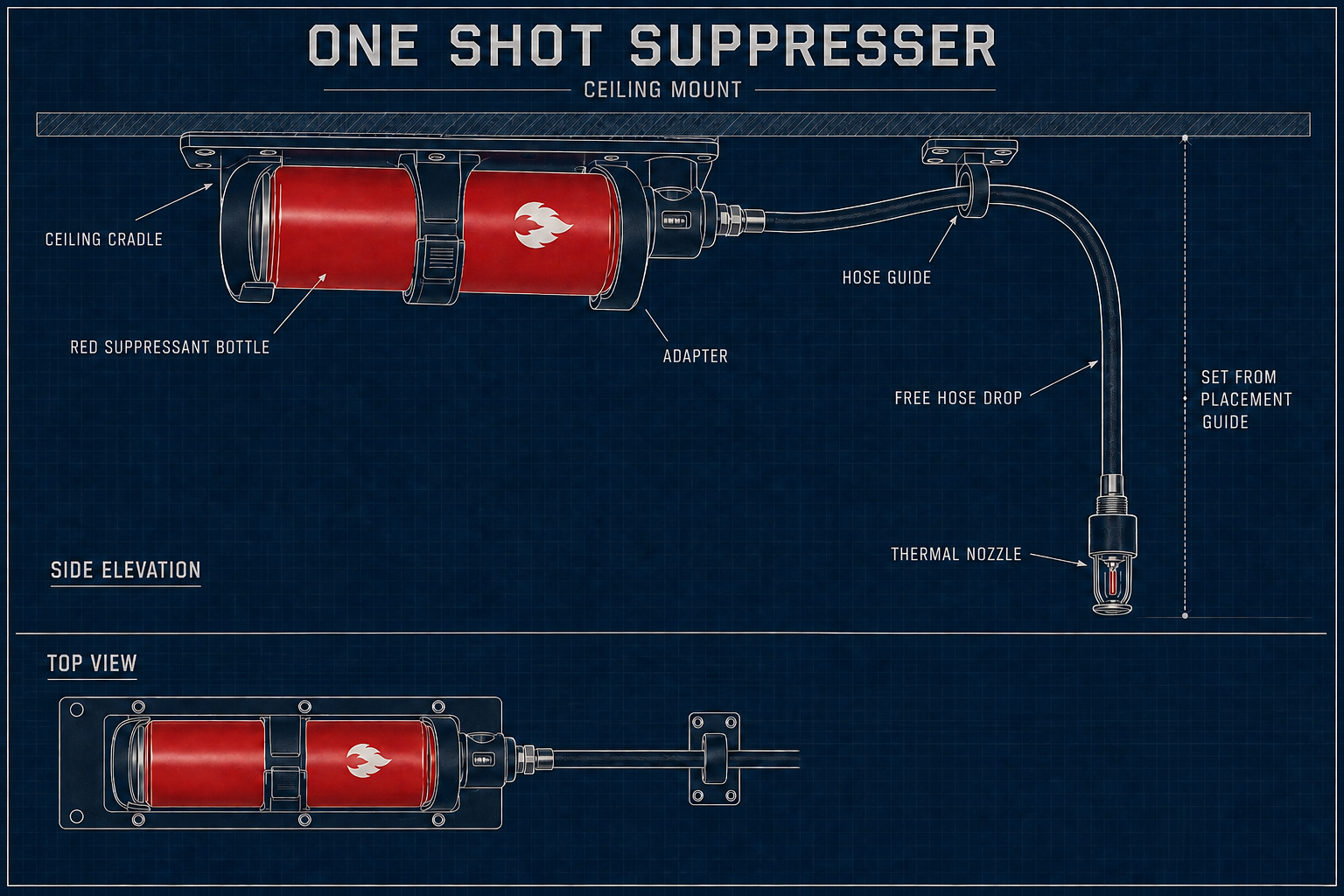
A flat mounting spine holds the black cradle against the ceiling. Retaining bands support the bottle, with its valve seated in the adapter at one end.
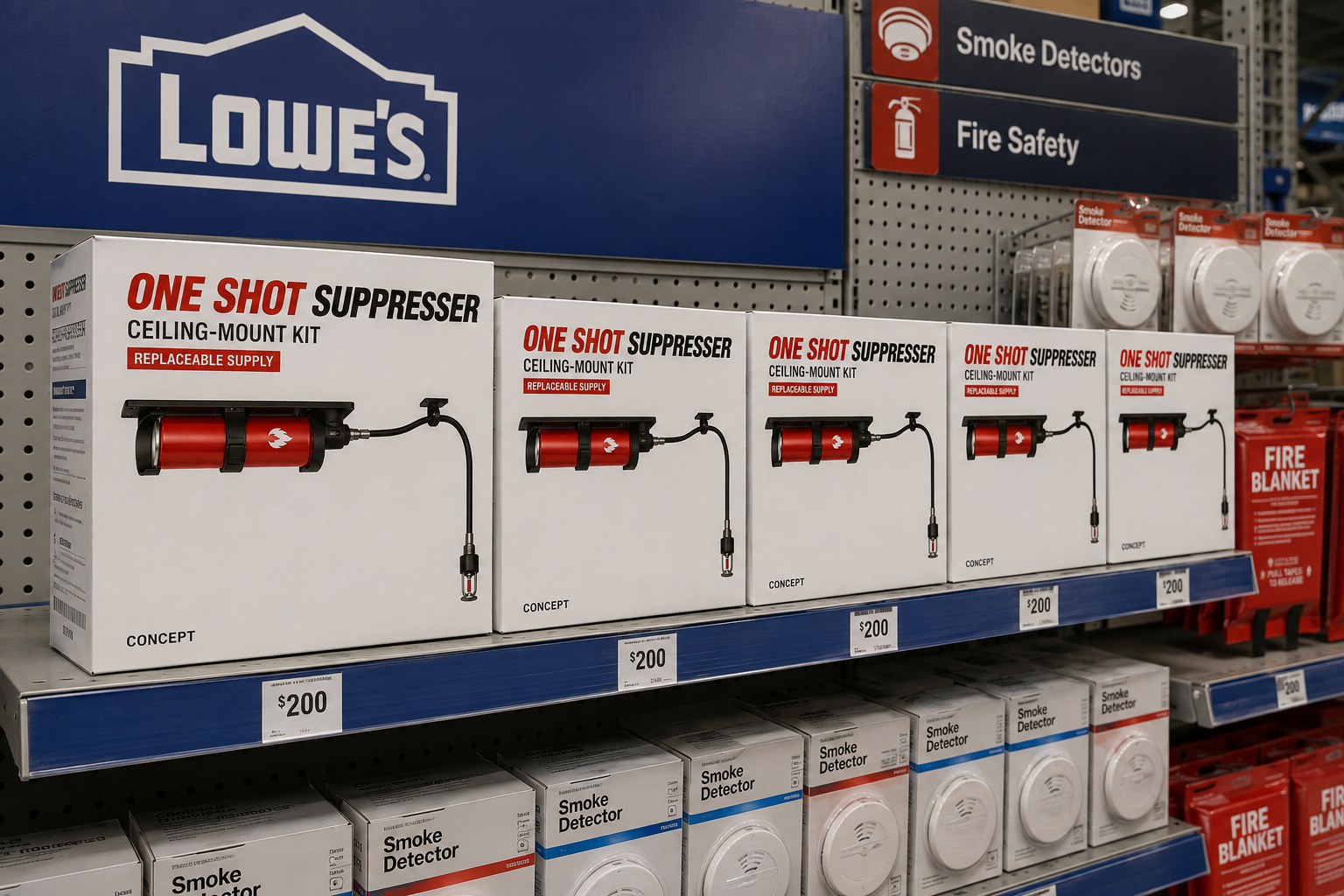
A little more help when somebody forgets the stove. A proposed $200 ceiling-mounted kit for kitchens without a hood puts a replaceable 16 oz can of fire suppressant above the cooking area, ready for a heat-release nozzle to open.
The real peace of mind is remembering to turn the stove off. But the phone rings, somebody needs help, attention shifts, and a pan stays on the heat. Unattended cooking is a leading contributor to home cooking fires, as NFPA’s cooking-fire research documents.
One Shot Suppresser proposes a small automatic response close to that problem. Heat at the nozzle releases a local supply of suppressant. The aim is to keep an emerging cooking fire from growing, or slow its growth, with a household product that is simple to see, understand, and replenish.
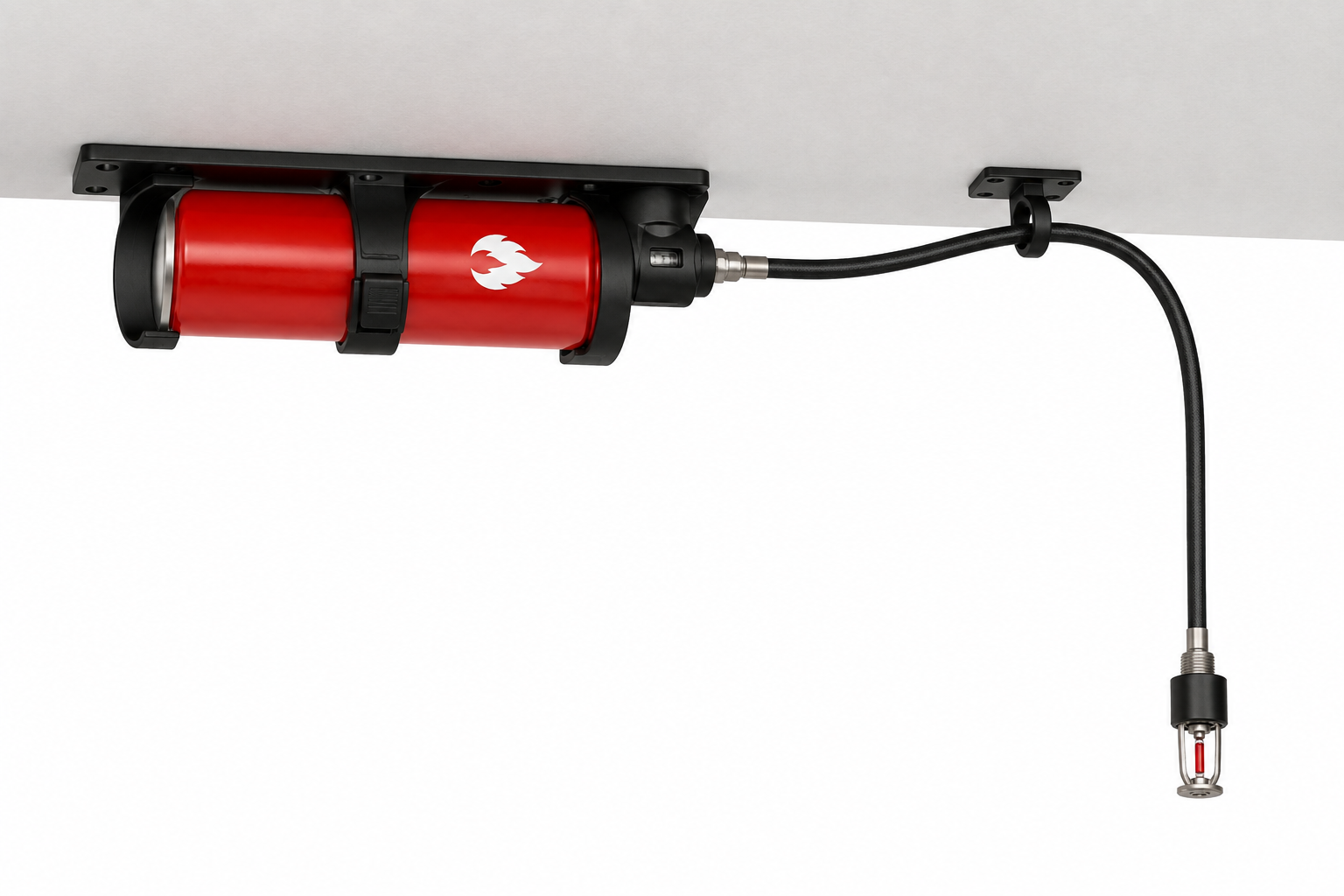
The bottle lies on its side. Both the cradle and the hose guide attach to the ceiling. The guide positions the hose; the hose continues through it and hangs down to the nozzle.
A flat mounting spine holds the black cradle against the ceiling. Retaining bands support the bottle, with its valve seated in the adapter at one end.
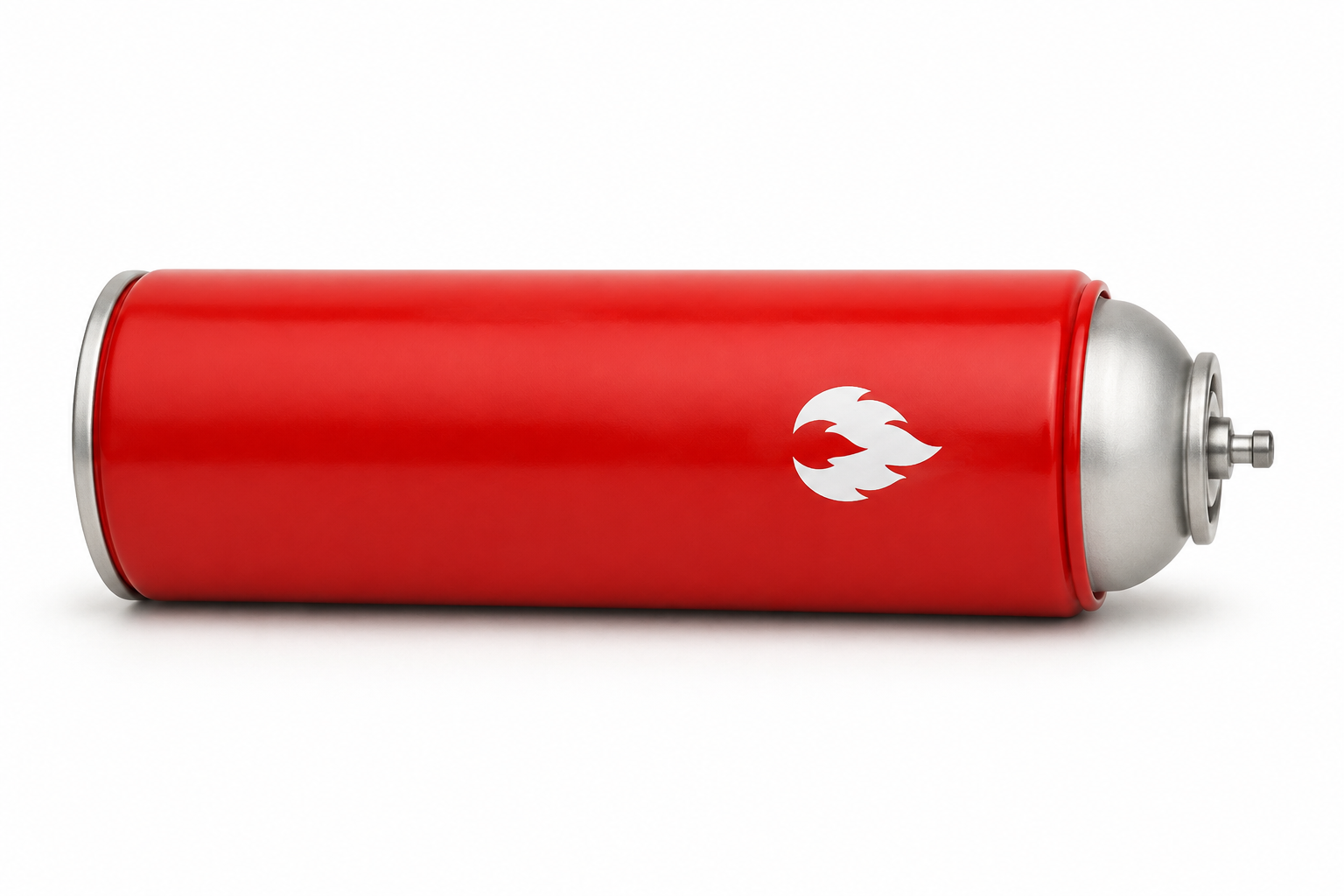
The replaceable supply is a 16 oz fire-suppressant spray can, shown here as a red bottle. Inserting it into the adapter would engage its valve and charge the hose; removing it would release the hose pressure.
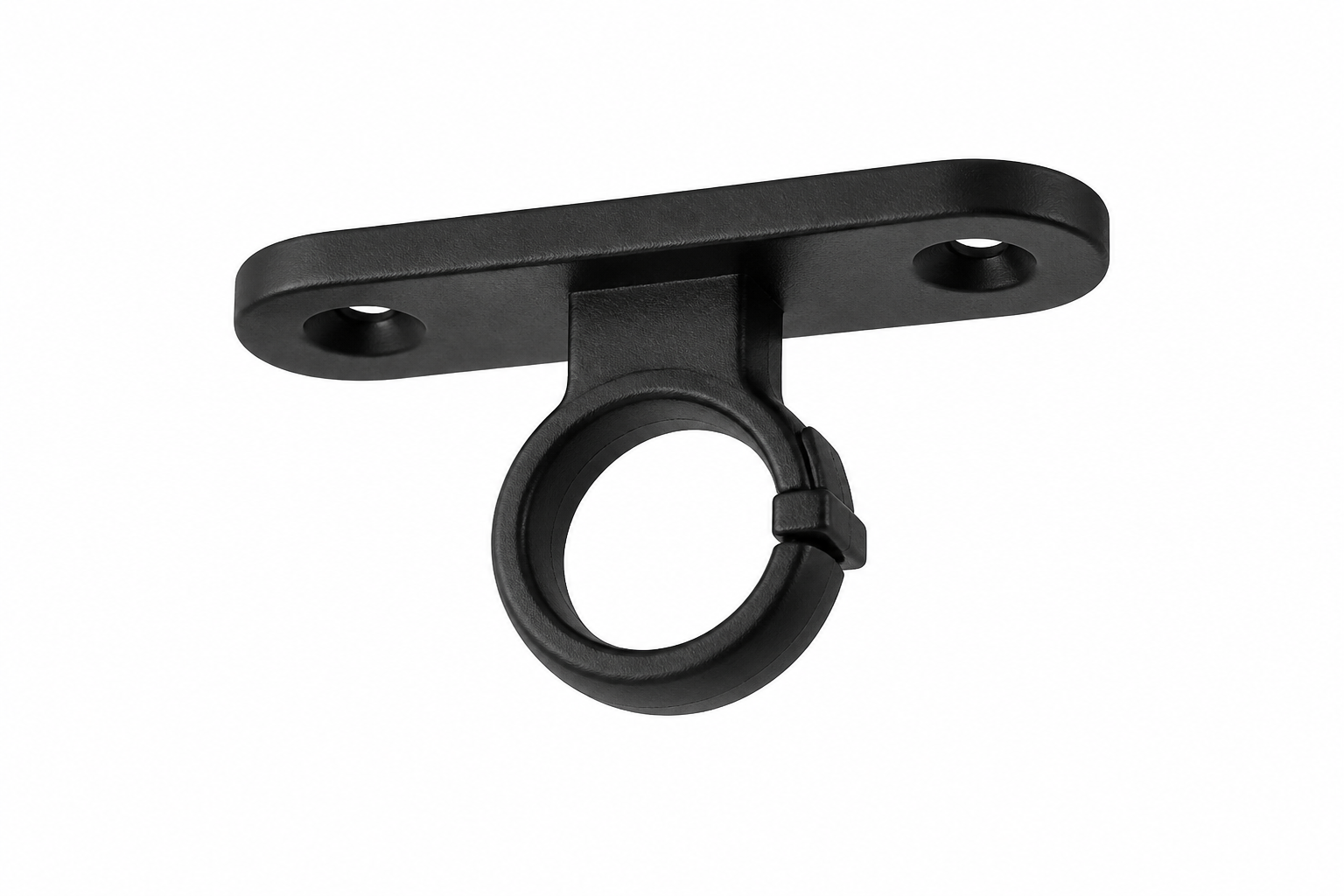
A separate bracket carries a smooth eyelet. Its position establishes where the hose leaves the ceiling and begins its free drop.
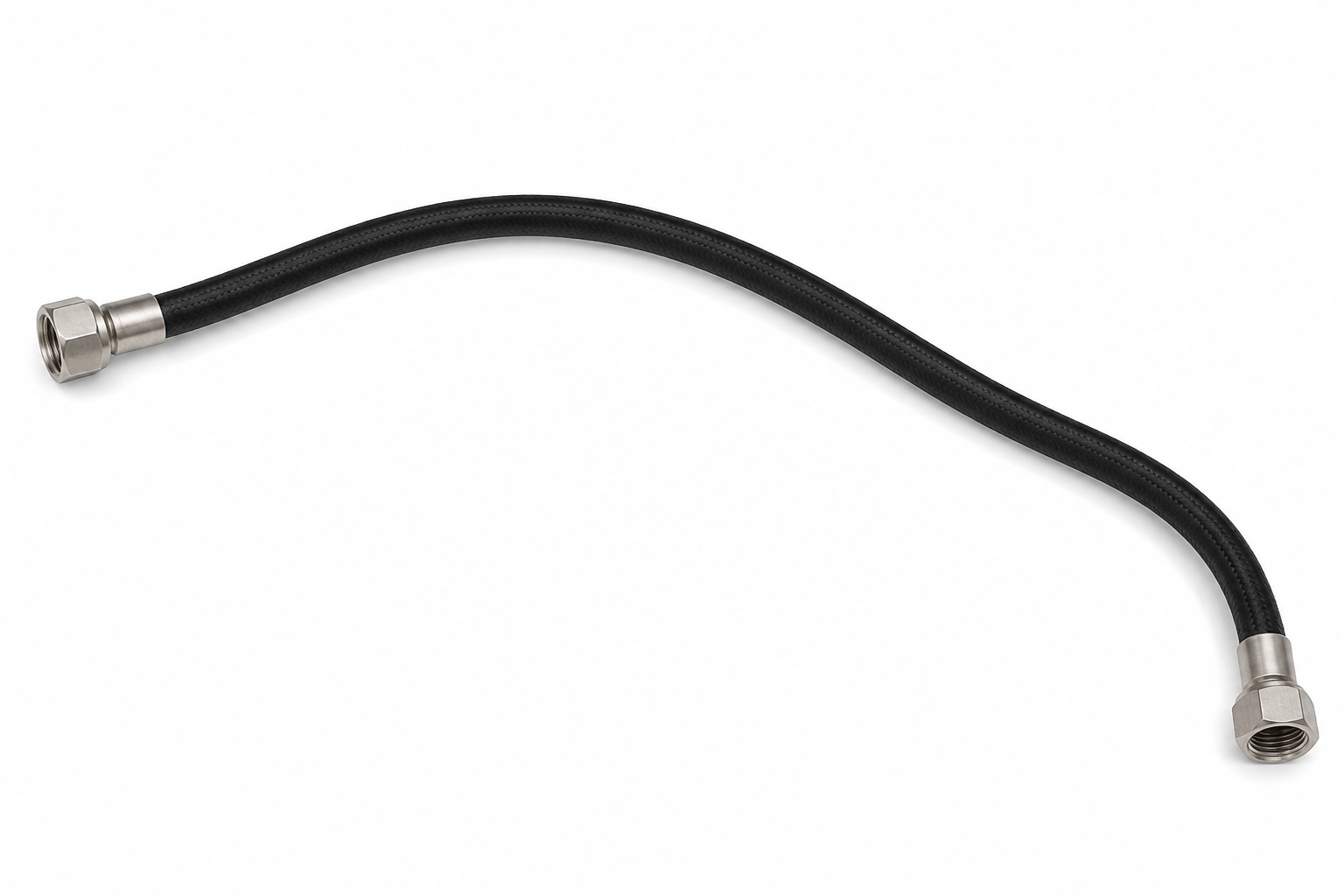
The hose connects the adapter to the nozzle. It passes through the guide and curves down beyond it, leaving the tip suspended over the cooking area.
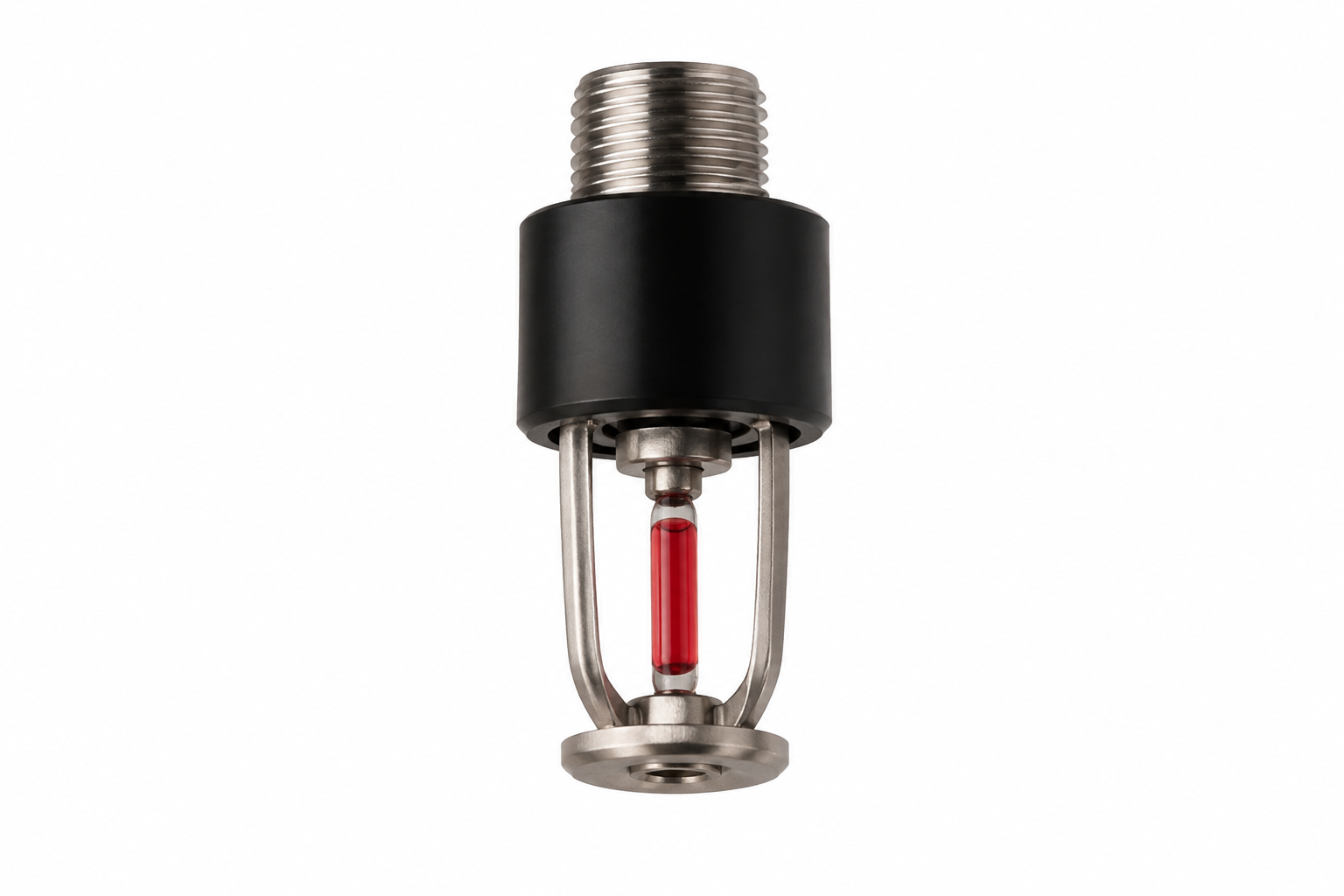
A heat-sensitive glass bulb holds the outlet closed. When the bulb releases under heat, the outlet opens and the stored supply can discharge.
Keeping the bottle horizontal brings its bulk close to the ceiling. Moving the guide places the hanging tip over the intended cooking area without moving the whole bottle. The hose’s free drop establishes the remaining distance.
The adapter carries a mechanical telltale. With no hose pressure, a spring pushes a red pin into view. Pressure pushes against that spring and retracts the pin. Loss of pressure becomes visible without a battery, screen, or app.
Spring extended. Red pin visible.
Spring compressed. Red pin retracted.
Schematic cutaways show the intended indicator motion. The nozzle’s red glass bulb is a separate part. Pressure indication reports pressure; it does not measure suppressant quantity or prove the discharge path is clear.
The intended DIY experience is a bracket, a tape measure, and a compatible refill. The kit would supply the matched bottle list and placement guide needed to turn that simple sequence into a repeatable installation.
The kit is designed around a 16 oz replaceable spray can. Fire Gone FG-007-102 is an existing 16 oz (454 g net weight) household suppressant. First Alert EZ Fire Spray AF400 and Kidde Flame Out KAP-14K are other familiar small-can products to evaluate for additional adapter sizes.
The intended adapter would take the place of a compatible can’s removable spray head while retaining its sealed valve. These brands are candidates for fit evaluation: their published documentation does not establish removable-head compatibility with this assembly. The matched-can list would identify the exact refill and adapter pairing, including valve fit, seals, and delivery while the can lies horizontally.
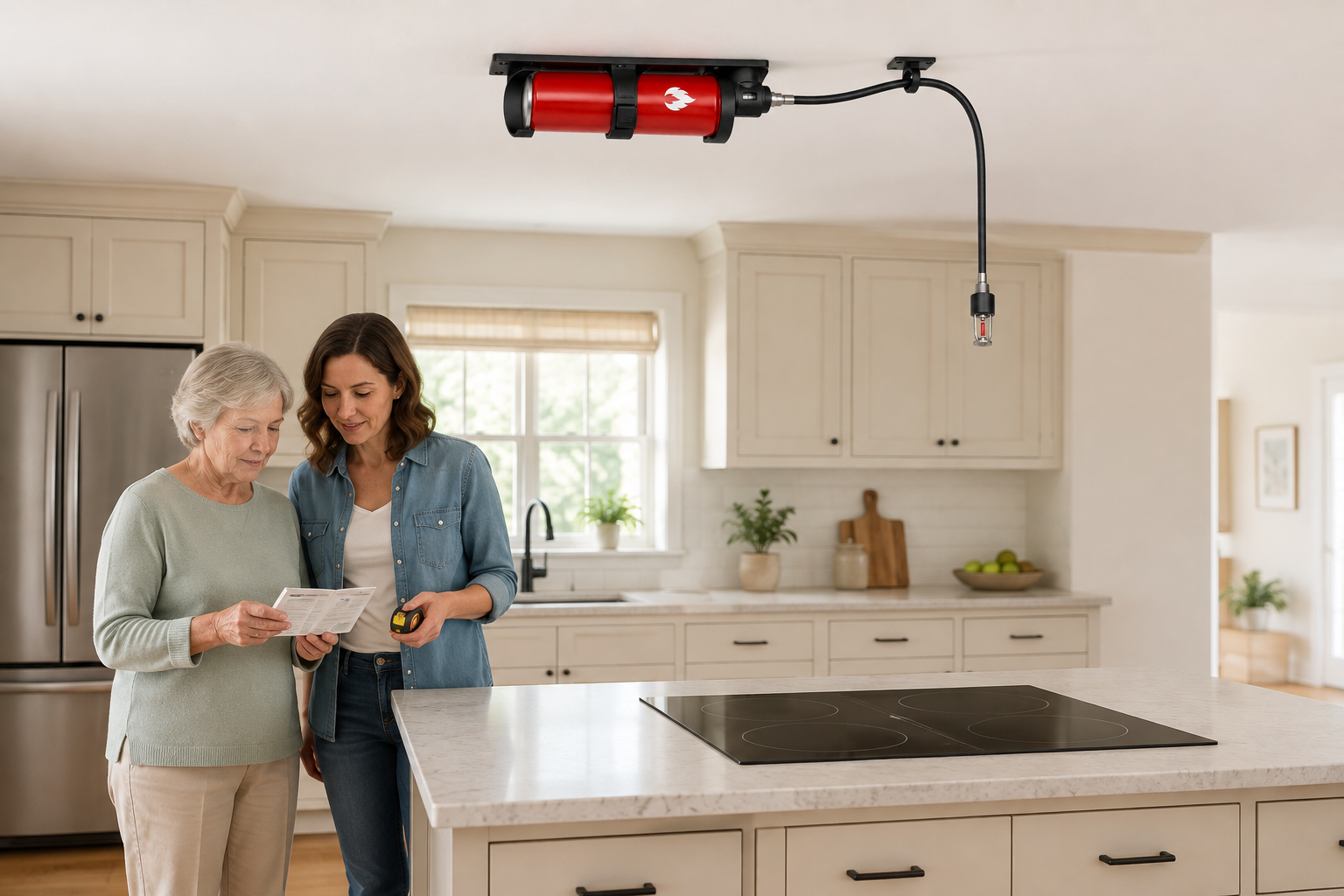
An older person who wants to keep cooking independently. An adult child helping make a parent’s home easier to manage. Someone with ADHD who knows how quickly an interruption can pull attention away. A busy household where cooking competes with everything else.
The audience is defined by a familiar lapse, rather than a diagnosis. A clearly visible refill and a plain mechanical indicator could make the product easier for household members to understand together. The attraction is a practical extra response already waiting above the stove.
The target is an approachable DIY purchase: cradle and adapter, guided hose, thermal nozzle, mounting hardware, a matched 16 oz suppressant can, and a clear placement guide in one kit. Replacement supply should be easy to identify beside it.
No ventilation hood is needed to mount One Shot Suppresser. StoveTop FireStop’s Rangehood device attaches magnetically beneath a metal ventilation hood; its product page specifies 24–35 inches between the mounting surface and stovetop. One Shot Suppresser is proposed for kitchens without that hood: the ceiling supports the supply and guide, and the hose brings the nozzle down over the cooking area.
The $200 target has to earn its place through the complete installation experience, refill availability, and demonstrated cooking-fire performance. The assembly pictured here makes the proposed object concrete; engineering and fire testing would establish compatible supplies, placement limits, and useful suppression coverage.