Twelve ways laundry could smell beautiful. And a little more time before it sours.
“Spring Breeze” does not smell like spring. It smells like detergent.
This critique begins with a personal observation: I have never encountered a supermarket laundry detergent whose odor I enjoy. The American laundry aisle offers an abundance of colorful bottles and imaginary weather. The experience of wearing their contents has been considerably less varied.
That familiar detergent smell is so closely associated with washing that it can stand in for the result. Open the dryer and there it is: evidence, apparently, that the clothes are clean. Yet the fragrance is also something we will wear against our bodies, carry into a room, and sleep beside. It deserves the attention given to any other scent chosen for those purposes.
Good alternatives already exist. Cleancult's Rose Petal and its wider range, Seventh Generation, and boutique detergent makers offer other directions. Fragrance-free products are common and useful. The complaint is about the dominant American supermarket selection and the imagination it leaves unused.
A company capable of making detergent at enormous scale can also work with modern aroma materials. Give it a clear base and an interesting brief. Freshly ironed cloth. A clothbound book. Bubble bath. A warm, mineral wood that exists chiefly in the imagination.
Artificiality can be a pleasure. Here are twelve compositions worth imagining on cloth.
Candlewood
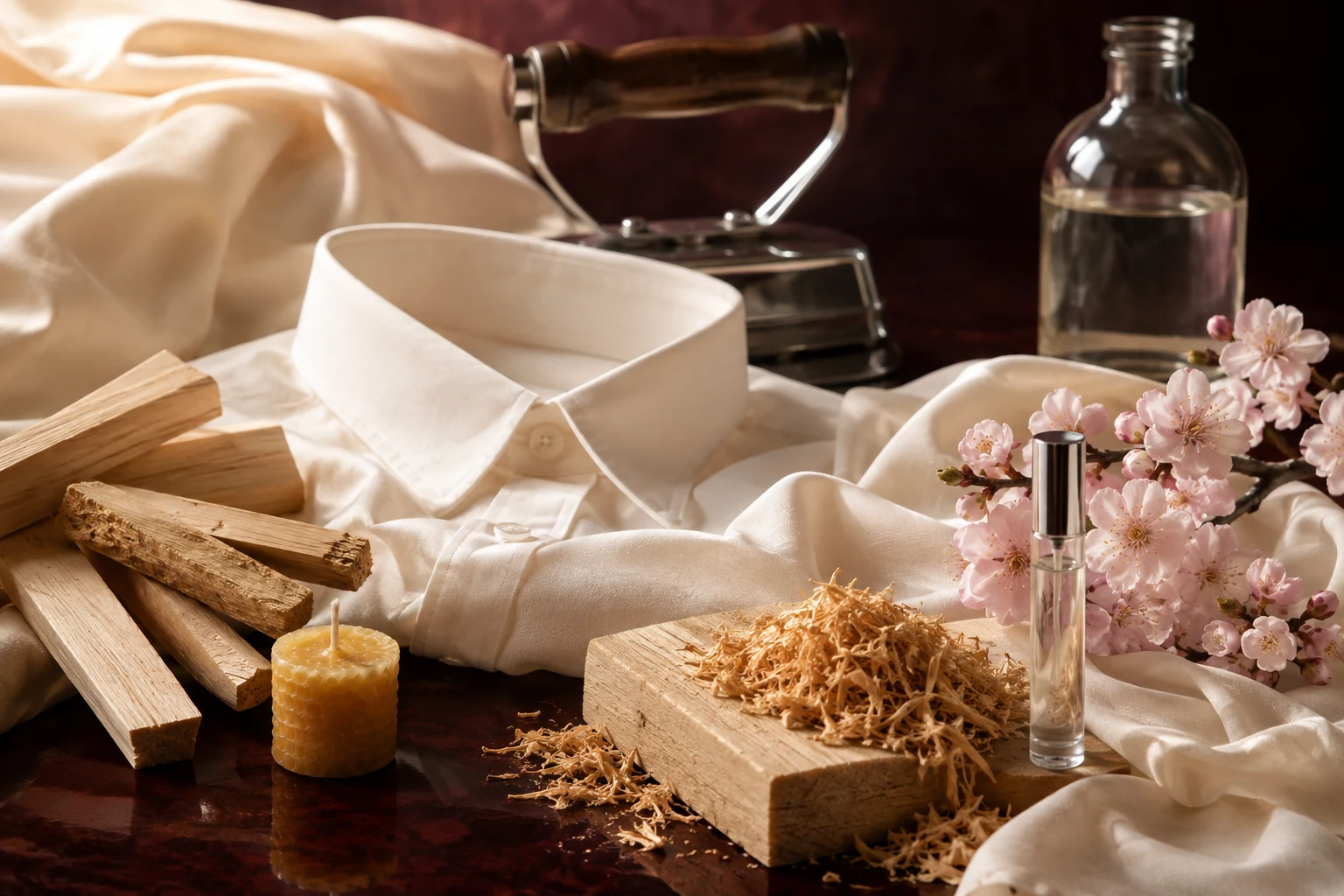
Ambrox gives Candlewood its warm, mineral glow. Pale wood and a little wax round out the impression: something smooth, dry, and quietly luminous, especially when a shirt warms against the body. The name supplies a small imagined place for the fragrance to inhabit.
This is an argument for the pleasure of synthetic perfumery in its simplest form. A familiar aroma material, composed with care, could give an everyday detergent a scent worth choosing. The liquid can remain perfectly clear.
Freshly Ironed
There is a particular pleasure in the smell of cloth just after the iron has passed over it. Heat, a suggestion of steam, the dryness of pressed cotton: the garment seems finished in a way that extends beyond its appearance.
Many clothes never need an iron. Their detergent could still evoke that moment. This composition would be developed around warm tumble-dried fabric and the way it smells as it cools, carrying the impression of a freshly pressed shirt into an ordinary load.
Hinoki
Hinoki brings the thought of pale Japanese cypress: aromatic wood with room for air around it. The fragrance should feel close to a freshly worked surface, with a little resinous depth and a gentle dry finish.
It belongs naturally on a towel, a robe, or bedding. An impression of wood can be reconstructed and balanced for fabric, giving the manufacturer freedom to make the fragrance consistent through washing and drying.
Marula Blossom
Marula Blossom would be smooth, softly floral, and quietly creamy: a polished blossom fragrance that feels at home on clean cloth. Its reference is the marula-associated scent found in fragranced products, interpreted here as a fabric perfume.
Imagine the pale floral impression of a cherry-blossom composition settling into a freshly washed shirt. The charm is in that composed softness, with enough body to remain present after drying and enough restraint to wear comfortably.
Pine Resin
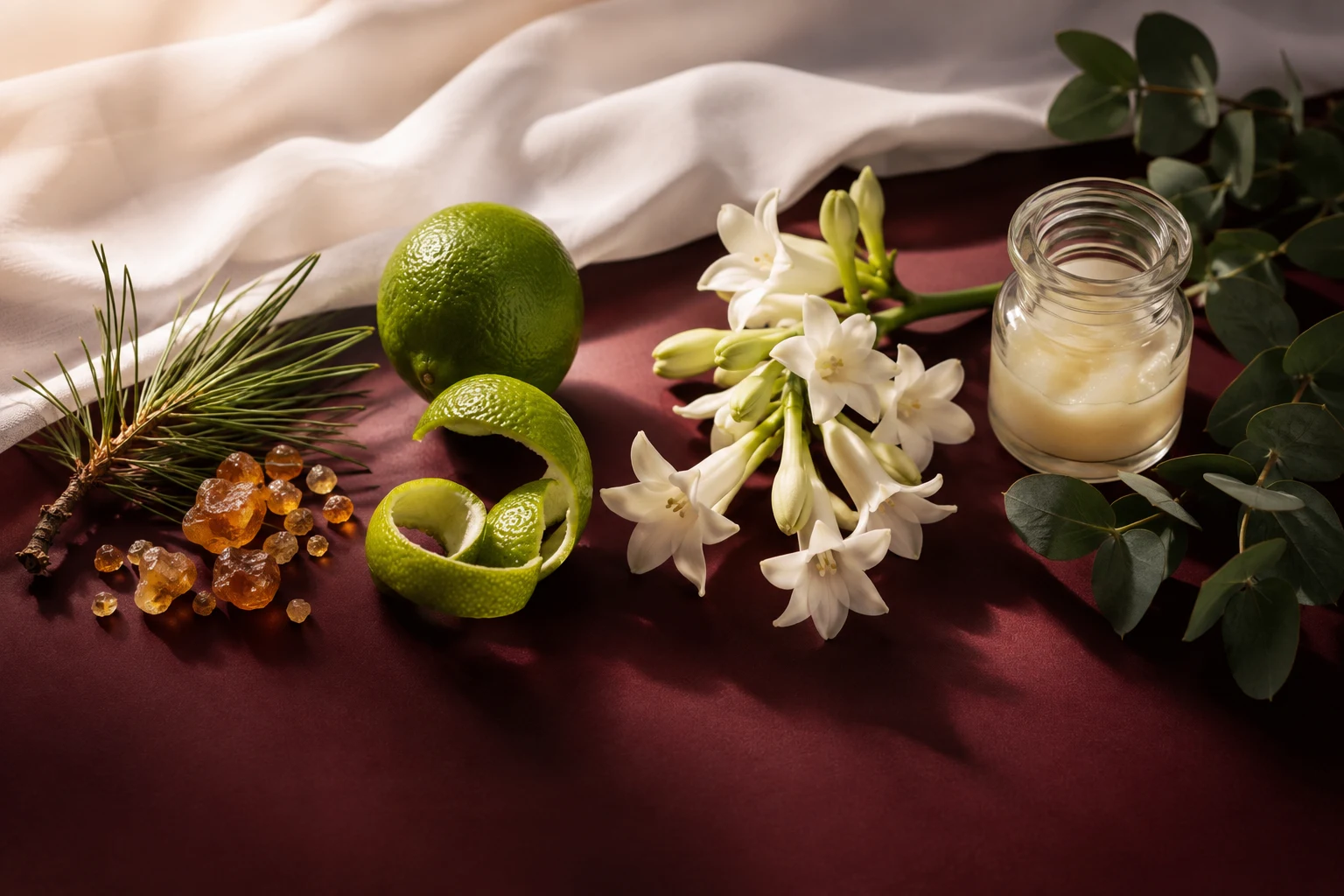
Crushed needles and the warm resin at a break in the branch. Pine Resin would put the balsamic body first: rounded, slightly bitter, with dry wood underneath and a cool green edge. The resin pieces in the still life suggest its weight and warmth.
On a towel, the opening should feel freshly aromatic; on a worn shirt, the quieter resinous part should remain. Keep the sweetness low and the sharpness brief, so the result has the fullness of pine without the piercing insistence of a floor cleaner.
West Indian Lime
A classic shaving-soap fragrance translated into cloth: dense white lather, bitter-green aromatics, a restrained floral softness and a little dry spice. The finished impression should be unmistakably a toiletry, with no recognizable fresh-lime smell. Its name belongs to the bathroom cabinet, not the fruit bowl.
Petitgrain, neroli and a trace of clove offer a direction for the composition, folded into a rounded, clean soap accord. Truefitt & Hill’s West Indian Limes combines those notes with an explicitly citrus opening; this laundry interpretation would instead give the aromatic, floral and soapy body the whole stage. Think of the scent left in a shaving bowl, carried into a freshly washed collar.
Tobacco Flower
The rich, powdery perfume of an old-fashioned shaving soap: floral spice, aromatic herbs, soft wood and a clean musky warmth. Tobacco Flower would be a composed barbershop scent, with the floral notes worked into the soap’s body rather than presented as a freshly picked blossom. Neither smoke nor a botanical portrait belongs at its center.
Tabac Original shaving soap offers a useful reference for that structure: pepper, bergamot and petitgrain above carnation, lavender and geranium, settling into sandalwood, musk and vetiver. For cloth, the proposed balance favors the powdery floral-spice heart and dry woody finish: substantial enough to recognize on a shirt, soft enough for the pillowcase.
Blue Camphor
The familiar scent of Vicks VapoRub has an appeal of its own: the cool aromatic opening, the camphoraceous depth, the comforting association of a small jar being opened. Blue Camphor carries that memory into a fabric fragrance.
On towels, robes, or winter bedding, a quiet version could be lovely. The target is the recognizable aromatic composition and the pleasure of smelling it; this is a fragrance brief, with no treatment claim.
Milkglass
Vanilla oleoresin with a faint dairy note: the soft, creamy impression of plain soft serve, caught at the instant before it becomes a dessert fragrance. The sweetness stays low enough that the cloth remains the main event.
Milkglass would be especially at home on sheets and blankets. Its name suggests the translucent material as much as the creamy scent. This is a perfumery accord; the effect comes from composition and proportion.
Bookcloth
A well-made clothbound book offers an unusually fitting reference for laundry: textile, paper, and the quiet dryness of an object kept with care. Bookcloth would make that association clean, close, and wearable.
The pleasure lies in the materials themselves. A shirt could carry a little of the intimacy of opening a beautiful volume. It gives synthetic perfumery a tactile brief, something more particular than another promise of freshness.
Aquatic Sunrise
Bubble bath is already a persuasive example of beautiful artificiality. Warm water, fragrant foam, and a familiar bath-product smell can form a deeply enjoyable experience without reproducing a natural landscape.
Aquatic Sunrise begins there. Imagine that rounded, buoyant fragrance translated into clean towels and everyday clothing, with the softness of the bath retained after drying. The name gives it light and atmosphere; bubble bath gives the perfumer a concrete reference.
Addams Family Recipe
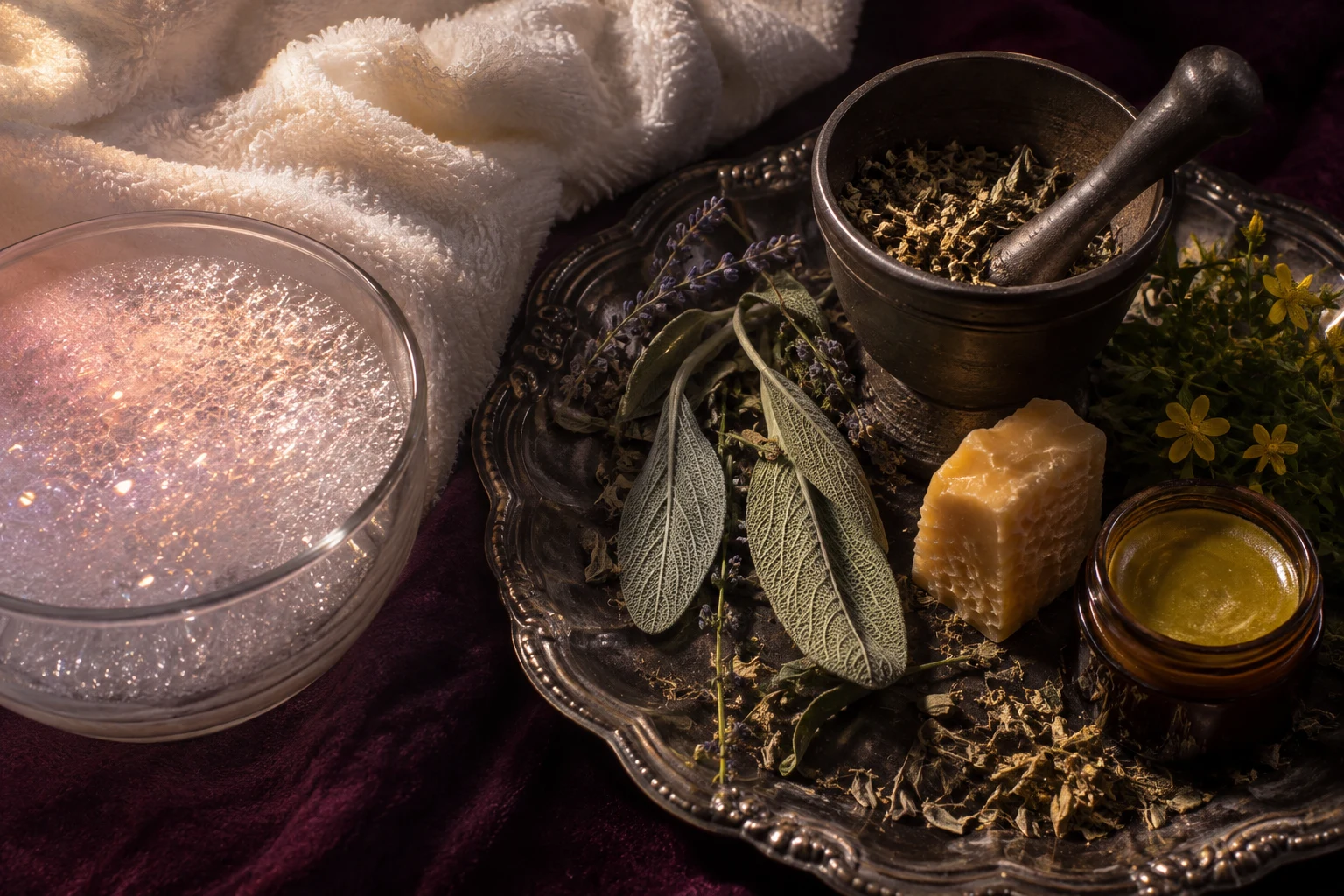
St. John's wort, sage, lavender, and beeswax: a bitter herbal balm. Sage gives it a dry, pungent, camphoraceous edge. The St. John's wort impression brings a darker herbal and balsamic quality. Lavender contributes its aromatic stems and cool herbal lift as much as its flowers. Together they should smell concentrated, slightly medicinal, and pleasingly austere.
Beeswax rounds the sharp edges with a dense, mellow warmth. The composition suggests crushed herbs worked into an old apothecary balm, its waxy scent released when the lid comes off. On fabric, that bitterness could be remarkably satisfying: a little eccentric, deeply aromatic, and warm underneath. Addams Family Recipe is the jar kept behind the ordinary things in the linen cupboard.
Why does clean laundry sour so easily?
The washer has just spent a whole cycle cleaning the clothes. Leave them sitting a little longer than intended and they can develop that sour, stagnant smell. Now the same load needs another wash, consuming more detergent, water, electricity, and time. It is an irritating weakness in a product category that promises so much freshness.
New detergents should include natural antimicrobial ingredients chosen to suppress the activity that produces wet-laundry odor. Plant-derived antimicrobial compounds offer a direction worth developing into the cleaning formula itself. The objective is straightforward: a washed load should tolerate a delay before drying without turning sour.
The useful ingredient is one that works through an actual wash at a skin-compatible concentration and leaves the fabric pleasant to use. Manufacturers should establish how much additional time the finished formula provides. That would be a practical improvement to everyday laundry, shared by every scent in the range.
Bay Rum and Cold Cream belong in body wash. Both compositions would open beautifully in warm shower water, and each has a distinct recipe behind the name.
Bay Rum
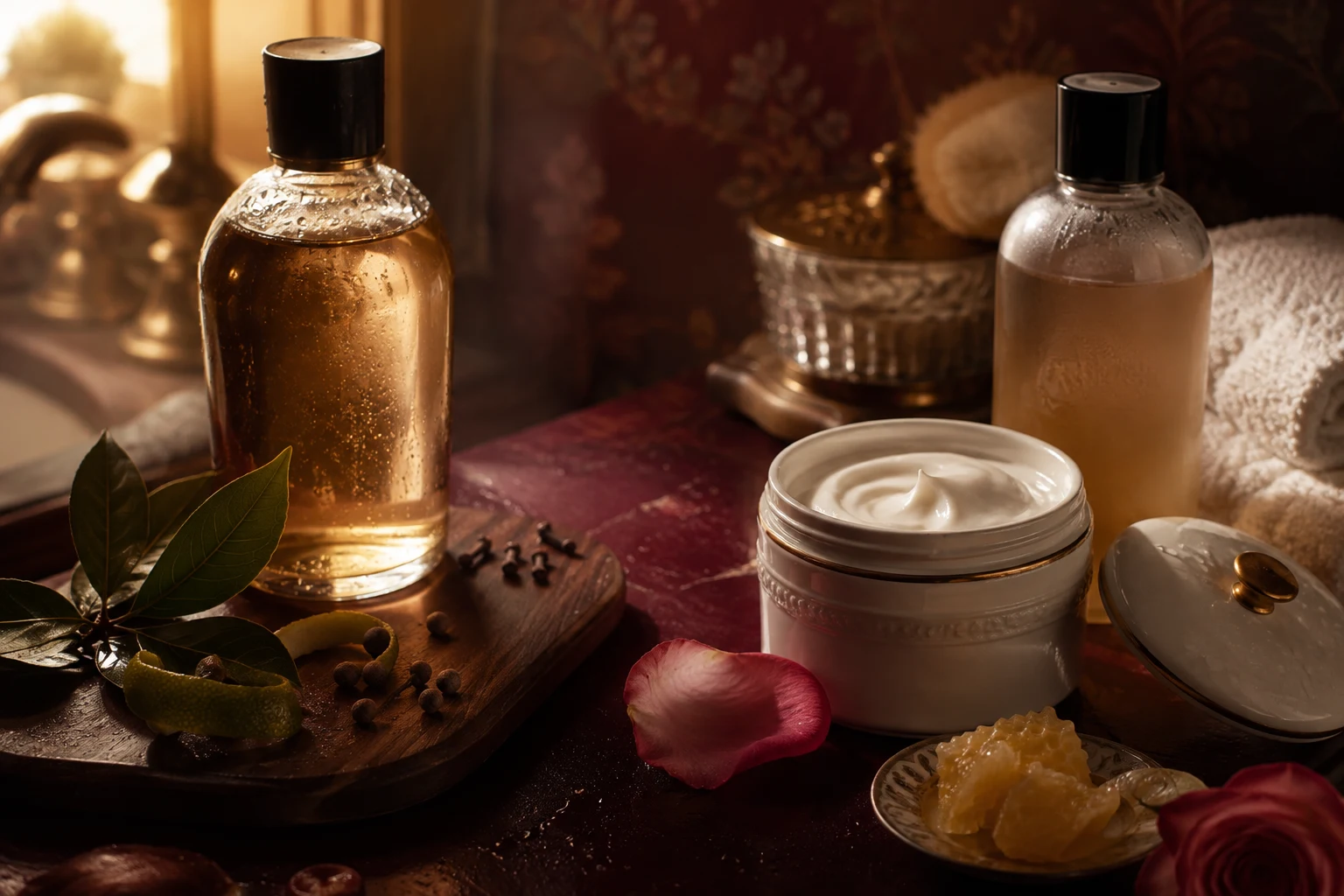
West Indian bay leaf, lime peel, pimento, a little clove, and dry wood. The bay supplies the aromatic body; lime brightens the opening, while allspice and clove bring a warm, dry spiciness. Wood gives the composition somewhere to settle.
In a body wash, that classic barbershop character could expand through the steam, then leave a restrained trace after rinsing. The laundry collection already explores related toiletry pleasures through West Indian Lime and Tobacco Flower. Bay Rum earns its place at the shower instead.
Cold Cream
Orris, a trace of rose, beeswax, a pale mineral-oil impression, and a quiet skin musk. The recipe follows the waxy, softly powdered smell of an old jar of face cream. Orris gives it a dry powderiness, rose softens the center, and beeswax supplies the rounded ointment character.
A body wash could carry that intimate dressing-table scent into a creamy lather: cool porcelain, faint powder, warm skin, and the familiar smell of the jar just opened. Its appeal is specific enough to deserve a composition of its own.
Leave out the softener.
Dryer sheets and fabric softeners leave another chemical treatment on the clothes you have just washed. Some quaternary ammonium compounds irritate skin; added fragrance can contribute irritation and contact allergy. The coating can also reduce cotton's absorbency. It is an optional treatment worn against the body for hours, and one more purchase the laundry routine can do without. Skip it.