Engineered Crops
Start designing plants around the molecules you want.
Modern solutions demand modern problems
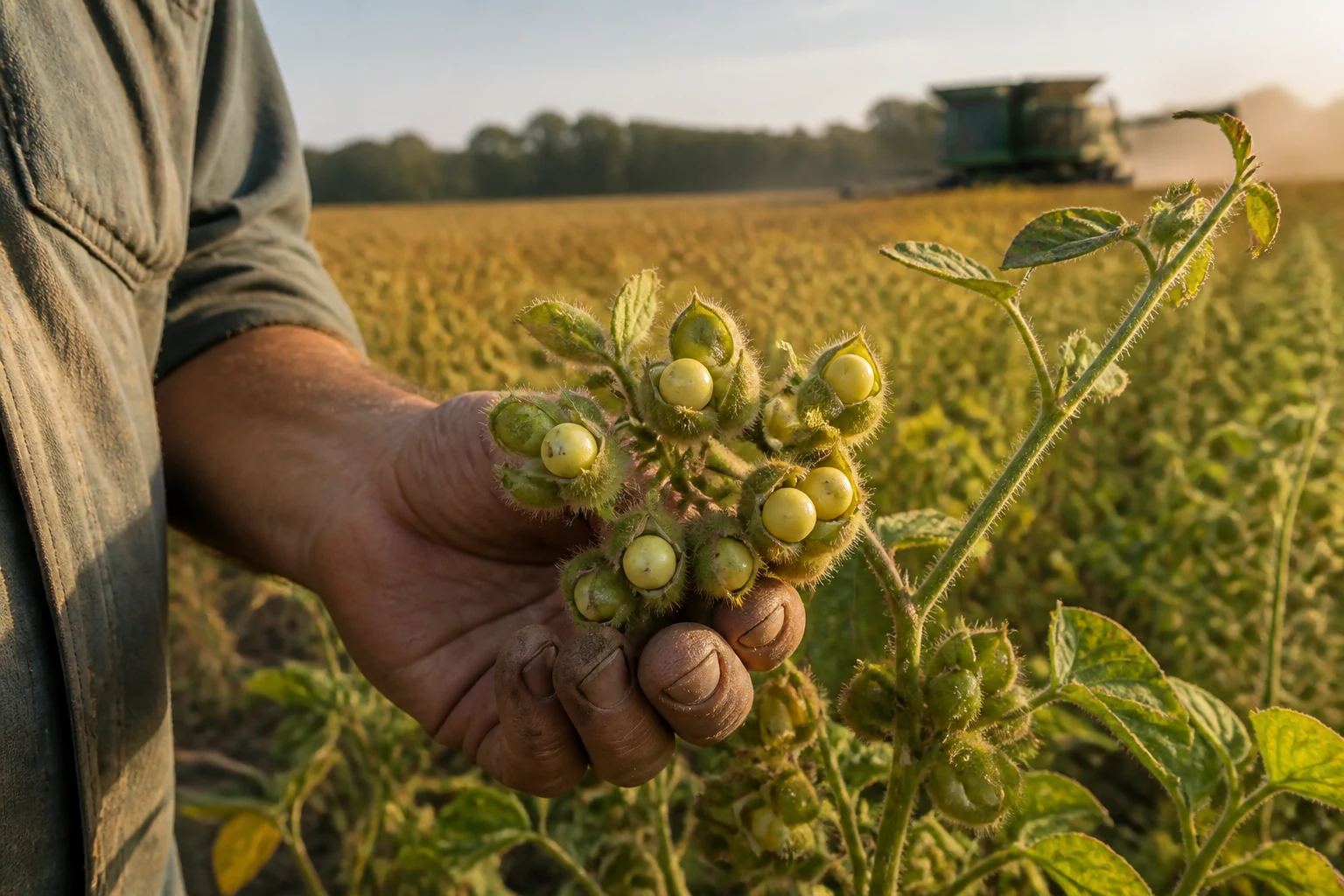
Conventional crops arrive with evolution’s packaging decision intact. Soybean, rapeseed, sunflower, and other plants accumulate concentrated energy in seeds because an embryo needs it. Agriculture harvests that reproductive package, extracts what is useful, and then refines, modifies, or blends the yields downstream.
This means a lot of resources go into producing behavior that humans simply throw away. Yes, we could reclaim more of it: today people have started, for example, recapturing coffee waste from the fruit around the bean and trying to turn that into a healthfood.
I propose technology has advanced enough we should move in the opposite direction- we now have the ability to engineer life and to produce recombinant plants from source DNA. We can take the properties of different plants and merge them into one. For refined industrial products, including oils, proteins, etc, we should do this. For quality latex, we must- there is a huge latex shortfall.
Engineering can now reach the pathway
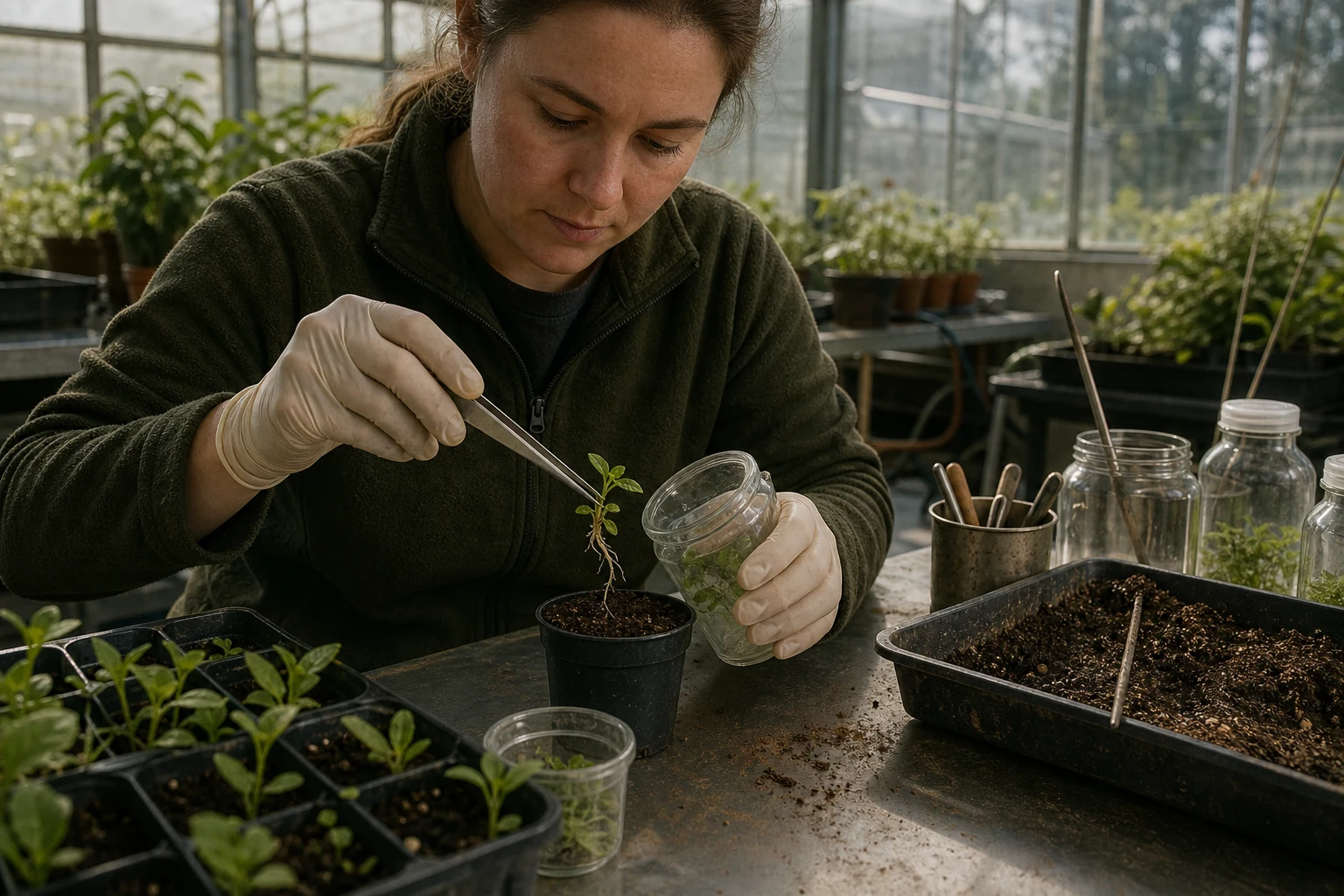
Plant engineering has moved beyond adding a single pesticide or herbicide trait. Transgenesis can install genes from another organism; CRISPR can alter native genes and regulatory regions; multiplex editing can change several targets together; and synthetic-biology stacks can reconstruct portions of a metabolic pathway. More than 90 percent of American corn, cotton, and soy acreage already uses genetically engineered varieties, although the dominant commercial traits remain herbicide tolerance and insect resistance.
The clearest proof for this page is oil itself. Researchers installed a four-component microalgal synthesis system in canola and produced DHA and EPA in field-grown seed without a reported seed-yield penalty. It is a commercially legible oil pathway operating in a major crop, with the complete organism remaining a larger engineering problem.
The remaining barrier lies in regenerating a changed pathway into a fertile plant, supplying it with enough carbon, confining it to the right tissue, keeping it stable across weather and generations, and improving the economics of an acre. Engineering can now reach the pathway. Whole organisms still resist composition as if their traits were interchangeable parts.
Oils, revisited
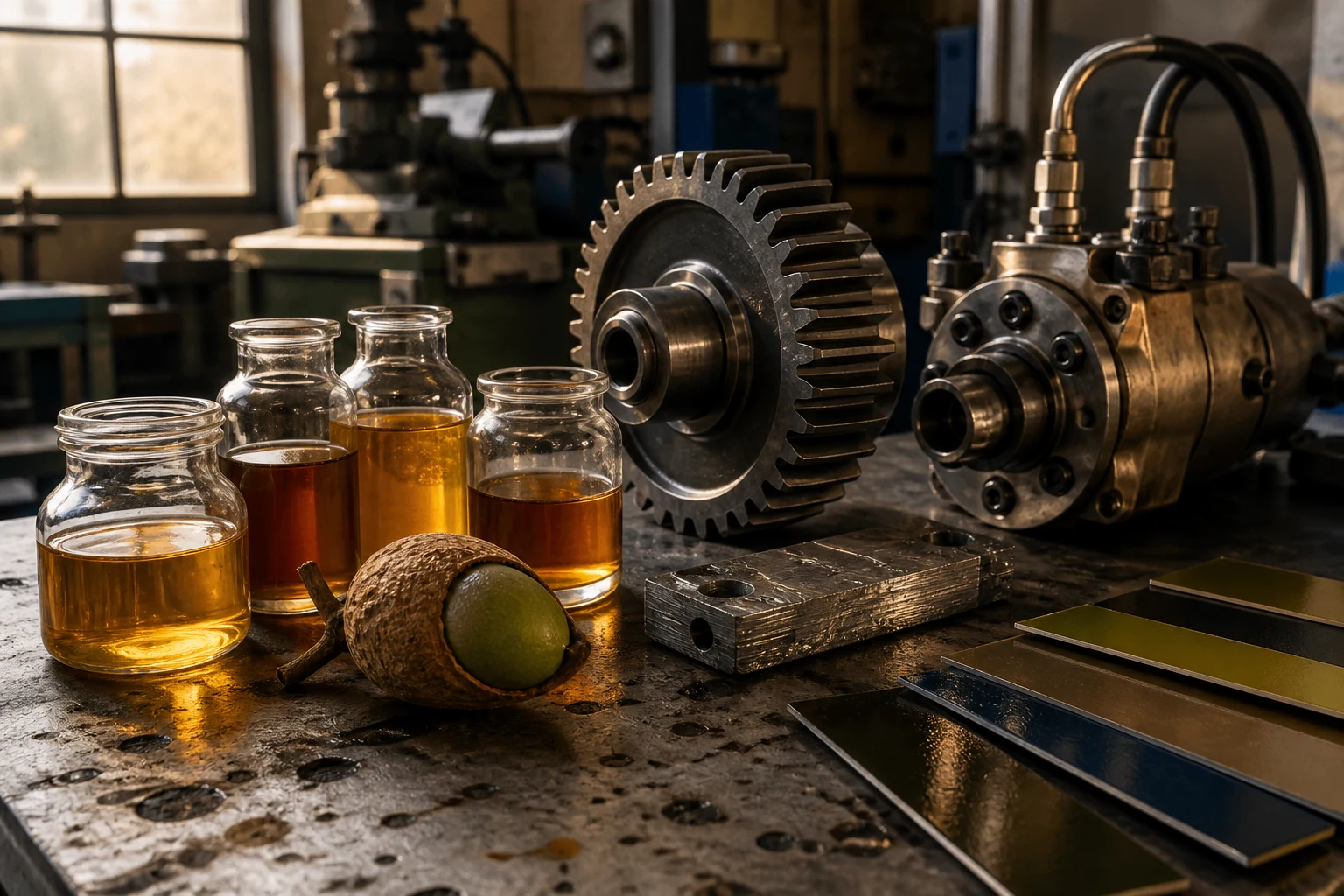
A food cultivar could be high-oleic for oxidative stability while carrying a deliberate supply of long-chain omega-3s. A coatings cultivar could favor drying behavior. A hydraulic-fluid cultivar could make wax esters or other molecules selected for film strength, viscosity, low-temperature flow, and resistance to rancidity. The crop would still need refining and toxicology; it would simply begin closer to the required molecule.
Sperm oil and spermaceti once served in cutting oils, transmissions, hydraulic fluids, rust preventatives, and fine machinery because their liquid wax esters performed unusually well. The ecological cost of whaling forced industry toward petroleum and synthetic substitutes. Jojoba later demonstrated that a cultivated plant could make a comparable liquid-wax feedstock; sulfurized jojoba performed comparably or better than sulfurized sperm oil in several extreme-pressure lubricant tests.
Purpose-built crops could recover the chemical freedom industry once obtained from a natural liquid wax, then grow better analogues without whales and, where performance allows, without fossil carbon.
Latex is widespread, but rubber remains unfinished science
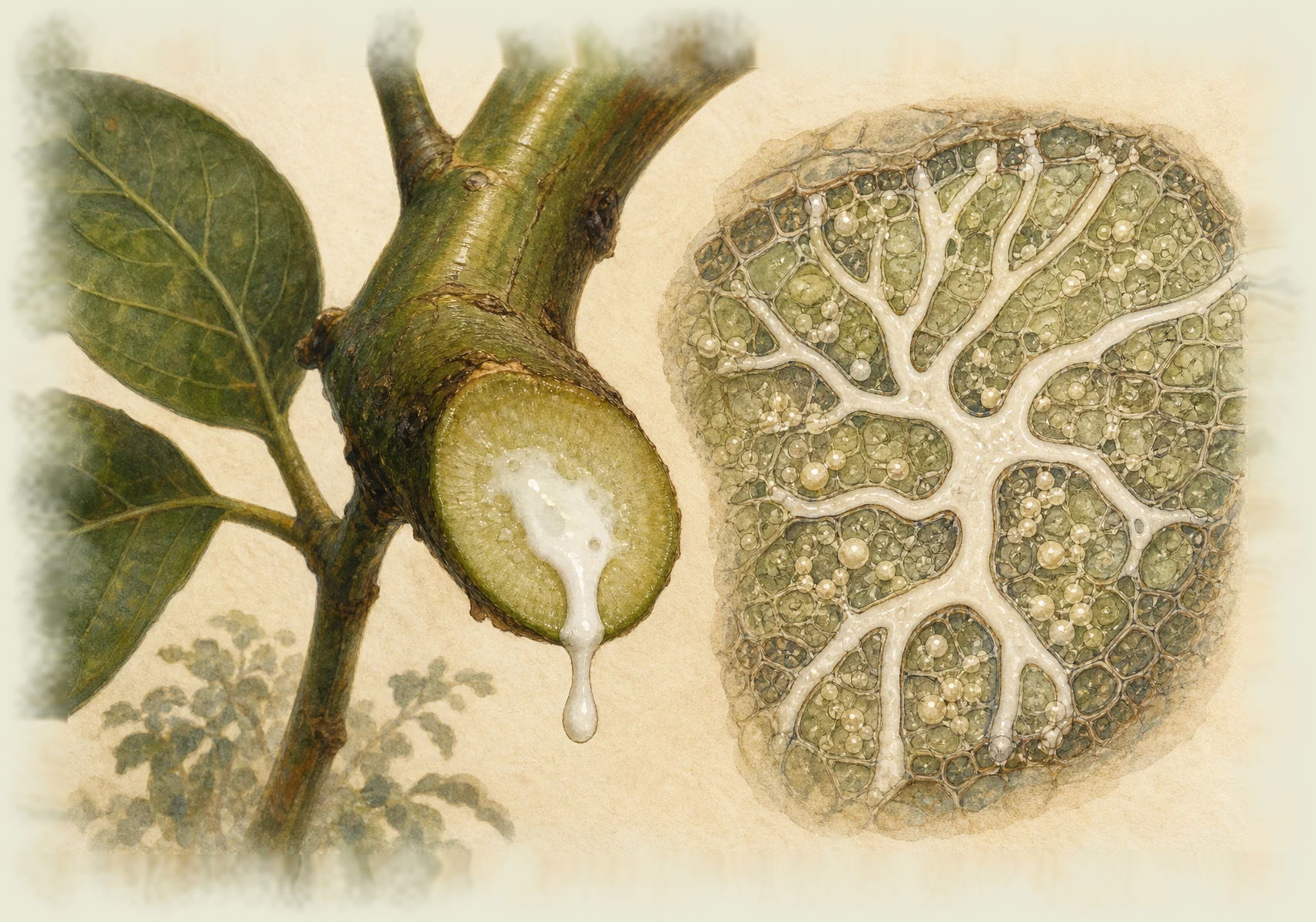
Latex appears in roughly 21,500 species—about a tenth of flowering plants—and has evolved repeatedly as a pressurized defense system. When tissue is damaged, laticifers deliver a sticky emulsion that can seal a wound, gum up an insect’s mouthparts, and carry concentrated defensive proteins or toxins. Only a smaller subset, estimated around 2,500 species, makes natural rubber.
By 2025, the pathway was no longer a black box. Isopentenyl diphosphate supplies the repeated carbon unit; a rubber-transferase complex on the surface of rubber particles includes cis-prenyltransferases and accessory proteins. CRISPR knockouts in Russian dandelion showed that two CPT enzymes and a CPT-like activator are essential for rubber synthesis and particle formation.
What remains unresolved is exactly what an engineer needs: the complete working composition of the transferase complex, the links among its components, the birth and growth of the rubber particle, and the controls that determine molecular weight, branching, yield, and tissue-specific regulation. Researchers know important parts and can break the system. Rebuilding high-molecular-weight rubber in an unrelated host remains much harder.
Rubber has become a national-security material
Natural rubber is a strategic material because aircraft and heavy-vehicle tires, seals, vibration controls, medical goods, and thousands of other products still depend on properties that synthetic elastomers do not replace in every application. The United States imports nearly all of it through a geographically concentrated supply chain vulnerable to disease, weather, and political disruption.
The Department of Defense announced $1.2 billion in new biomanufacturing investments in 2023, directed broadly at domestic mission-critical materials and fragile supply chains. In Ohio, the Air Force Research Laboratory, BioMADE, Farmed Materials, and Goodyear launched a multimillion-dollar, multiyear program to develop Russian-dandelion rubber. Greater Akron’s concentration of tire companies, polymer scientists, and manufacturing knowledge gives the region a natural role in turning that research into an industry.
Guayule and Russian dandelion reveal the bottleneck
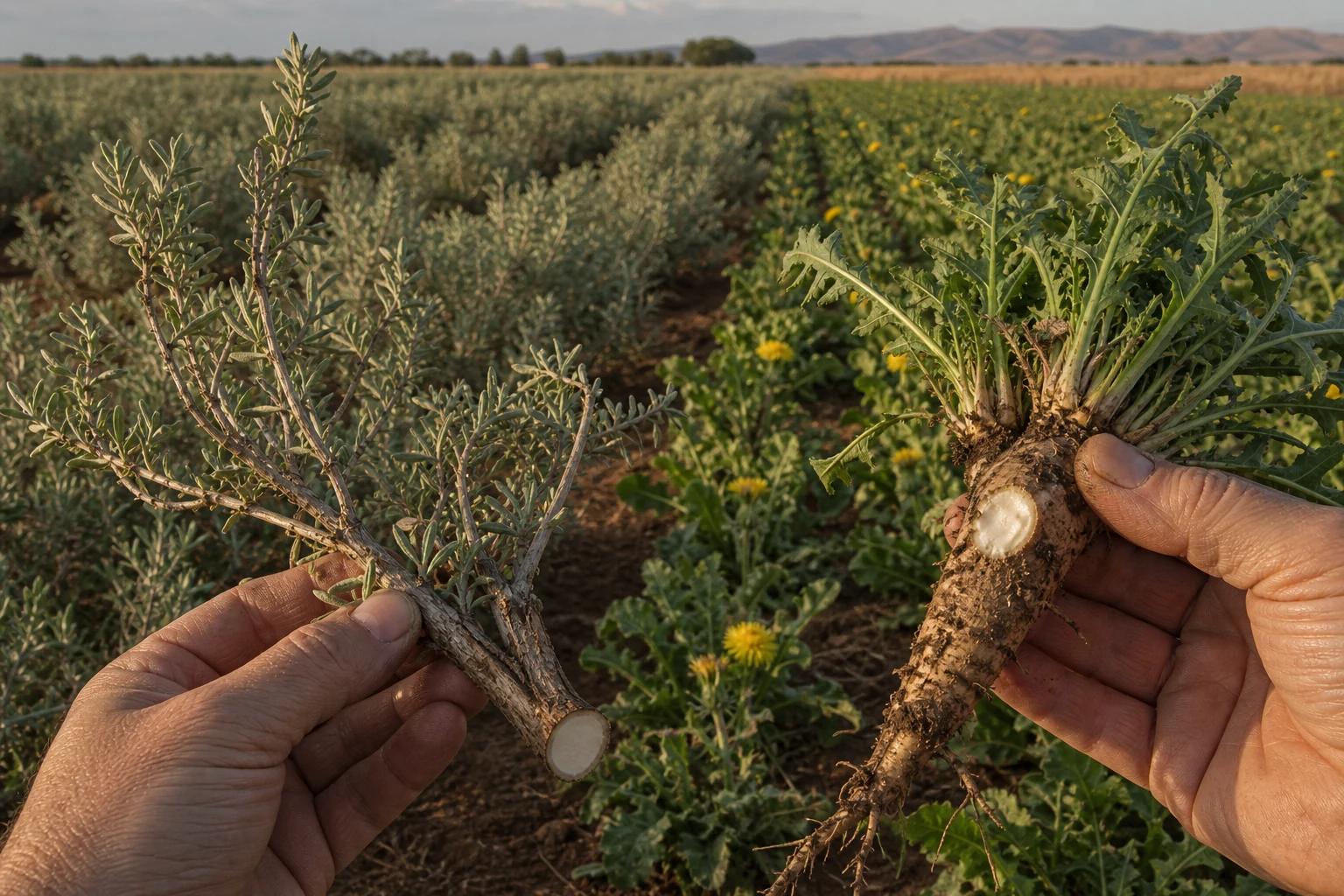
Guayule proves that high-quality rubber can come from a drought-tolerant North American shrub, but its biology is awkward to industrialize. Rubber is dispersed through parenchyma rather than collected in a tappable laticifer network, so the harvested shrub must be ground and separated. Resin can exceed the rubber fraction, contaminate the product, accelerate oxidative degradation, and demand selective extraction. Rubber accumulation is cold-responsive, and evidence points to important post-translational control of transferase activity—an enzymatic regulation problem that cannot be solved by turning one gene up.
Russian dandelion is faster, temperate, and genetically tractable. Its root latex can make rubber close to Hevea quality, and a crop can be harvested in months rather than waiting years for a tree. Yet small roots, weed competition, variable germination, yield instability, and costly root recovery keep rubber per acre below a dependable commodity threshold. It is an excellent research organism and a promising crop; it is not yet the field-scale answer.
Both alternatives force the same conclusion. Finding a plant that makes the molecule is not enough. The valuable material must be concentrated in an organ whose geometry, maturation, contamination profile, and harvest method were designed for industry.
A marvel worth attempting
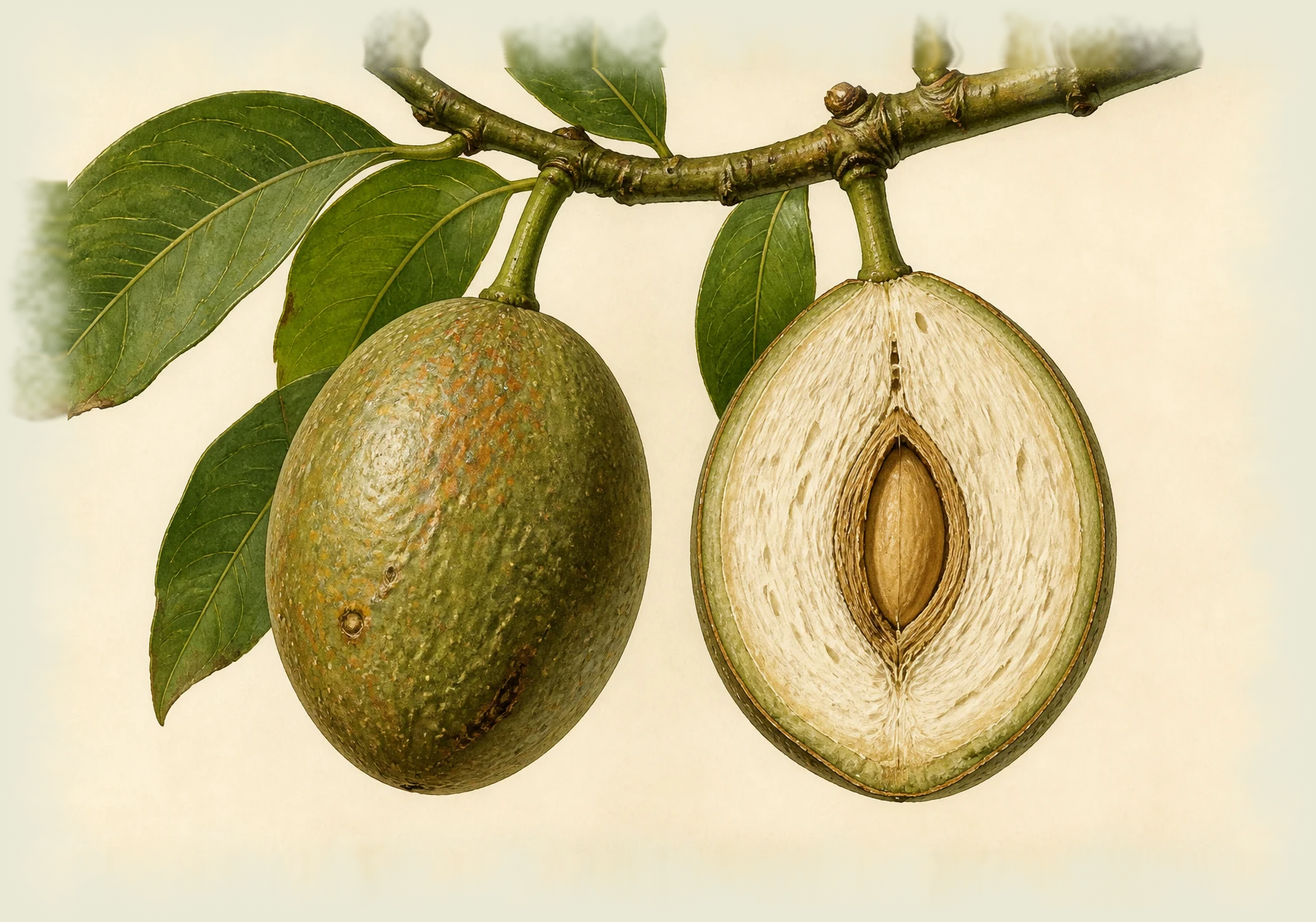
A latex drupe would move rubber out of a tree’s wound-defense plumbing, out of guayule’s ground woody biomass, and out of a dandelion’s small roots. The crop would build a large detachable organ around rubber-particle tissue, keep it vascularized while carbon flows in, then seal and dry its hull for transport. Tiny seeds could remain inside or in a separate chamber; reproduction would no longer dictate the size of the product.
- A standardized organ could concentrate latex before the plant reaches the factory.
- A protective hull could control oxygen, moisture, coagulation, and contamination.
- A designed abscission zone could give every mature drupe a measurable break force.
- The tissue could be selected for polymer molecular weight and low allergenic protein content rather than defense alone.
- A combing header and pneumatic conveyor could harvest the product without excavating roots or shredding whole shrubs.
Natural rubber already proves that a plant can manufacture a demanding high-molecular-weight polymer. A successful drupe platform could extend from cis-polyisoprene toward related elastomers, tackifiers, resins, coatings, and plasticizer precursors. It would address particular plastic functions rather than the entire category. Learning to package those polymers in a harvestable organ would be a genuine new manufacturing primitive.
The first use belongs wherever performance, scarcity, or supply risk can justify a difficult crop: aircraft and truck elastomers, medical latex with a controlled protein profile, specialty seals, extreme-pressure lubricant additives, dielectric fluids, durable coatings, or precision waxes.
From there the platform could broaden. One cultivar might secrete a natural-rubber emulsion; another a lower-molecular-weight tackifier; another a resin or wax that blends into a recyclable composite. The hull could become fiber or process heat, the filtered seeds could propagate the next crop, and the remaining biomass could return carbon and minerals to the field. The organ, not just the molecule, would be engineered for separation.
Refineries remain part of the system; their feed changes. Regional presses and biorefineries could receive standardized biological packages instead of dilute woody biomass or imported tropical latex, then finish materials with the same seriousness now applied to petrochemicals.
The right organism may differ by latitude, water, soil, disease pressure, and product. A temperate annual could make high-value oil in the Midwest; a perennial dryland shrub could make resin and rubber in the Southwest; a cover-crop chassis could make a modest product while protecting soil between food rotations. The transferable invention would be the storage-organ program, not a single universal species.
That platform suggests two further uses. First, traits could be tuned to local industrial waste streams: carbon dioxide, recovered nutrients, or process heat may connect field production to a regional biorefinery. Second, a common physical harvest standard—organ height, break force, maximum diameter, hull toughness, and pneumatic handling limits—could let one family of machines serve many molecular crops.