The donut may be the friendliest food human beings have ever made.
It is breakfast that knows it is also dessert, a small celebration that asks for no occasion, a paper bag made warm and fragrant from within. A donut can be feather-light or satisfyingly cakey, plain enough for coffee or glorious enough to leave icing on your nose. It can wear cinnamon, chocolate, maple, fruit, nuts, custard, crumbs, glaze, or nothing at all. It can be a ring, a twist, a pillow, a cruller, a fritter, a tiny hole, or a magnificent mistake that barely fits in the box.
That variety is not indecision. It is the point. The donut is a form generous enough to hold local traditions, childhood flavors, bakery ingenuity, gas-station necessity, and the particular pleasure of bringing a dozen somewhere and watching everybody look. People love donuts because donuts keep finding new ways to be lovable.
So this is not a correction to the donut. It is affection taking the form of six suggestions.
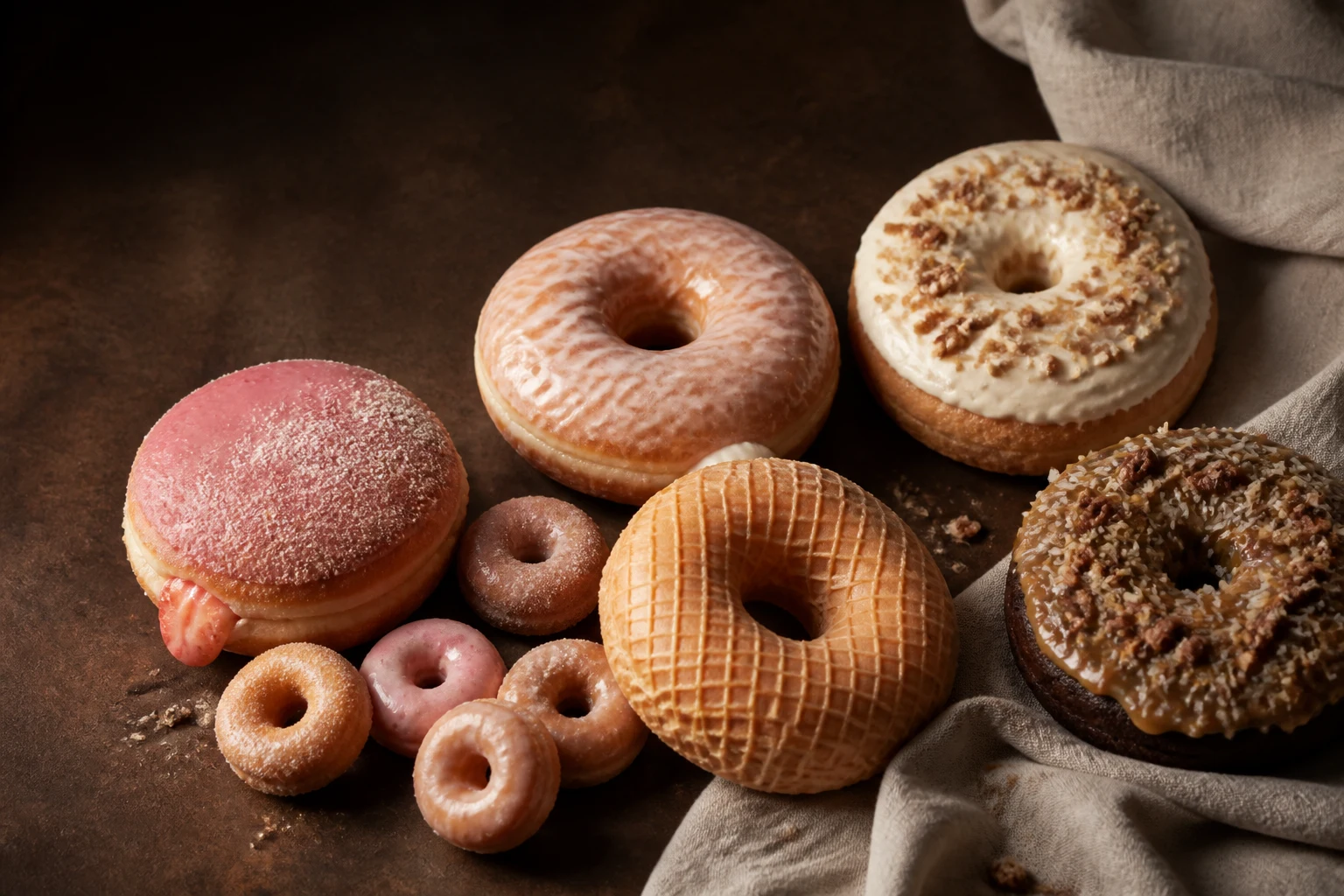
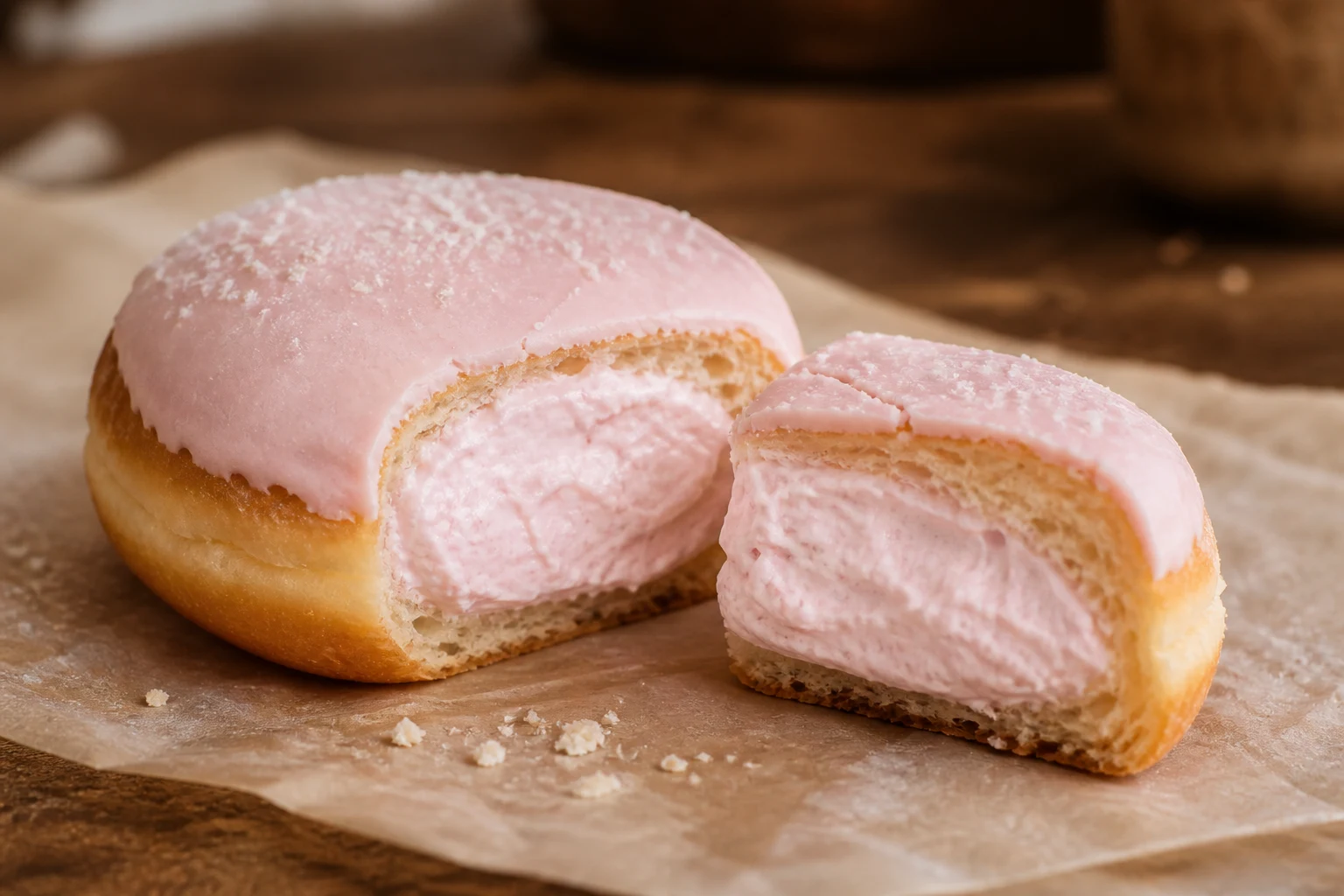
The Strawberry Shortcake Donut begins with the deep comfort of a Boston cream: a soft, round yeast donut and a filling generous enough to announce itself on the first bite. But the custard turns strawberry-pink and tastes like the strawberry milk remembered from childhood—the unmistakable powdered-strawberry note of Nesquik translated into a cream made for pastry.
Up top, the familiar chocolate cap gives way to a pale pink topcoat with the flavor and delicate set of frosted Pop-Tarts icing. It should not taste like fresh berries or artisanal jam. Its charm is more specific than that: bakery softness meeting the bright, slightly candy-like strawberry of the cereal aisle, held under a thin icing shell that yields before the cream does. It is shortcake by mood, Boston cream by architecture, and Saturday morning by memory.
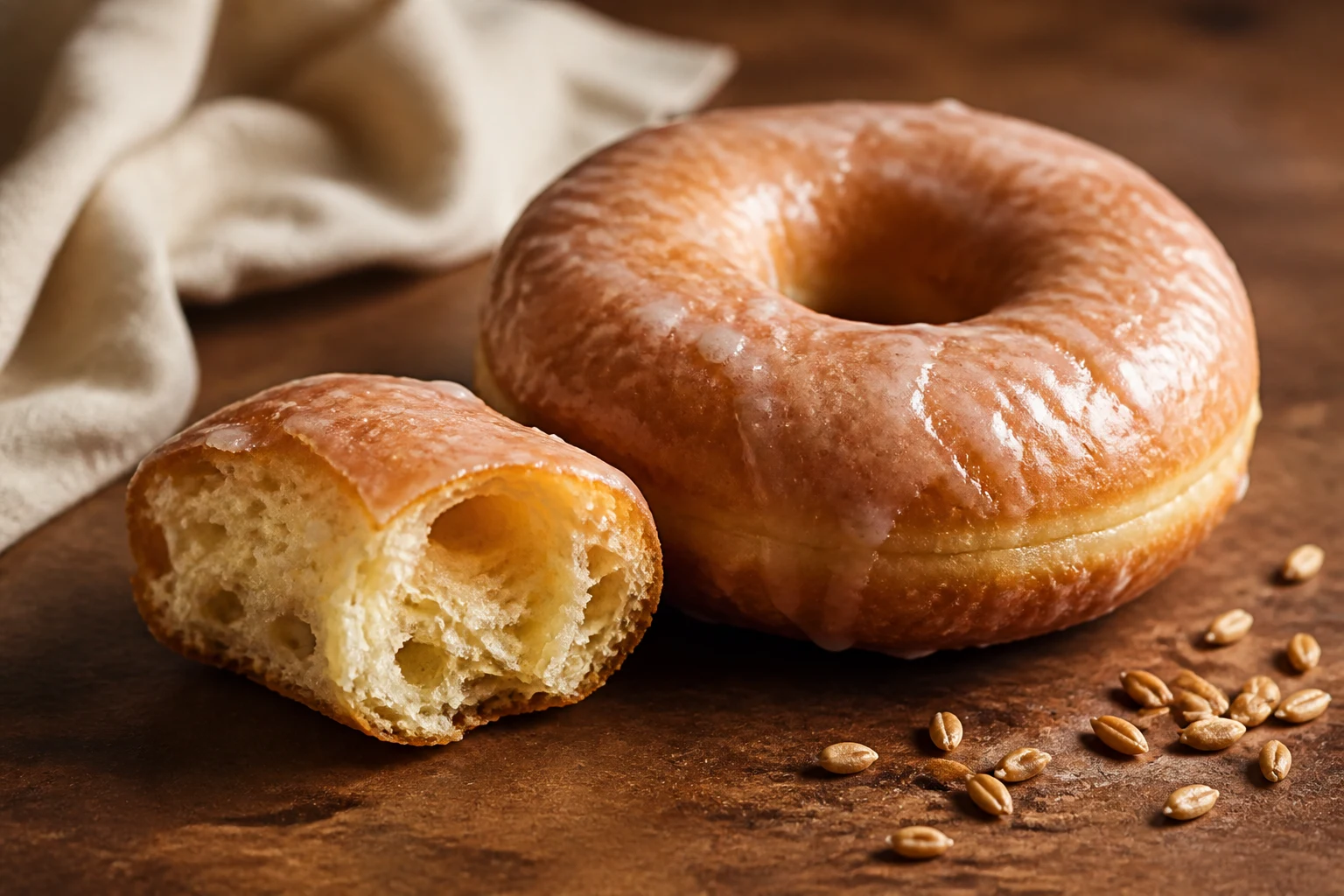
The I Can’t Believe It’s Not Donut, Donut is not a punishment wearing a donut costume. It remains a proper yeast ring: raised, fried, tender, and glazed. The adjustment begins in the dough, where pearled farro flour supplies twenty percent of the flour. That is enough to bring a subtle nuttiness and a little more grain character without turning the ring into dense health bread.
The glaze reduces the sugar load through a deliberate blend of dextrose, allulose, and maltitol. The target is still the thin, translucent crackle people want from a glazed donut—not a chalky coating, an aggressively flavored sweetener, or a lecture. Dextrose is still sugar, and no donut needs to pretend it is absolution. This one simply makes room for a person who wants the real experience with less sugar attached to it: less guilt, no exile from the box.
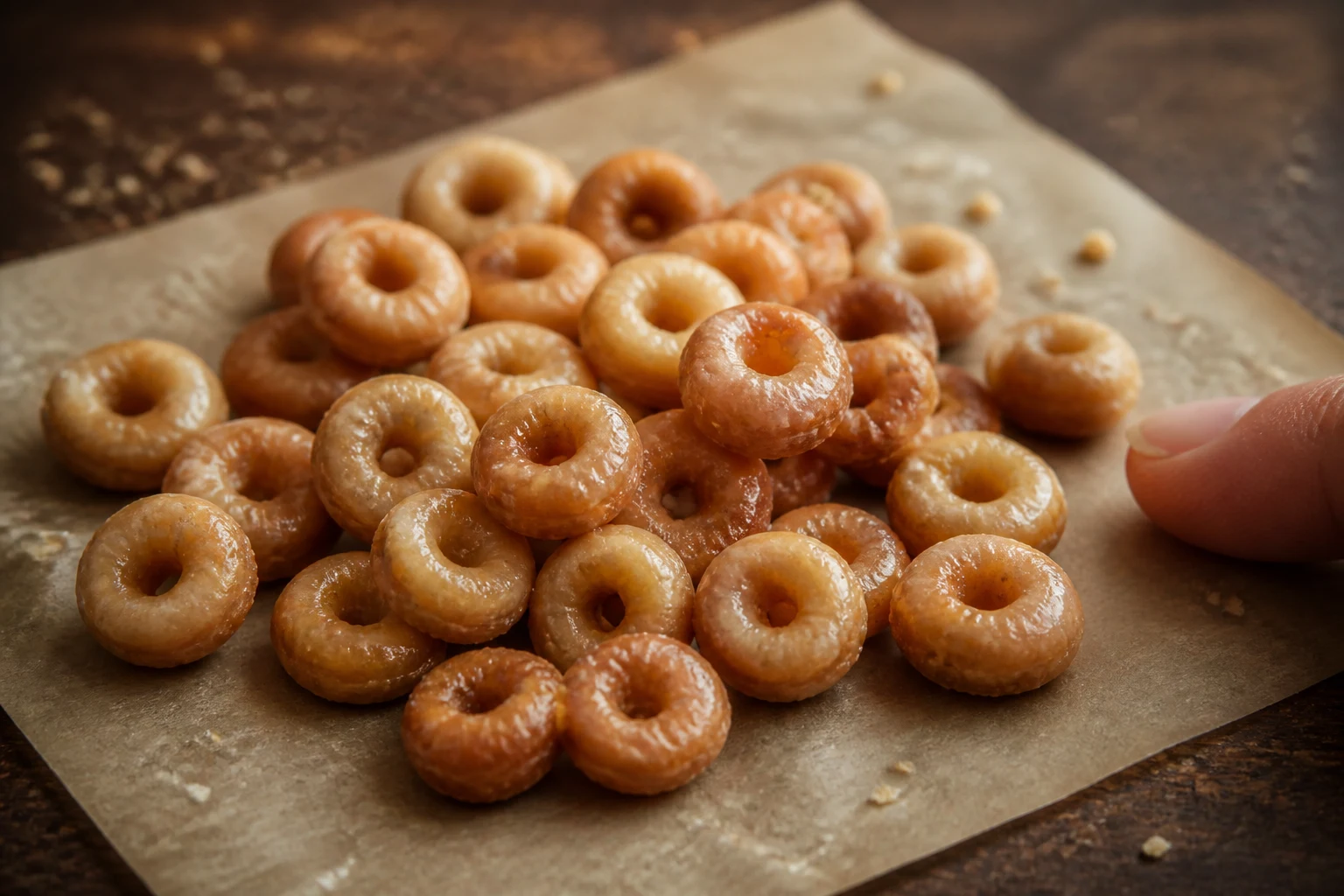
Tiny Temptations take the promise of “just a little one” literally. Each yeast ring measures two inches across: not a donut hole and not a shrunken cake donut, but a complete little raised ring with an open center, a browned underside, and a skim of glaze.
The scale suggests its own production method. Soft yeast dough is portioned through a shaped nozzle in a steady procession of small rings, then pan-fried so the line can make them quickly and consistently while preserving those minute differences that hot oil gives every piece. A handful becomes a tasting flight, a shared pile, or the chance to have one more without committing to another full-size donut. The temptation is plural on purpose.
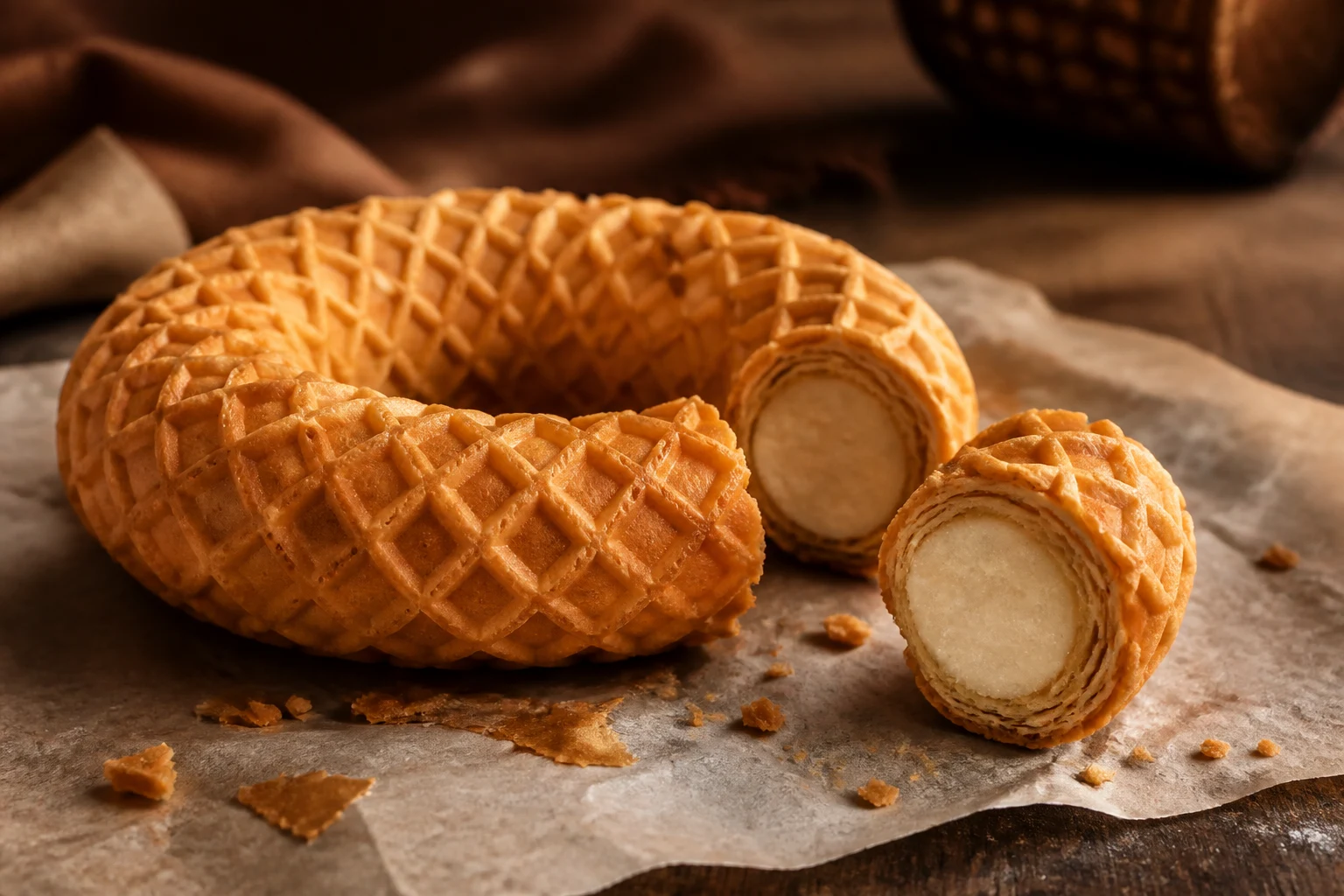
Lil Crispies ask what happens when the ring survives but the dough disappears. Waffle-cone batter is formed into the donut shape and baked until the whole ring is dry, golden, crosshatched, and audibly crisp. It belongs near donuts because of its silhouette and spirit, even while the first bite delivers the brittle snap of an ice-cream cone.
After baking, the hollow ring receives an injected filling formulated without moisture. That constraint matters: ordinary cream would migrate into the shell and quietly destroy the crispness that makes the idea worth eating. A dry vanilla, praline, malted-milk, or nut-butter filling could give the center richness while letting the shell remain clean and crackly. The pleasure is the contrast between a familiar shape and a texture no donut box currently promises.
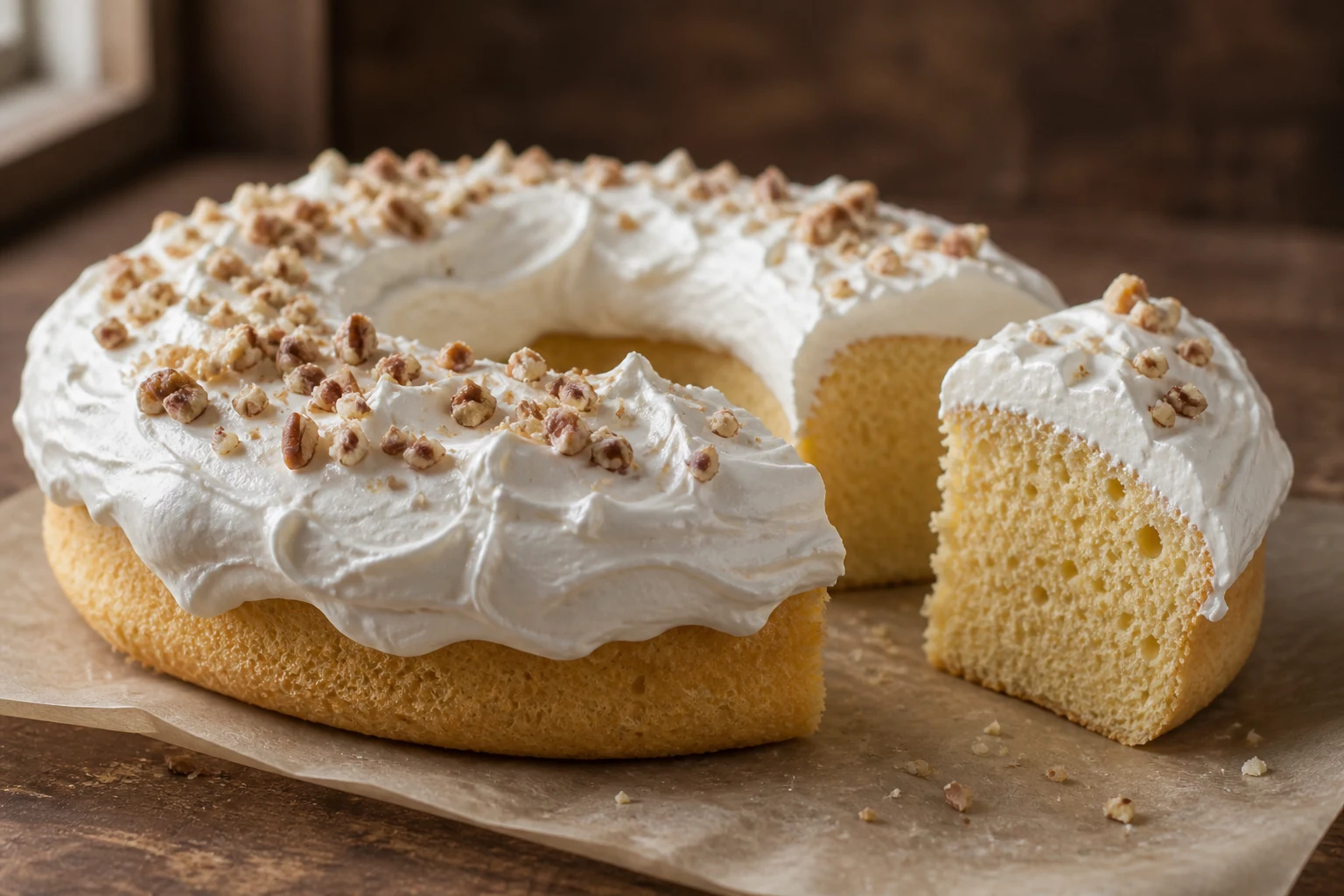
Royal Donuts start as true sponge cake, airy and springy, baked in sheets or shallow forms and cut with a mold into clean rings. They are not conventional cake donuts—the crumb should stay open and feather-light, more inclined to rebound than crumble, with the unmistakable lift of sponge.
Across the crown goes an icing with the cool, cloudlike character of Cool Whip but more body: stable enough to make a soft ridge, survive the box, and hold its shape without becoming heavy buttercream. Tiny sprinkles of pecan provide the finish. They should be fine and restrained, adding a toasted accent and a faint crunch instead of turning the top into a nut crust. The result is regal in the gentlest way: pale, tall, soft, and unexpectedly weightless.
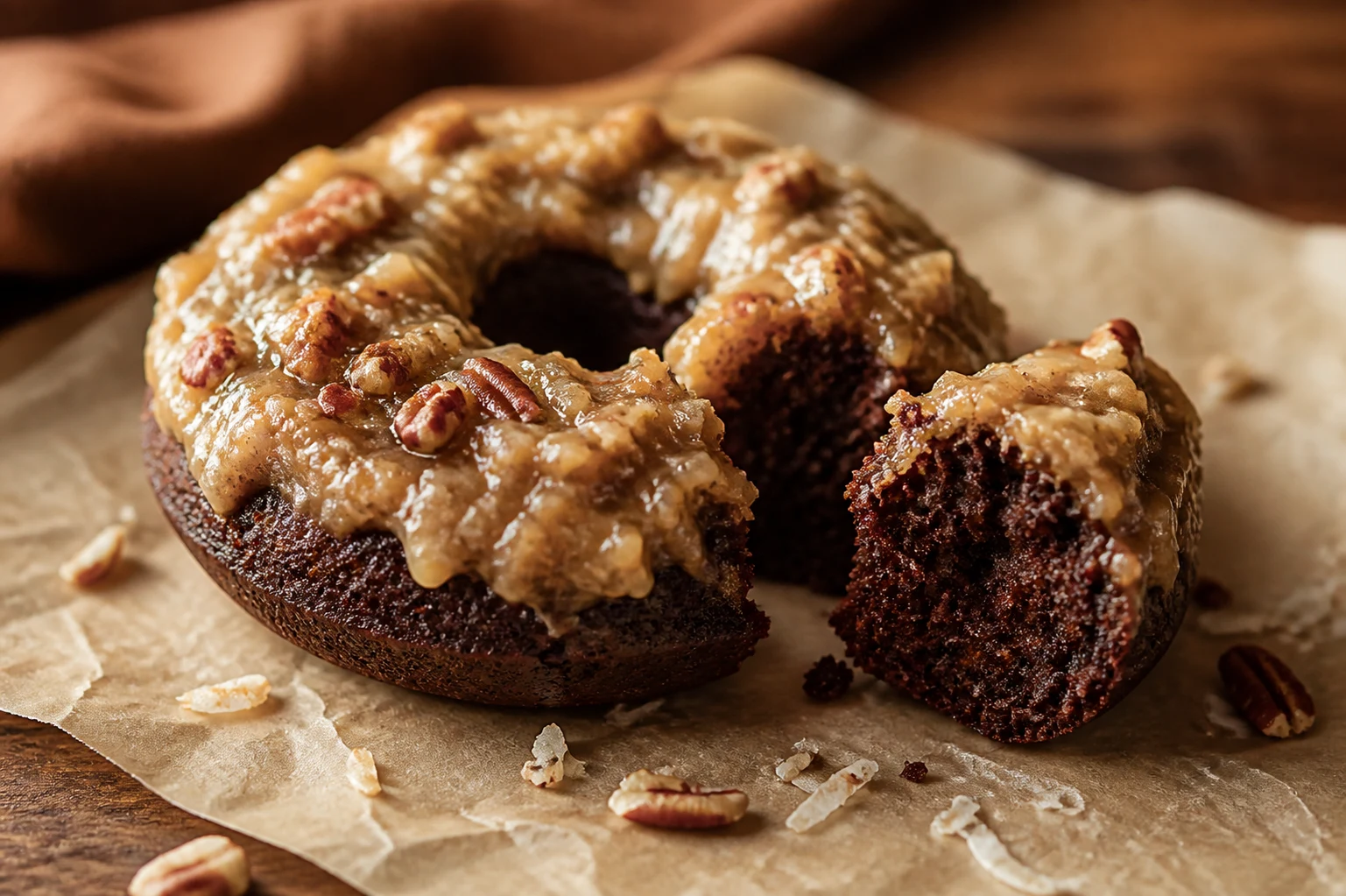
The German Chocolate Cake Donut needs almost no argument. Begin with an ordinary chocolate cake donut: dark, tender, sturdy enough to carry a topping, and recognizable before anything else touches it. Then give it the part of German chocolate cake that people reach for—the cooked coconut-pecan glaze.
Evaporated milk supplies the dairy depth; butter, egg yolk, and sugar cook it into a soft caramel body; shredded coconut and pecans turn every bite chewy, nutty, and abundant. It should be spooned over the ring while still supple, then allowed to settle into a glossy, textured crown. No extra chocolate shell is needed. The cake is already doing that work underneath, and the classic topping deserves the whole surface.
There is no shortage of donuts. That has never been a persuasive reason to stop inventing them.
Make the dozen bigger.
Return to all ideas