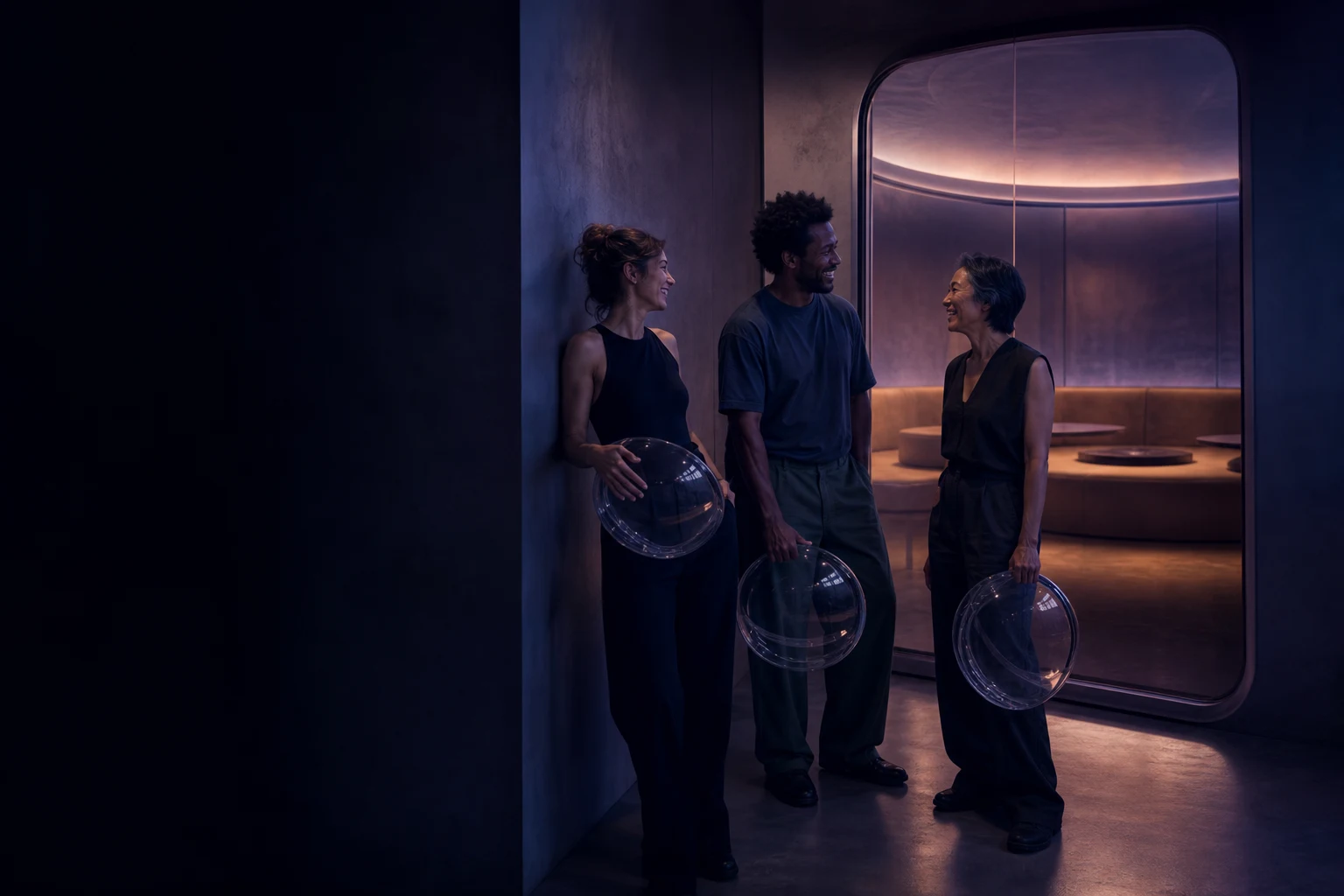
The helmet must destroy speech, not disguise it. A microphone array inside the collar captures the raw voice while the shell and neck seal keep that sound from entering the room. A deliberately non-transcribing processor extracts duration, pace, energy, broad pitch movement, pauses, breath, laughter, and an affective trajectory. It then generates unrelated pseudo-speech in the chosen voice family. Timing is close enough to preserve turn-taking, but never aligned syllable for syllable; question shapes, names, numbers, cognates, and repeated fragments must not survive.
Transparency creates one more leak: lips. During speech, a clear electro-optic band subtly retimes and blends the lower face. Identity, smiles, grimaces, and laughter remain visible, while phoneme-level mouth shapes stop matching the synthetic audio. At rest, the layer is optically neutral. Quiet airflow, an instant mechanical release, and directional speakers keep the helmet wearable rather than theatrical.
No visible room can eliminate every kind of meaning. Pointing, sign language, spelling on glass, personal objects, and a known shared context can carry propositions without speech. Sessions therefore leave phones and writing surfaces outside and establish a no-charades rule. Gaze, posture, ordinary gesture, and facial feeling remain because removing those would erase the social channel the room exists to save.