Elsewhere,
all night.
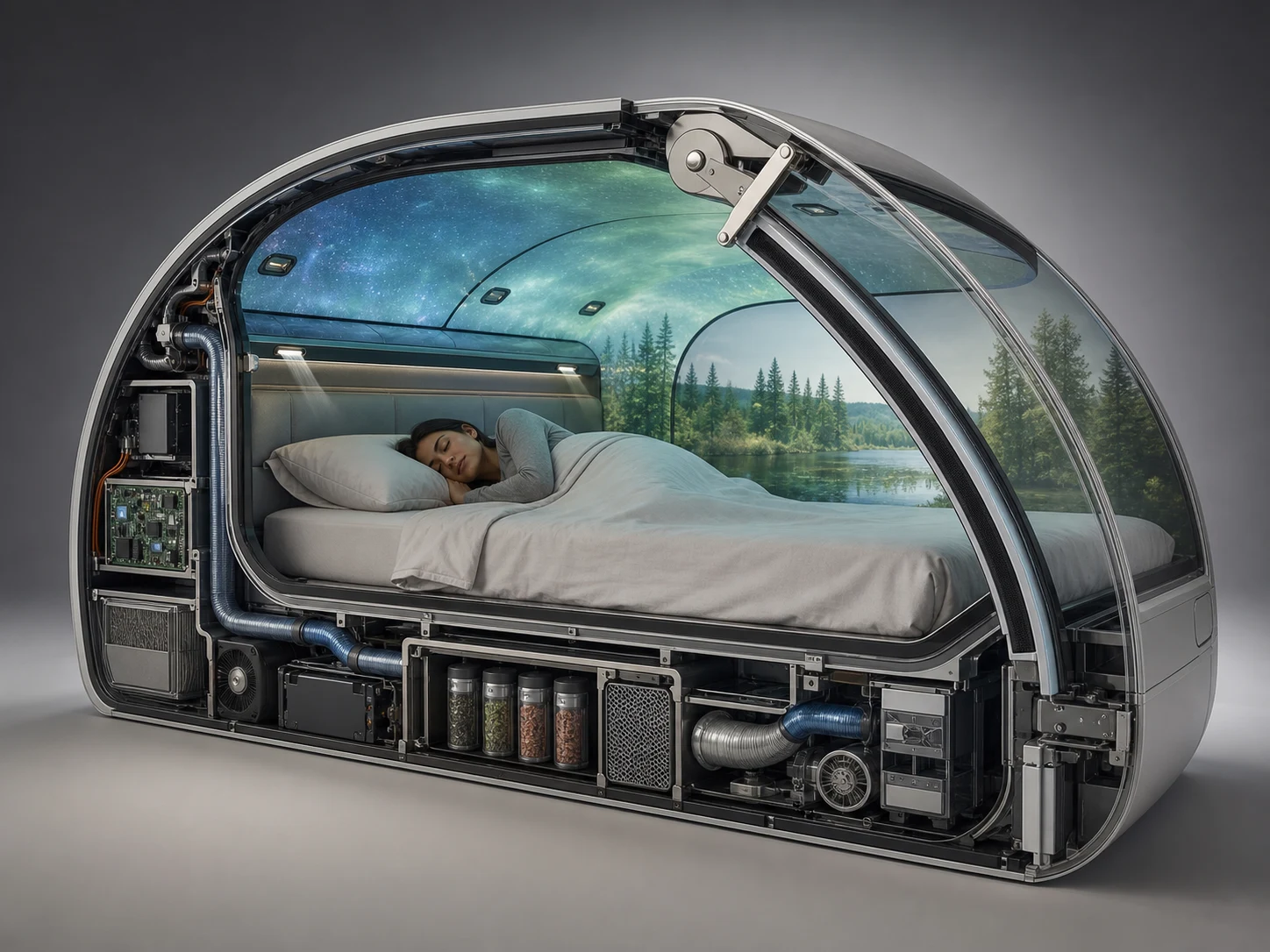
A bed inside a greenhouse room in another world—built by the whole pod acting as one synchronized scene.
Let the room become somewhere else.
Most bedrooms are designed to remove disturbance, but they cannot give a person the feeling of having gone anywhere. That matters during long recoveries, dense-city nights, institutional stays, travel, and stretches of life when the same walls become part of the fatigue. A television adds another rectangle to watch; it does not move the bed into a coherent place.
A restless person lies in a room they have already studied from every angle, scrolling because nothing in the environment can carry attention gently away. The screen stays mentally loud even when the room is physically quiet.
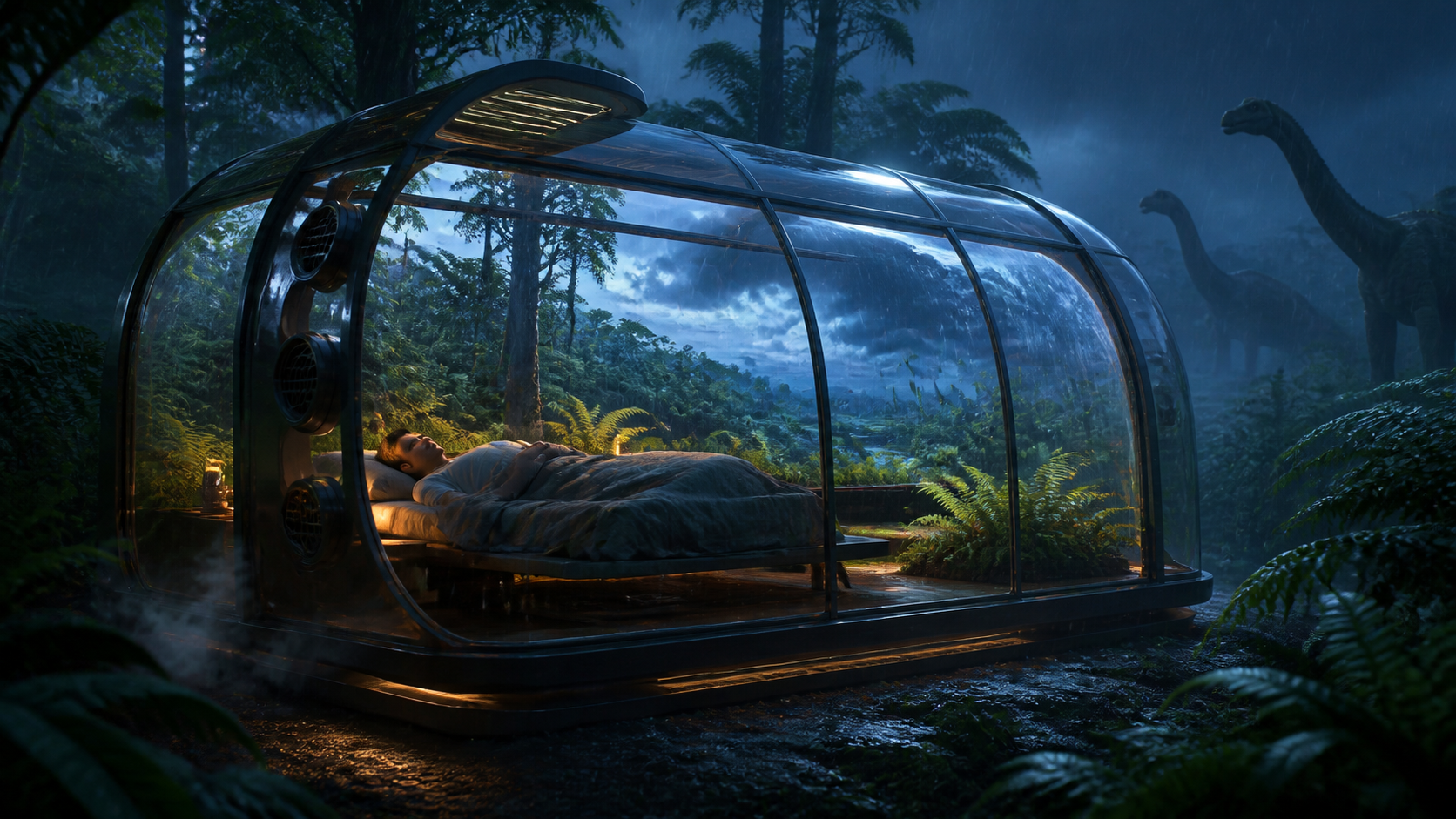
The bed remains ordinary and safe while the entire greenhouse-like inner shell becomes one environment. Image, spatial audio, smell, and directed airflow share a timeline, so mountain dawn, ocean pressure-dark, or rain in a fern forest arrives as a place rather than a clip. From outside, the cover remains slightly transparent and the sleeper remains visible.
Eleven places, one bed
The enclosure and the sleeping body remain legible in every scene. The world changes around them: sometimes sublime, sometimes impossible, and sometimes deliberately absurd.
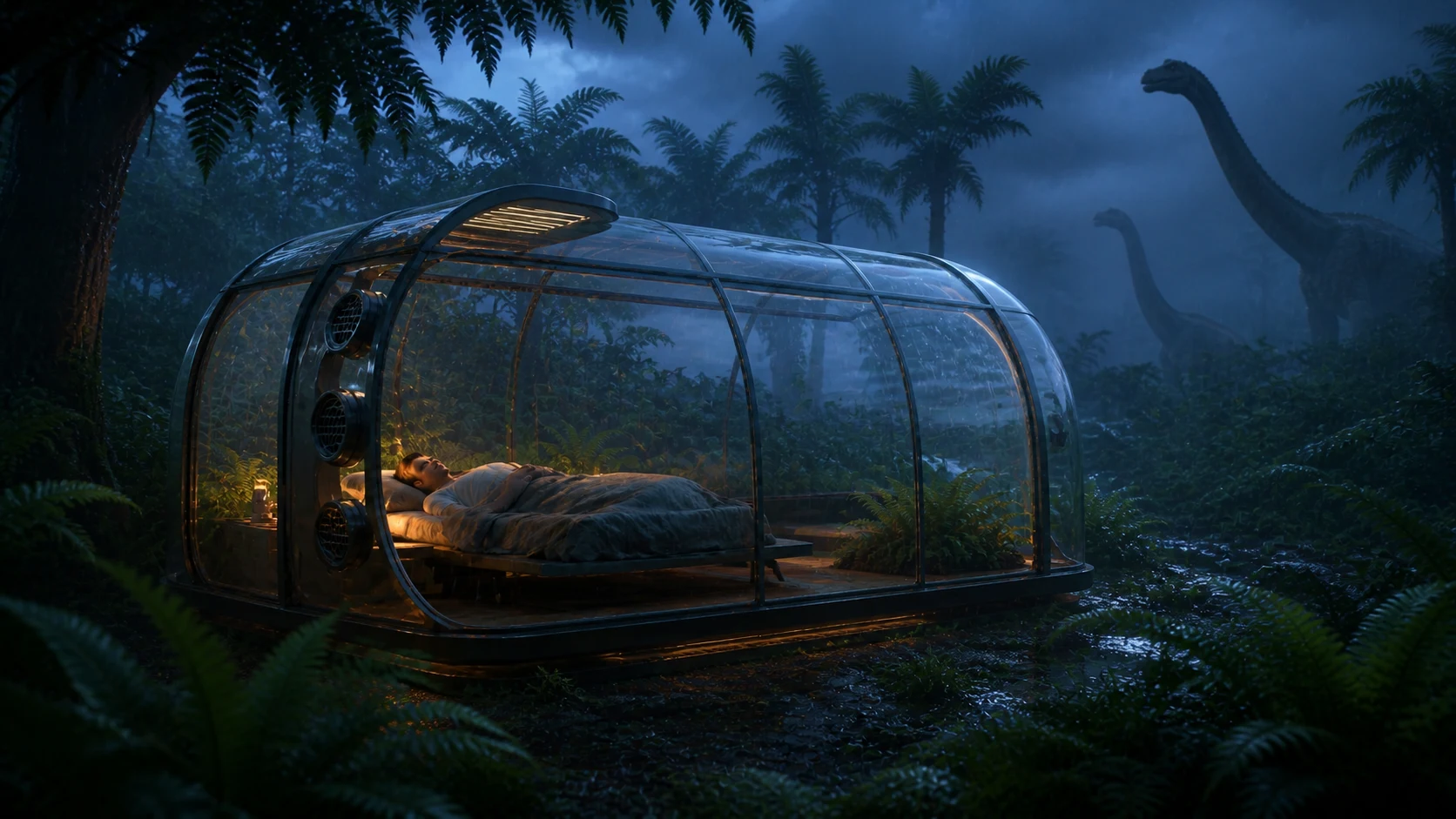
JurassicFern forest, warm mist, distant sauropods, low insect chorus. 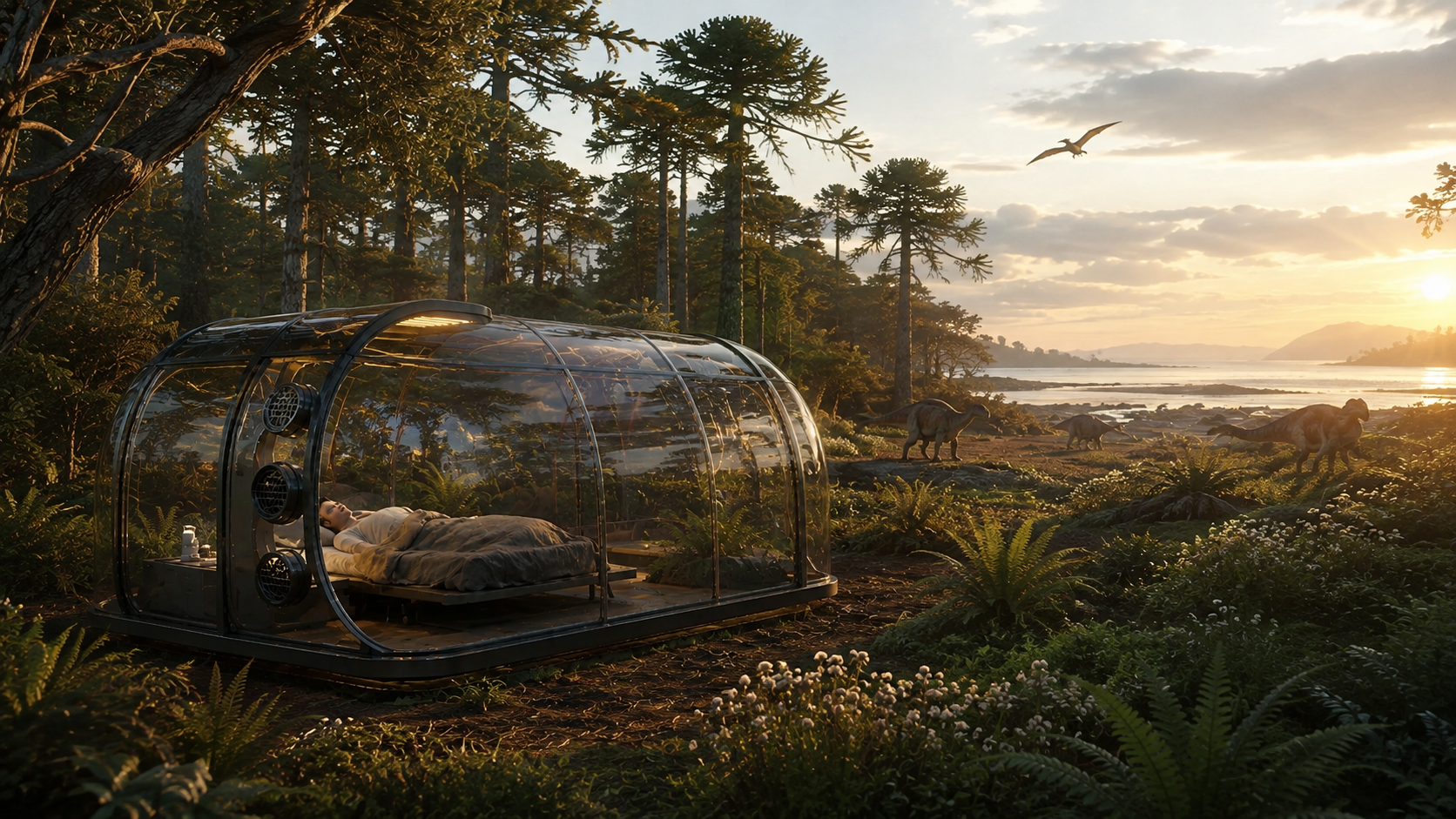
CretaceousFlowering plants, coastal light, calls beyond the glass. 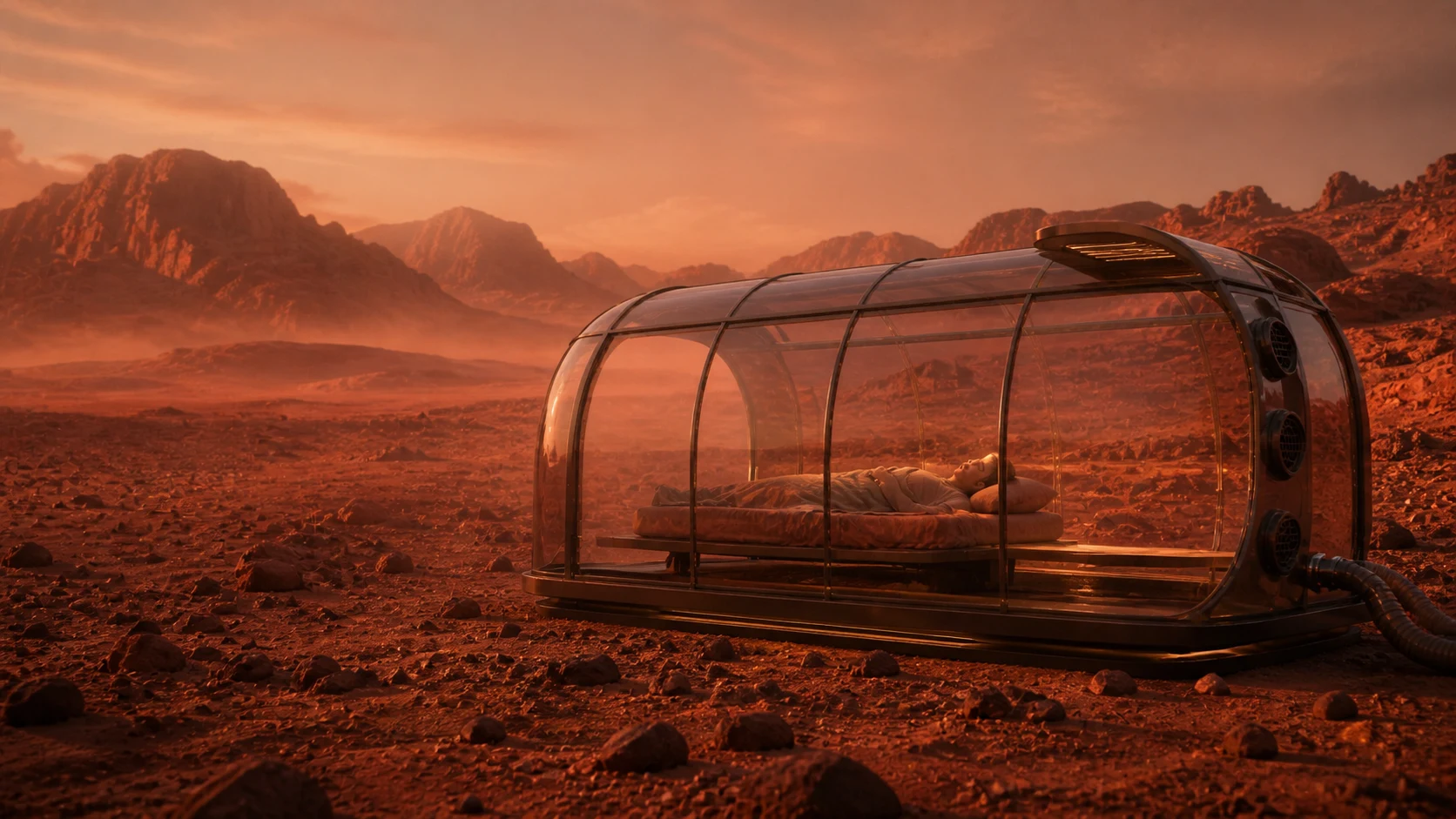
MarsDust-red horizon, cold filtered sun, gentle habitat airflow. 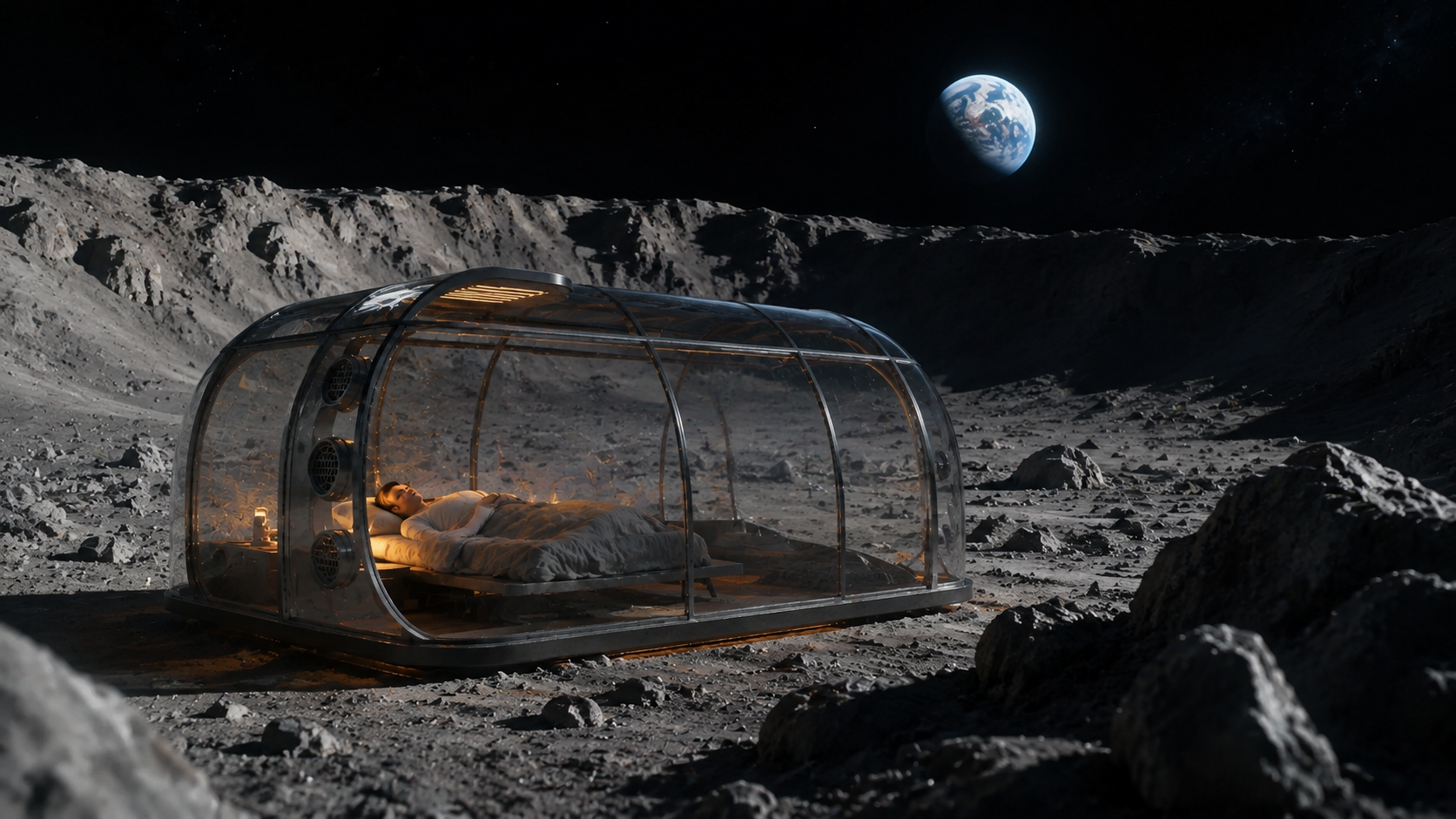
The MoonBlack sky, Earthrise, near-silence with soft structure tones. 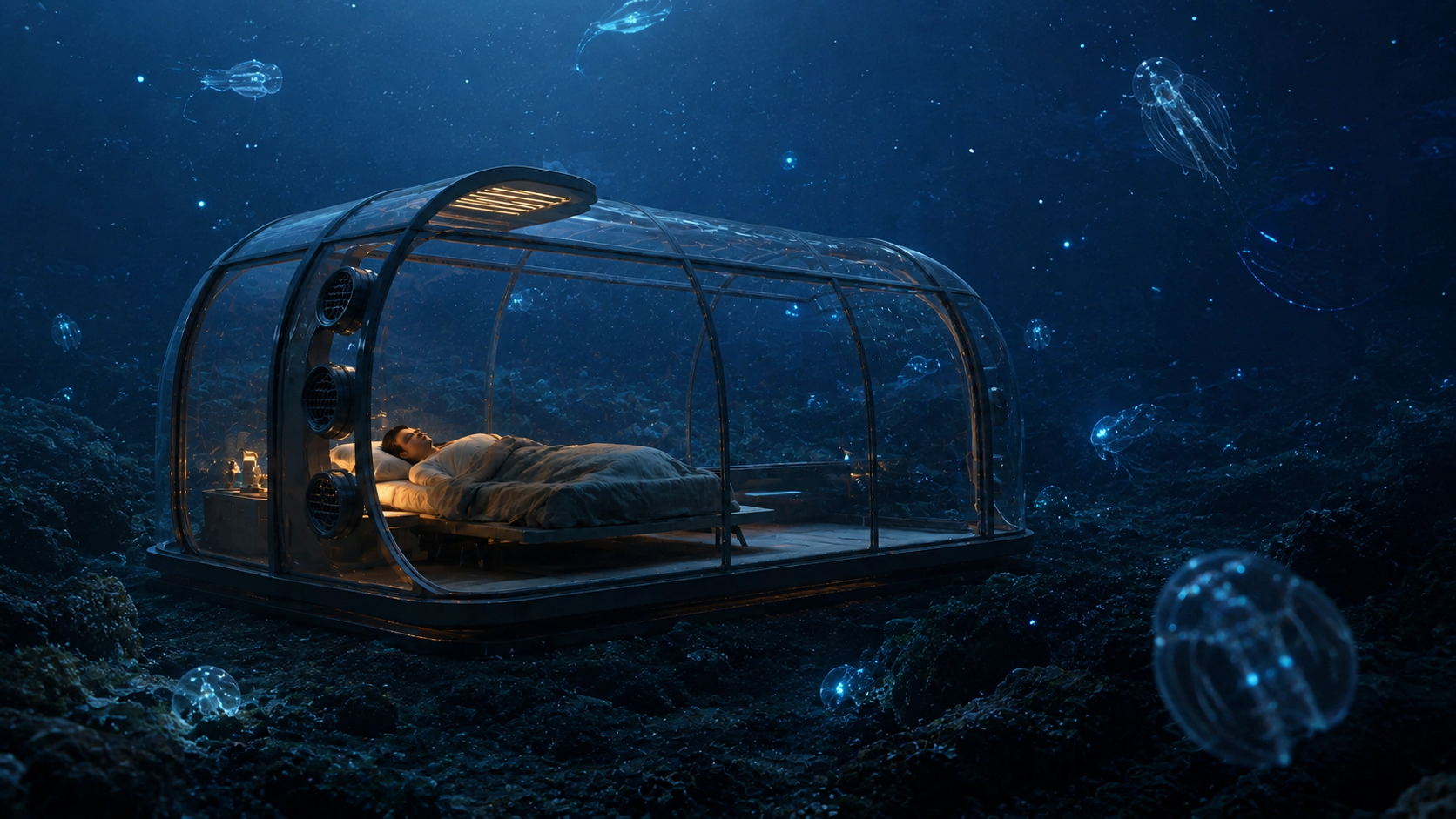
Deep oceanBlue pressure-dark, drifting bioluminescence, slow current audio. 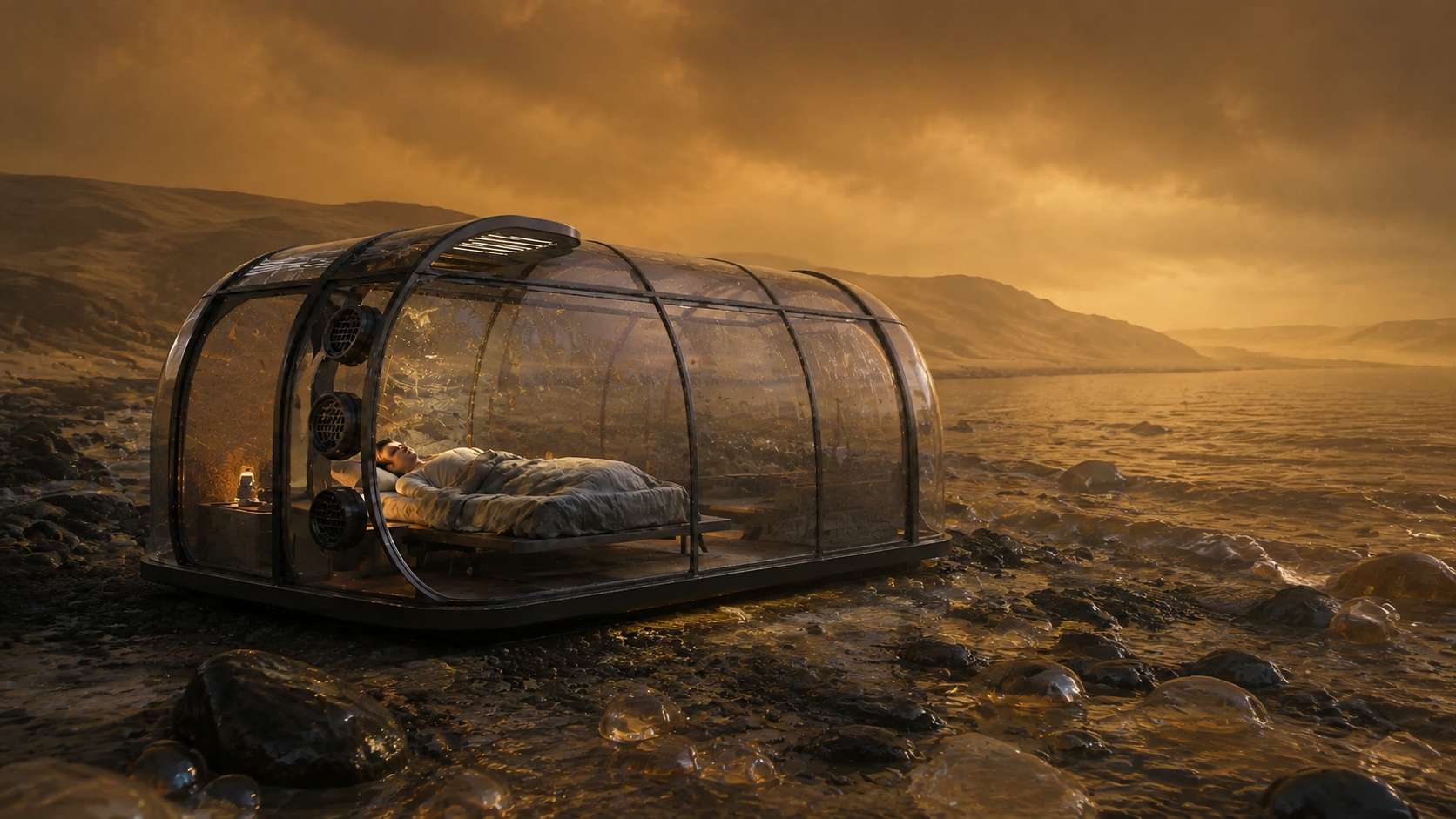
TitanAmber haze, methane rain suggested visually, distant dark shore. 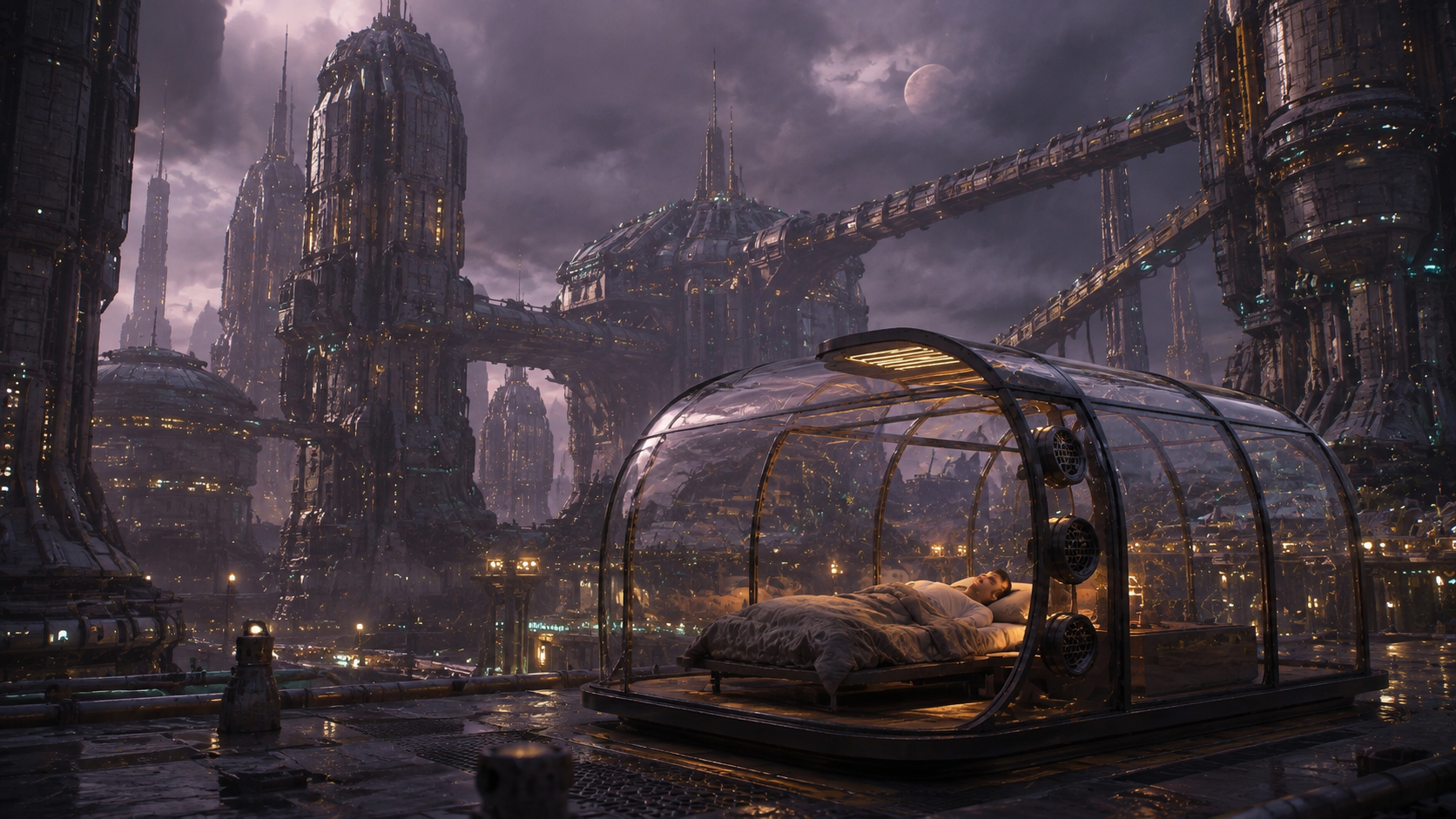
Battlefield Earth homeworldThe greenhouse appears amid the fictional world’s immense alien structures and strange atmosphere. 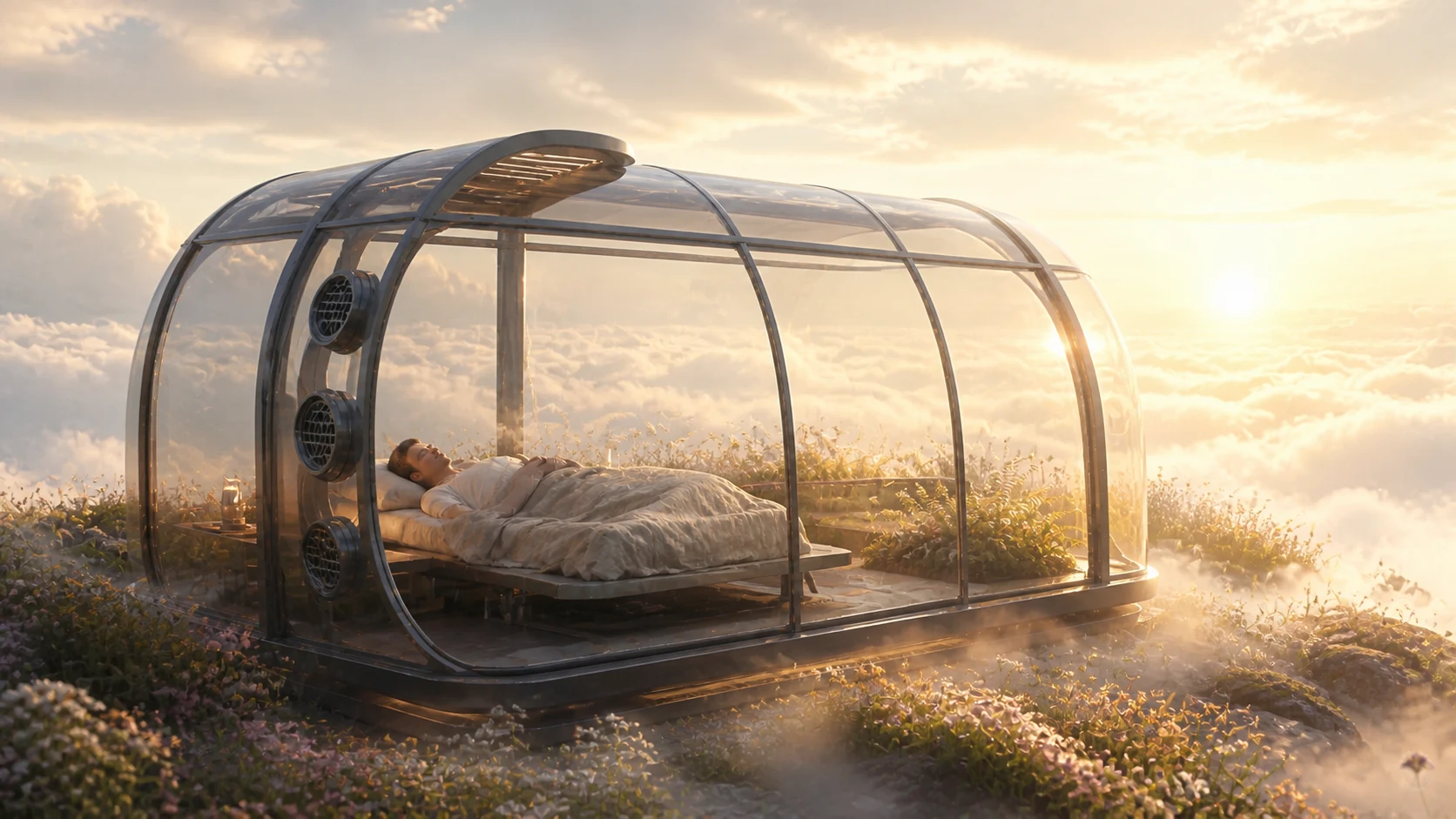
HeavenA personal cloud-and-light scene built around stillness, scale, and release. 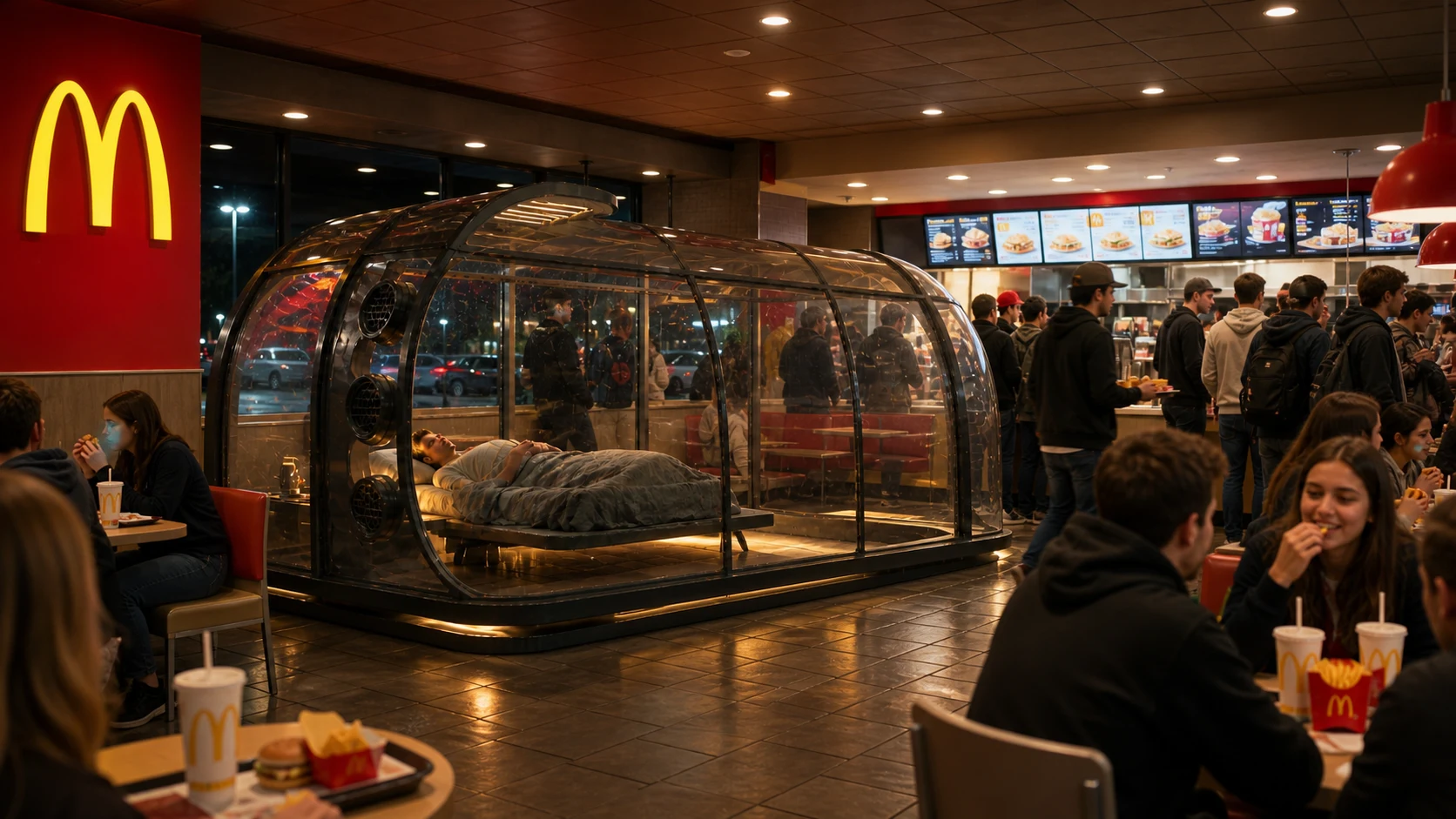
Inside a McDonald’sPeople queue, order, carry trays, eat, and pass the greenhouse while the sleeper remains sealed inside it. 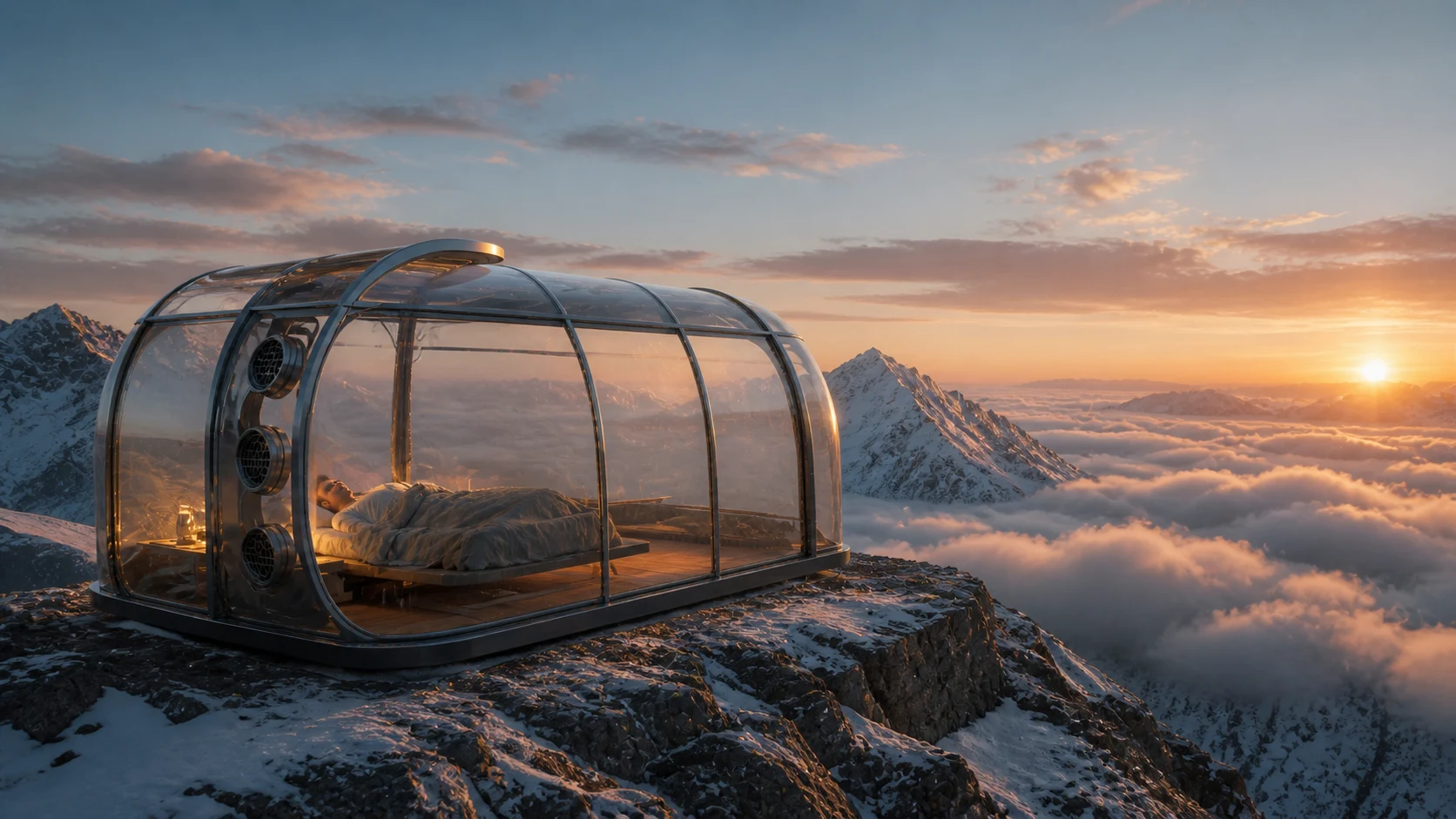
Mountain topDawn above a cloud deck, alpine wind suggested at pillow level. 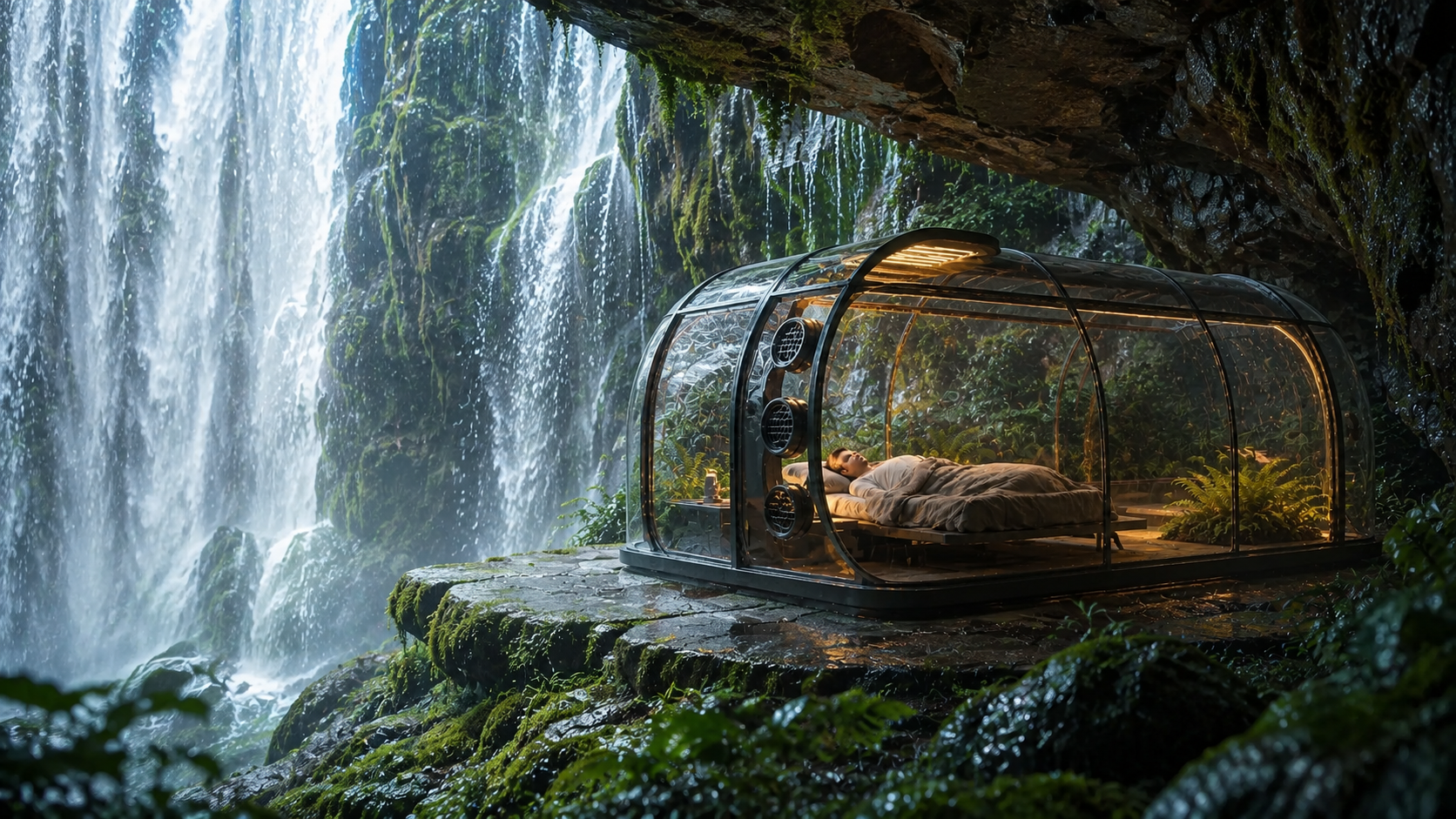
Under a waterfallWater curtain beyond the canopy, cool mist cues, deep rushing sound.
Named fictional and commercial settings identify selectable scene concepts; they are not sponsorships.
The world reaches beyond the picture.
Rain moves across the canopy. Its sound travels with it. Air stirs near the pillow, carrying a faint forest scent. The entire inner surface is a screen, but image, audio, smell and airflow belong to the same passing moment. Their synchronization makes the bed feel as though it occupies a place.
A world that settles with you
The scene can change through the night: the light lowers, distant activity slows, and the soundscape gives way to a quieter hour. Gentle transitions carry the atmosphere without sudden cuts or flashes. Brightness tapers, while the scene’s air and scent cues remain coordinated with what surrounds the bed.
Each sensory channel stays under the sleeper’s control. A person can keep the view and silence the crowd, turn off the scent, or soften the breeze. The enclosure provides the scene; the occupant decides how much of it to invite in.
An ordinary way back to the room
The canopy opens mechanically from either side, including when power is off. Fresh-air monitoring, smoke detection and thermal protection operate independently of the scene computer. Those functions belong to the sleeping enclosure itself, so leaving the imagined world does not depend on the picture continuing to run.
One bed. A different night beyond the glass.
The first working enclosure would bring the continuous picture, spatial sound and quiet airflow together around a real bed. An overnight trial can then reveal what a still image cannot: display seams from the pillow, warmth from the hardware, the character of the air, how the scene feels while drifting off, and what happens when someone wakes and opens the cover.
Further sensory layers can join that experience as they are refined. The aim stays the same: to settle into a familiar bed and feel, for a while, that the world around it has changed.